What is AI Recruiting? How to Use AI to Hire Smarter & Faster
Lindy broke down how AI streamlines recruiting across eight steps, from writing job descriptions to resume screening, candidate scoring, chatbot pre-screening, and automated interview follow-ups.


AI is changing how companies find and hire talent.
From screening resumes in seconds to writing job descriptions and even predicting candidate success, AI recruiting can make finding, hiring and onboarding new talents a lot easier and more efficient.
In this guide, I’ll break down what AI recruiting really means, how it works, and how you can start using it in your hiring process today.
What Is AI Recruiting?
AI recruiting is the use of artificial intelligence tools to automate or enhance parts of the recruitment process.
It doesn’t replace recruiters, it makes them faster and more effective by handling repetitive tasks and uncovering insights humans might miss.
AI can help with:
- Writing and posting job descriptions
- Resume screening and shortlisting
- Candidate scoring and ranking
- Chatbot-based screening and scheduling
- Predicting candidate-job fit based on data
- Reducing bias by focusing on skills over backgrounds
Instead of relying only on gut feel or manual reviews, AI helps teams make faster, data-backed hiring decisions.
Why Use AI for Recruiting?
Because the traditional hiring process is slow, biased, and expensive.
AI helps fix that by:
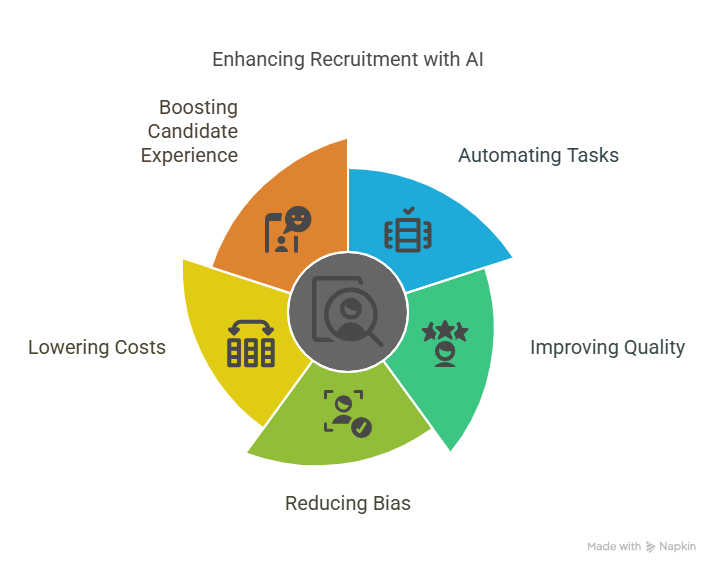
- Saving time: Automates tasks like resume screening and interview scheduling
- Improving quality: Scores candidates on skills, not just keywords
- Reducing bias: Uses consistent criteria instead of gut instinct
- Lowering costs: Speeds up hiring and reduces need for third-party recruiters
- Boosting candidate experience: AI chatbots give instant answers and updates
How to Use AI in Recruiting: Your 8-Step Playbook
Here's a simple way to bring AI into your hiring process:
Step 1: Write Better Job Descriptions with AI
Boring job descriptions won't attract the right talent.
Try AI writing helpers like Jasper, Textio, or even ChatGPT to write attractive job descriptions. Then use Lindy to optimize your job descriptions.
When writing job descriptions with AI:
- Check for Bias: Pop your draft into Textio. It'll find and fix any language that might put off different groups of people. You want to sound fair and open to all.
- Keyword Power: Get AI to look at your job description and see what keywords people search for. This helps your job post show up higher on job boards. For example, ask ChatGPT: "Make this job description great for search engines, with keywords for a 'Senior Software Engineer' at a FinTech company."
- Clear and Short: AI can spot confusing words or long sentences. Keep it easy to read for everyone.
- Right Tone: Make sure your job description sounds good and professional, matching your company's vibe. AI can help you hit that sweet spot.
Step 2: Post Jobs Smartly and Automatically
Get your job ads out to the right people in the best places.
Instead of doing everything manually:
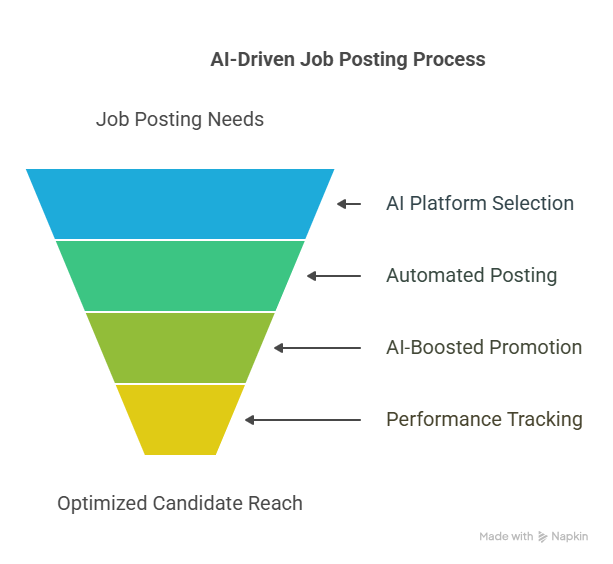
- Let AI Pick: Instead of guessing, use platforms like SmartRecruiters or Workable. They use AI to suggest the best job boards, specific communities, or social media sites for your role and who you're trying to reach.
- Auto-Post & Boost: Set these tools to automatically put your job on lots of sites at once. Look for features that let AI "boost" or promote your ad on places like LinkedIn or Indeed, making sure the right candidates see it.
- Track Results: Use AI analytics in these platforms to see which places bring in the best candidates. This helps you get smarter over time.
Step 3: Screen Resumes Super Fast
Stop sifting through mountains of resumes. Let AI do the heavy lifting to find the best fits.
- Get AI Resume Readers: Let Lindy’s Application Screener agent compare applications with your job requirements so you can focus on the most promising candidates. You can also integrate it with tools like Zoho Recruit and make your screening and recruitment process a lot more efficient.
- Set Clear Rules: Before you upload resumes, be super clear about what you need: specific skills (like Python, SQL), years of experience, degrees, or even certifications. The clearer you are, the better the AI can shortlist.
- Quick Shortlist: The AI will zip through thousands of resumes, find people who match your rules, and toss out the ones who don't. This saves recruiters a ton of time. Focus on finding good candidates, not just weeding out bad ones.
- Watch for Bias: Remember, AI can sometimes pick up biases from old data. Always check what your AI is doing and try to get a diverse group of applicants from the start to fight this.
Step 4: Rank Your Candidates Smartly
Don't just filter, score candidates to see who's truly the best fit. AI tools (often linked with resume readers) like Lindy can do more than just match keywords. They use smart models to give each candidate a score.
How AI scores candidates:
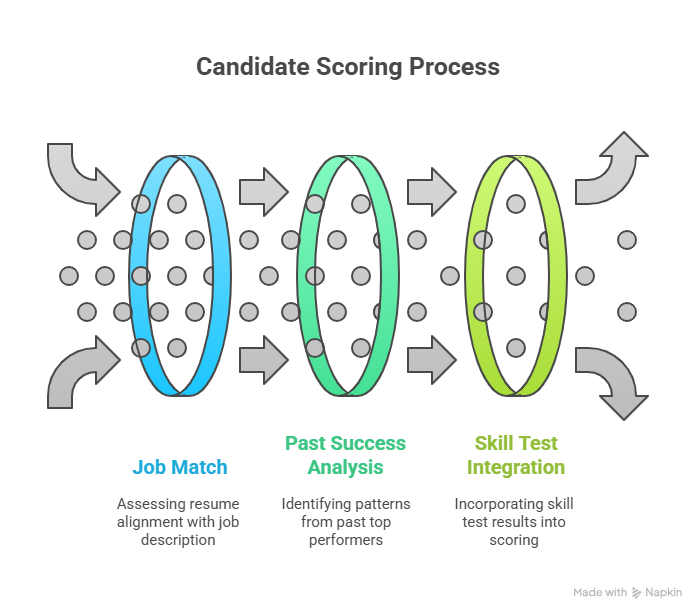
- Job Match: How well does the candidate's resume line up with what you're looking for in the job description?
- Past Success: If you have data, AI can look at your top performers from the past to find patterns that predict success in similar jobs.
- Skill Tests: Some platforms can include results from online skill tests (like coding challenges) right into a candidate's total score.
This way, you’ll end up with a ranked list, so your recruiters can focus on the most promising people first.
{{templates}}
Step 5: Use AI Chatbots for Early Chats
Let AI handle those first few candidate conversations to get key info and make things smoother.
Add AI chatbots like Olivia (Paradox), XOR, or Mya Systems to your application process.
Then add these to your automated chats:
- First Questions: Chatbots can ask basic qualifying questions ("Can you legally work in India?", "What salary are you looking for?"). This helps weed out people who aren't a fit early on.
- Check Availability: They can automatically ask when candidates are free for interviews, making scheduling a breeze.
- Answer FAQs: Chatbots can instantly answer common questions about the job or company, taking some work off your plate.
- Schedule Interviews: Many can even link up with calendars to set up initial interviews automatically based on when both you and the candidate are free.
Step 6: Analyze Interviews with AI (Be Careful Here!)
AI can give you deeper insights from interviews, but use it wisely and be transparent.
First, use AI to record the video interviews.
Then take a note of how the candidates talk. AI can even look at speech patterns, body language, and emotions to give you clues about how well a candidate communicates.
You can also use AI to check if a candidate's answers really match the questions asked and the job needs. It can also help make interview scoring more consistent across different interviewers.
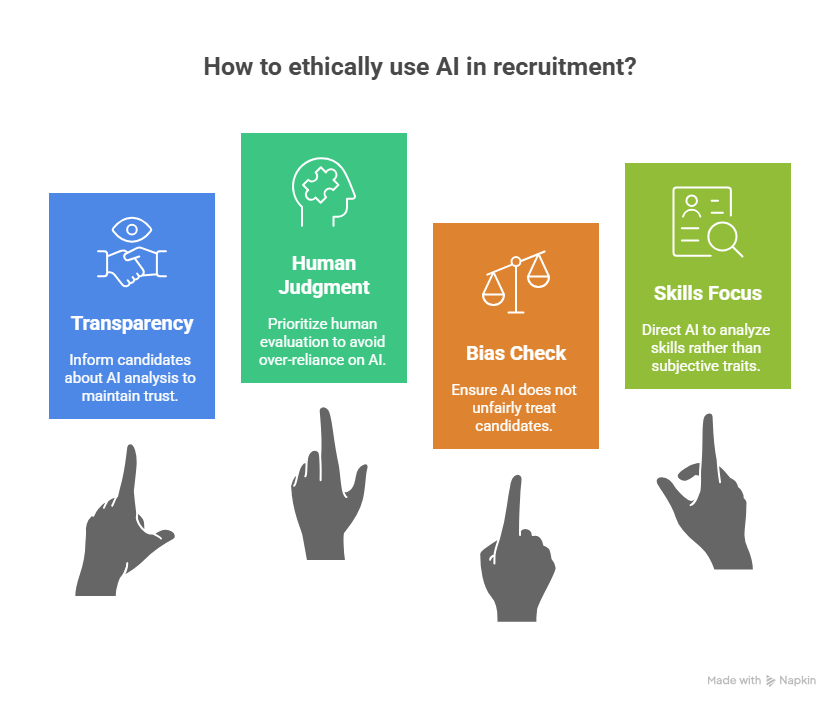
But there are some obvious concerns when it comes to using AI for recruitment. Here’s how you can deal with that:
- Tell Candidates: Always let candidates know if AI is analyzing their interviews.
- Prioritize Human Judgement: AI analysis should help you, not replace your own judgment. Think of it as just one piece of information.
- Check for Bias: Constantly check what the AI is doing to make sure it's not unfairly treating certain groups of people.
- Focus on Skills: Push the AI to analyze answers and real skills, not just subjective things.
Step 7: Predict Who'll Be a Great Fit
Use AI to get a sneak peek at whether a candidate will stick around and do well in the long run.
For example, you can use advanced prediction tools that go beyond basic matching, like Ideal or some parts of bigger HR systems.
Then compare a candidate's profile (skills, experience, even personality test results if you use them) with data from your current top employees in similar roles using AI.
Use AI to predict:
- Job Performance: How likely they are to rock the job based on what worked for past successful hires.
- Stay Rate: How long they might stay with the company.
- Culture Fit: How well they'll fit in with your company's values and work vibe (but define "culture fit" carefully to avoid bias!).
This gives your recruiters and hiring managers a bigger picture of a candidate's potential, beyond just their resume.
Step 8: Automate Follow-Ups and Offer Letters
AI can make the post-interview steps a lot smoother and faster for candidates.
Set up AI-powered systems in your Applicant Tracking System (ATS) or CRM to send routine messages automatically.
Here’s what it can do for you:
- Rejection Emails: Automatically send personalized (but template-based) "no thank you" type of emails to candidates who aren't moving forward. It keeps your company looking good.
- Interview Scheduling & Reminders: AI can send automated interview invites, calendar invites, and reminders to both candidates and interviewers.
- Offer Letter Creation: Based on approved templates and rules (like salary range or benefits for a specific role), AI can draft personalized offer letters. A human still gives the final OK.
- Onboarding Start: Once someone says yes to an offer, the AI can kick off the next steps for onboarding, like sending welcome info or starting background checks.
When you use AI in these smart ways, your recruiting team will spend less time on busywork and more time finding amazing talent. This means better hires and a stronger team overall!
What to Watch Out for When Using AI for Recruiting
AI is great for hiring, but it has some tricky parts. Here's what you need to keep an eye on to make sure it works well for you:
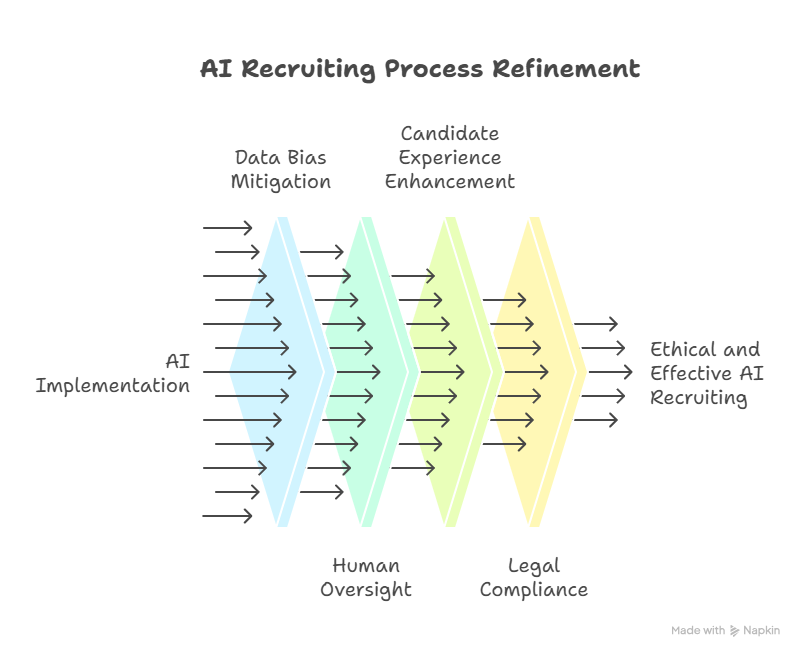
1. Biased Training Data
If the people you hired in the past weren't diverse, your AI might learn those same old patterns. It could then unfairly favor some candidates over others.
Here’s what you can do:
- Clean your data: Before you feed data to your AI, check it for biases. For example, if you mostly hired men for a certain role, try to fix that historical imbalance in the data the AI learns from.
- Use diverse data: Train your AI with lots of different examples. The more varied the data, the less likely the AI is to be biased.
- Audit regularly: Keep an eye on the AI's hiring suggestions. If you see it consistently overlooking certain groups, you know you have a problem to fix.
- Explain your criteria: Make sure the AI understands why certain candidates were successful, focusing on skills and performance, not just demographics.
2. Relying on AI Too Much
AI is a powerful tool to help you narrow down choices, but it doesn't make the final decision. If you let the AI do all the thinking, you might miss out on great people.
I do this to keep a balance:
- Keep humans in charge: Always have a human review the AI's suggestions. A person brings empathy, nuance, and common sense that AI can't.
- Use AI as a filter, not a judge: Think of AI as your super-fast assistant that gives you a shorter list. You still need to interview and assess the top candidates.
- Question the AI: If the AI consistently ranks a candidate low who looks good on paper, dig deeper. Maybe the AI missed something important.
- Focus on soft skills: AI is great with data, but humans are better at spotting things like communication style, teamwork, and cultural fit during interviews.
3. Bad Candidate Experience
If your AI interactions feel cold, robotic, or impersonal, candidates might get a bad impression of your company. This can hurt your reputation and make great people go elsewhere.
This is what you should do:
- Make it human-like: Design your AI's messages to sound friendly and helpful. Avoid jargon and overly formal language.
- Offer clear opt-outs: Let candidates know they can always talk to a human if they need to.
- Set expectations: Tell candidates upfront that they'll be interacting with an AI. This helps manage their expectations.
- Provide quick support: If a candidate has a problem with the AI, make sure a human can step in quickly to help.
- Mix it up: Use AI for initial screening, but bring in human recruiters for more personal interactions like interviews and follow-ups.
4. Legal Rules and Regulations
Governments are starting to put rules in place about how companies use AI in hiring. You need to know these laws, especially if you hire in places like the US or the EU, to avoid legal trouble.
To make sure your processes are compliant:
- Stay updated: Keep an eye on new laws about AI in hiring in all the regions where you recruit. Laws are changing fast!
- Talk to a lawyer: Get advice from legal experts who understand AI and employment law. They can help you make sure your processes are compliant.
- Document everything: Keep good records of how you use AI, including how you train it and how it makes decisions. This helps if questions or challenges come up.
- Be fair and transparent: Make sure your AI systems are fair and don't discriminate. Be ready to explain how your AI works if asked.
- Check for disparate impact: Even if your AI isn't designed to be biased, its outcomes might still negatively affect certain groups more than others. Regularly check for this and fix it.
Start Hiring Smarter with Lindy
Lindy makes it easy to automate the most time-consuming parts of hiring while keeping the human touch where it matters most. It lets you:
- Automatically screen and score resumes with customizable rules that match your job criteria
- Use smart AI agents to handle candidate pre-screening, scheduling, and follow-ups
- Optimize your job descriptions for clarity, tone, and search visibility in minutes
- Connect seamlessly with your existing ATS or CRM tools for a smoother workflow
- Maintain full transparency and compliance with audit-ready processes and human-in-the-loop controls
Hire faster. Hire better. Try Lindy for FREE today!
{{cta}}
Frequently Asked Questions
1. Is AI recruiting legal?
Yes, but it must follow data protection and employment laws. You need to be transparent with candidates, avoid automated decisions without human oversight, and ensure your AI doesn’t create discriminatory outcomes. Always review how your AI makes decisions and keep humans involved in all major hiring steps.
2. Can AI really reduce hiring bias?
Yes, AI can reduce hiring bias if the training data is clean and diverse. AI can enforce consistent, skills-based evaluation and reduce human bias. But if trained on biased data, it can amplify existing patterns. Regular audits, diverse training inputs, and clear scoring criteria are essential to ensure your AI promotes fair hiring practices.
3. Do I need a big budget to start using AI in recruiting?
No. Many AI tools, including Lindy, offer affordable entry points for small teams. You can begin with resume screening or automated candidate outreach without large upfront costs. These tools scale as you grow, so you can start small and expand only when needed.
4. Will AI replace recruiters?
No. AI supports recruiters by handling high-volume, repetitive tasks like screening, scheduling, and scoring. But real recruiting still requires human judgment like building relationships, assessing culture fit, and making final decisions. AI speeds up the process but doesn't replace the strategic role of recruiters.
5. How do I pick the right AI recruiting tool?
Identify your biggest bottleneck first, like resume overload, long time-to-hire, or poor candidate engagement. Then choose a tool designed to fix that specific issue. Prioritize platforms that integrate with your current systems, offer clear analytics, and let you customize workflows as your needs evolve.
6. How does the AI help the HR team to streamline candidate sourcing?
AI automates candidate sourcing by scanning multiple platforms, parsing profiles, and identifying top matches based on skills, job titles, and experience. It eliminates manual searching, ranks candidates, and delivers pre-qualified talent pools, saving HR teams hours and increasing sourcing accuracy across job boards, social media, and internal databases.
7. How do you match candidates using AI?
AI matches candidates by comparing their resumes, experience, skills, and behavior data against the job description and historical success data. It uses NLP to interpret context, score relevance, and rank candidates based on predictive job fit, helping recruiters focus only on those with the highest likelihood of success.
8. How will AI and social media revolutionize recruiting?
AI and social media together enable precision targeting, passive candidate sourcing, and automated outreach. AI can scan platforms like LinkedIn and GitHub for ideal profiles, score them instantly, and engage through tailored messaging, turning social networks into real-time, intelligent talent pipelines without manual effort.
9. How can I create my own AI assistant?
With Lindy, you can build your own AI recruiting assistant in minutes. Just describe the tasks like resume screening, pre-qualifying applicants, scheduling interviews and Lindy generates an agent to handle it. No coding needed. You can integrate it with job boards, CRMs, and calendars for a fully automated hiring flow.
10. What’s the best candidate sourcing tool in recruitment process outsourcing?
Lindy is ideal for RPOs because it combines candidate sourcing, outreach, screening, and scoring, all automated. It can search profiles across platforms, qualify leads using AI chat, and deliver ranked lists to your recruiters. It’s like adding an AI-powered sourcing team that works 24/7 without extra headcount.
11. How do you choose qualified AI trainers using recruitment platforms?
Use Lindy to screen AI trainer candidates by automating the matching process against critical skills like data labeling, prompt engineering, or model evaluation. Lindy’s agent can shortlist profiles, score technical fit, and even schedule assessments, helping you source high-quality trainers faster from any platform or talent pool.
12. How do I integrate AI candidate scoring into my current recruitment workflow?
You can integrate AI candidate scoring by connecting tools like Lindy to your ATS or resume database. Lindy analyzes resumes, matches them against your job criteria, and auto-scores each candidate. Scores can be synced back to your workflow, enabling recruiters to prioritize interviews without reworking their process.