


15 Ways You Can Use AI as a Personal Assistant to Save Hours


I use AI as a personal assistant every day, and it has taken over more than half of the tasks I had to do manually. Here are 15 ways you can use AI every day to improve productivity and save time on tedious tasks.
What is an AI personal assistant?
An AI personal assistant is software that uses artificial intelligence to manage tasks, answer questions, and take actions on your behalf. It can organize your calendar, draft emails, summarize meetings, set reminders, research information, and automate repetitive work.
Most AI assistants combine natural language processing with automation. You can give instructions in plain English, and the system can interpret the request, make decisions, and complete tasks across your apps.
How to use AI as a personal assistant?
To use AI as a personal assistant effectively, set clear goals for the assistant, integrate the tools you use every day, and personalize the setup. Provide specific instructions, use cases, and context, and don't hesitate to offer feedback and refine your approach as you go.
AI assistants like Lindy can let you do this easily. You get 40+ ready-to-use AI assistant templates, 4,000+ integrations, and a 7-day free trial to let you test the tool before upgrading to the paid plans.
My 15 favorite ways to use AI as my personal assistant
After tinkering with multiple AI tools, I have shortlisted the top 15 use cases that make the most impact for teams and individuals. Here are the top ways to use AI as your personal assistant, categorized by their domains:
Email and communication management
1. Use AI to manage emails automatically
Manually managing your inbox consumes a lot of time. I’d spend hours every week sorting newsletters, replying to repetitive questions, and following up on threads people forgot to answer. And amidst this chaos, I also missed messages from my clients and team members.
What AI can do:
- Auto-sort emails by priority, sender, or intent
- Flag high-priority messages so you never miss them
- Draft replies that sound like you
- Send automatic follow-ups when someone doesn’t respond
- Unsubscribe you from junk or archive low-priority stuff
You connect your email account, like Gmail or Outlook, to an AI tool. It reads your inbox patterns, like who you reply to, how fast you respond, and what content matters to you. Based on that, it sorts incoming emails automatically.
If someone important emails you, an AI assistant can flag the message or move it to the top of your inbox. If a newsletter keeps landing in your inbox but you never open it, the AI assistant can archive it or unsubscribe you automatically.
You can also ask the AI assistant to summarize long threads. For example, you can ask, “What’s the key point from this thread with John?” The assistant can also draft quick replies like, “Reply yes and ask for the agenda.”
An AI assistant like Lindy can automate most of your email workflows. You start by connecting your email account, such as Gmail or Outlook, and giving the assistant access to your inbox.
For example, Lindy can triage incoming messages, draft replies in your voice, and send follow-ups when someone doesn’t respond. You can also ask Lindy to sort emails, detect intent, search your documents for answers, and update your CRM after sending a response.
2. Translate conversations and documents instantly
AI translates conversations and documents instantly while preserving tone, formatting, and meaning. If your teams or clients are from different countries, AI can be a time-saver. You no longer need to rely on clunky apps or wait for human translators.
What AI can do:
- Translate entire documents or chats in real time
- Preserve tone, layout, and original formatting
- Handle complex language, industry terms, and cultural idioms
- Let you edit translations inline before sending
- Draft multilingual emails without switching tools
- Support major languages, often inside the tools you already use
You can upload a document or paste text into your AI tool, and it instantly gives you a clean translation with proper phrasing and formatting.
AI can read the context, so the idioms and technical terms make sense in the target language. You can even translate ongoing conversations like live chats or support tickets without breaking the flow.
Some tools offer voice dubbing or let you preview translated documents side-by-side so you can make sure everything looks and sounds right before sharing it.
Lindy's PDF translation tool can translate documents into over 50 languages and strives to preserve most of the original formatting, including tables and layout. For highly complex documents, always review the final version to ensure formatting accuracy.
3. AI for speech-to-text
When you're on the go, too tired to focus, or in the middle of hands-on work, typing important ideas isn't practical. I would always forget tasks I thought of mid-cooking or struggle to write down ideas while walking.
That’s where an AI voice-to-text tool can help:
- Convert spoken words into text
- Draft emails, meeting notes, or reminders without touching the keyboard
- Add calendar events using natural-language voice commands
- Control productivity tools and trigger workflows with your voice
- Understand different accents, tones, and speaking styles with high accuracy
- Save and organize voice memos automatically
The AI listens to what you speak. It then uses automatic speech recognition (ASR) and natural language processing (NLP) to turn your words into actionable text.
It can understand your command, like “Remind me to call Alex tomorrow at 3 PM,” know what the action item is, add that task to your calendar, and notify you about it. You can draft documents, fill out forms, or even control tools like email and Slack, all by voice.
AI tools can also understand context, so you won’t have to repeat yourself constantly. It’s fast, reliable, and ideal for capturing thoughts when your hands are busy or your brain is moving faster than your fingers.
Lindy can transcribe voice memos, calls, or meetings with high accuracy. It can generate summaries, highlight tasks, and trigger follow-up actions across apps. You can customize note formats and workflows depending on your meetings and other tasks.
Sales, growth, and recruiting
4. Use AI for lead generation and sales outreach
I used to spend hours searching for leads on LinkedIn, copying contact information into spreadsheets, and writing personalized cold outreach emails from scratch.
But now, I use an AI that goes through the web, social media, and my CRM to identify prospects who fit my ideal customer profile, then crafts and sends personalized messages at scale.
What AI can do:
- Find leads that match your ICP (ideal customer profile)
- Enrich contacts with verified emails, titles, and company info
- Personalize messages using tone, interests, and activity
- Score leads based on conversion likelihood
- Send automated follow-ups and track engagement
AI tools connect with your CRM, email, LinkedIn, and other platforms you already use. They scan public data like job titles, tech stacks, engagement patterns, and match it to your customer criteria.
Once you have a list, AI drafts personalized emails for each lead, using the recent LinkedIn activity or company updates. From there, it runs outreach sequences, sends the first email, waits a few days, and then sends a follow-up while tracking the opens, clicks, or replies.
Over time and with constant feedback, AI can get better at predicting which leads are worth chasing. So, you spend less time guessing and more time closing.
For example, Lindy’s AI Sales Assistant can help you generate leads, qualify and enrich them, and launch automated outreach.
Using enrichment tools like People Data Labs and CRM integrations, Lindy builds curated lead lists, sends personalized messages, and follows up based on behavior without constant human oversight.
5. Manage your hiring and recruiting with AI
AI assists you in managing hiring and recruiting by automating tasks such as resume screening, candidate sourcing, and interview scheduling. This improves efficiency and reduces bias in the hiring process.
By automating recurring tasks, recruiters can focus on strategic tasks such as candidate engagement and relationship building.
What AI can do:
- Screen resumes instantly based on skills, experience, and role fit
- Source candidates from job boards, LinkedIn, and internal databases
- Match applicants to the right openings using job description parsing
- Automate interview scheduling and reminders
- Run chatbots to answer FAQs and pre-qualify applicants
- Reduce bias by focusing on data-driven insights over gut instinct
You upload your job description, and the AI starts looking for candidates across your preferred channels like LinkedIn, Indeed, your ATS, or internal pipelines.
When applications come in, the AI compares resumes against the role’s requirements. It highlights the best matches and flags missing information or misfits
You can also set up a chatbot that talks to candidates directly. It can answer basic questions, check the availability for both the recruiter and the candidate, and book interviews.
And since the AI evaluates based on structured data like experience, keywords, and education, it removes some of the human bias that creeps into early screening.
Lindy automates the recruiting tasks, like job posting, candidate sourcing, outreach, and follow-up. You can customize the workflows and configure the AI agents to screen resumes, generate outreach sequences, and book interviews automatically.
Productivity and daily planning
6. Use AI to organize your calendar and schedule meetings
Busy professionals deal with tasks, meetings, and work commitments every day. Organizing your calendar with such a tight schedule can take up a lot of your time every day. AI can help with these tasks by connecting with your calendar, finding meeting slots, and managing scheduling.
Instead of going through the invites, double-bookings, and last-minute changes, your AI assistant can find the best time slots, manage conflicts, and even suggest breaks.
What AI can do:
- Analyze your calendar to find the best meeting times
- Automatically book or reschedule events when conflicts come up
- Suggest time blocks for focus work, lunch, or breaks
- Interpret natural language like “Schedule a call with Sam next Tuesday”
- Sync across Google, Outlook, iCloud, and team calendars
- Learn your habits to proactively optimize your weekly flow
AI scheduling assistants connect with your existing calendars, like Google, Outlook, or Apple, and analyze your availability, meeting preferences, and workload.
They use algorithms to suggest optimal meeting times, automatically reschedule when conflicts occur, and block time slots for deep work or personal routines.
Some AI tools also support voice commands that understand your natural language requests like “Book a call with Sam next week” and handle all the logistics, from sending invites to adding video links.
AI simplifies scheduling by learning your work patterns, like when you prefer meetings or when you prefer silent hours. Then, it optimizes your calendar accordingly.
Lindy’s Calendar Assistant and Meeting Scheduler can work together to find the best meeting times and book events for you. You can add an AI Meeting Assistant to join calls, transcribe them, create summaries, and send follow-up notes.
Lindy lets you automate the entire meeting workflow, including agenda preparation and CRM updates, without a complex setup that suits non-technical users.
7. Boost productivity with AI-generated to-do lists and reminders
AI can help you be more productive by managing tasks, to-do lists, and reminders. They can break large goals into smaller action steps, prioritize based on deadlines, and remind you about important tasks or upcoming meetings.
What AI can do:
- Generate to-do lists based on your schedule and workload
- Extracts tasks from emails, calendars, and project tools automatically
- Prioritize based on deadlines, urgency, and effort
- Send timely reminders and ask if you need to reschedule or block time
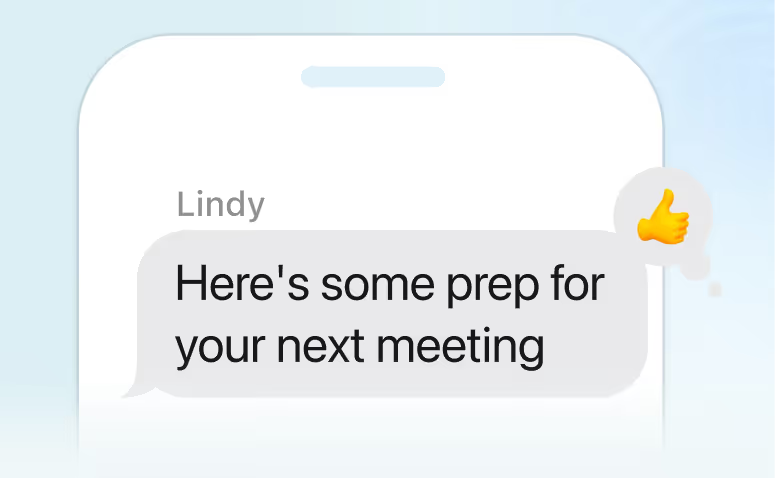
- Surface preparation work for upcoming meetings so you don’t miss anything
You can ask AI to plan your day or remind you what's due today. Many AI assistants can integrate with your calendar, email, notes, and other productivity tools with your permission. They gather information from these sources to help you build a prioritized task list with due times and reminders.
If something is overdue, it flags it. If a meeting’s coming up and you haven’t prepped, it tells you.
And if you need to move a few tasks around, it’ll suggest what you can move or which times you can block for focus.
Lindy’s AI Personal Assistant can scan for tasks in your inbox, Slack, and meeting notes, organize them by priority, and send reminders. You can ask it to plan your day, and Lindy generates a to-do list from data across your tools.
8. Use AI for travel
AI travel assistants can act like a 24/7 travel planner. They can help you plan, organize, and update your itinerary, so you don’t have to struggle with delays or last-minute changes.
What AI can do:
- Generate personalized itineraries based on your trip goals
- Recommend flights, hotels, restaurants, and activities
- Suggest the best travel windows based on price and availability
- Sync travel plans with your calendar or task manager
- Track booking confirmations and send reminders
- Adjust plans in real time if flights or events change
You start by telling the AI assistant where you’re going and how long you’ll be traveling. The assistant then builds a complete itinerary with flights, lodging, activities, and restaurant reservations based on your preferences.
If you connect it to your calendar, the AI blocks off travel times, sets reminders, and even moves meetings around if needed.
The AI assistant can also use data from sources like Google Maps, TripAdvisor, and event calendars to suggest things to do. If a flight is delayed or a gate changes, the assistant updates your itinerary automatically and sends you a notification.
For example, Lindy’s Travel Assistant can help you plan entire trips, from generating itineraries and tracking bookings to syncing travel plans with your calendar. It can notify you of changes, check-in reminders, and even reschedule meetings if you’re traveling.
Research, data, and technical work
9. Use AI for coding
Coding has always been a tedious task that required you to Google the error messages, search through Stack Overflow, and duct-tape fixes from different blog posts. It took forever just to get one function working right. AI coding assistants help speed this process up.
What AI can do:
- Autocomplete code as you type in your editor
- Generate full functions or components based on your prompt
- Debug code by explaining what’s broken and how to fix it
- Translate plain-language ideas into working scripts
- Explain complex code step-by-step so you actually learn it
- Save time by automating documentation and testing logic
AI coding assistants connect directly with editors like VS Code, JetBrains, or browser-based development environments.
Start typing a function, and the assistant autocompletes it. If you get an error, you can ask in plain English, like “Why is this loop breaking on line 12?”
The AI reads the logic, traces the issue, and gives you an explanation with suggested fixes. You can even ask it to clean up messy code, rewrite a code snippet for better performance, or help you learn new libraries.
Many developers treat AI coding assistants like an extra teammate who can review code, suggest fixes, and explain complex logic.
For example, Lindy’s Coding Assistant helps troubleshoot bugs, explain code, and generate complete scripts or components. It’s not an IDE but acts more like a conversational coding partner that works well for planning, debugging, and documentation.
You can now create full-stack apps by describing them in natural language using Lindy Build. You don’t need coding skills, as Lindy also debugs the code with its QA agents.
{{templates}}
10. AI for research
Researching topics and finding citations can take weeks, especially for academic and legal research. AI research assistants speed this process up and help surface relevant sources from across the internet.
What AI can do:
- Scan long documents and pull out key insights
- Summarize PDFs, articles, or transcripts in seconds
- Highlight pros, cons, arguments, or data points
- Answer follow-up questions using the source content
- Compare multiple documents side-by-side
- Turn raw text into outlines, tables, or bullet summaries
You start by uploading a document, pasting text, or sharing a link. The AI assistant reads the content and highlights key takeaways, arguments, and supporting data.
The AI reads everything in context, highlights the most relevant parts, and gives you a concise, easy-to-understand summary. If you need more details, you can ask specific follow-ups about pricing or the pros and cons from the research document.
It’s like having an intern who is highly accurate, and reads, highlights, and briefs you about the topic.
AI research assistants, like Lindy’s Research Assistant, can scan global databases, long PDFs, and web pages for quick data collection. It can then draw insights from that data and create summaries for you. You can also upload files or paste links, and Lindy can summarize content, create tables, and answer follow-up questions.
11. Use AI for data entry
Data entry and analysis to uncover trends and insights is one of the most draining and demanding tasks. AI data assistants can automate much of this work while improving accuracy and uncovering useful patterns.
What AI can do:
- Automatically extract data from emails, forms, PDFs, or images
- Clean and format messy spreadsheets without manual edits
- Fill in missing values based on patterns or rules
- Tag and categorize feedback or survey responses using NLP
- Sync structured data into tools like Notion, Airtable, or CRMs
- Turn raw inputs into usable reports and dashboards
You start by feeding the AI assistant raw data, such as CSV files, emails, or data from connected applications. It reads the inputs, cleans formatting, splits fields, corrects entries, and fills in gaps.
If it’s unstructured text, like email threads or survey responses, the AI scans for patterns, extracts relevant details, and converts it into a structured format like a table or tagged entry.
The AI Data Entry Assistant by Lindy can read data from emails, forms, spreadsheets, and PDFs, and update your data entry and analysis tools automatically. It also integrates with platforms like Notion, Airtable, and Salesforce. You can extract structured data from unstructured sources and feed it into your database or CRM.
Content and social media creation
12. AI for social media management
Keeping up with social media is a full-time job. Writing posts, finding images, responding to DMs, and checking analytics takes a lot of time and effort. But there are many AI-powered social media tools out there that solve this problem.
What AI can do:
- Generate captions, hashtags, images, and videos
- Schedule posts at the best time for your audience
- Suggest trending topics or content formats
- Reply to DMs and comments with personalized responses
- Analyze what’s working and what isn’t, then adjust strategy
- Automate tasks across platforms like Instagram, LinkedIn, and X (or Twitter)
You connect your social accounts to an AI tool. Based on past performance and audience data, it suggests post times, generates content, and helps you plan your calendar.
Say you’ve written a blog. Now, AI can chop it up into quotes, captions, or carousels that you can post on each platform.
It can even scan competitor accounts or trending hashtags to recommend what to post next.
Once you post the content, the AI monitors engagement, replies to comments with tone-matched messages, and sends weekly insights so you know what’s working and what needs tweaking.
Here are some of the best AI tools for social media:
- Lately: Uses AI to turn long-form content, like blogs or podcasts, into social media posts, schedules them for optimal times, and analyzes engagement to suggest improvements.
- Buffer: Automates scheduling and publishing across multiple platforms, with AI analytics to help you understand your audience and boost engagement.
- Ocoya: Combines content creation, scheduling, and AI caption and hashtag suggestions, making it easy to keep your social feeds lively and on-brand.
13. Use AI for writing blogs
Staring at a blank document is the worst feeling for any writer. Coming up with ideas, structuring the piece, and getting the tone right takes time. And when you have other tasks on your plate, writing gets compromised. AI writing assistants help speed up this process.
What AI can do:
- Generate drafts from a topic, prompt, or rough outline
- Rewrite sections to match your tone or brand voice
- Suggest blog titles, intros, conclusions, and call-to-actions
- Help with SEO by offering keyword suggestions and content structure
- Repurpose existing content into newsletters, tweets, or summaries
- Speed up ideation so you’re never stuck at “what should I write about?”
You start by prompting the AI assistant with a topic, such as writing a blog about the benefits of remote work. It will respond with a complete draft or let you build it step-by-step, like a headline, intro, bullet points, and more.
You can guide it further by specifying tone, like conversational or professional, length, or even audience type.
For recurring formats like product descriptions or listicles, you can create reusable templates. Once the draft’s ready, you can scan it to tweak accuracy, add personal flair, and make sure it aligns with your voice.
For example, Lindy offers AI content tools that repurpose long-form content into blog posts. It also offers prebuilt workflows like “Turn Podcasts into Blog Posts”, “Customer Case Study Drafter”, and “Proposal Drafter”.
You can upload transcripts, newsletters, or past recordings, and Lindy turns them into well-structured, publish-ready drafts without needing extensive formatting or research. It’s ideal for marketers and founders who want consistent content without starting from scratch.
Healthcare and medical workflows
14. Use AI in healthcare
Healthcare professionals spend way too much time on paperwork. AI healthcare assistants help offload these tasks so clinicians can spend more time with patients.
What AI can do:
- Automate appointment booking and reminders
- Transcribe doctor-patient conversations into structured notes
- Auto-update electronic health records (EHRs)
- Answer common patient questions via chat or voice
- Help patients check lab results or request refills
- Reduce manual data entry and admin load for clinics
AI medical assistants connect with your EHR system and calendar to manage bookings and follow-ups. You can ask AI to schedule a check-up next Thursday, and it’ll check the availability, book the slot, send reminders, and update the calendar.
During a visit, the AI listens and transcribes the conversation, then organizes it into SOAP notes or other formats. Patients can use AI assistants to check test results, refill prescriptions, or get answers about basic procedures, often through chat, email, or even voice-based apps.
For example, Lindy’s Medical Scribe joins patient visits, transcribes conversations, and auto-generates structured SOAP notes. It integrates with EHR systems and is compliant with standards like HIPAA and PIPEDA.
15. AI for medical SOAP notes
Healthcare professionals know how time-consuming documenting SOAP (Subjective, Objective, Assessment, Plan) notes can be. AI tools can automate much of this process while keeping clinicians in control of the final notes.
What AI can do:
- Transcribe live or recorded patient sessions accurately
- Automatically structure notes into Subjective, Objective, Assessment, and Plan
- Detect clinical terminology and insert it into the right sections
- Flag missing data or inconsistencies for review
- Pull in relevant EHR data to enrich documentation
- Allow for easy manual edits before saving or sending
You start by setting up an AI assistant to record or listen during a consultation. During the session, it can identify clinical phrases and slot them into a SOAP note template.
After the session, the AI can cross-check data with EHR systems to fill in context or highlight gaps. You get a complete, structured draft that you can adjust or edit manually before uploading or sharing the final note.
You can use Lindy's Medical Scribe to generate structured SOAP notes from live or recorded conversations. It supports customizable templates for various specialties and integrates directly with EHRs. You can also create referral letters, billing summaries, and patient updates from your sessions.
Top 7 AI personal assistant tools in 2026: At a glance
After using dozens of AI assistants, I shortlisted these 7 tools that make the most sense for everyday business and personal work. Here’s how they compare:
{{cta}}
What to look for in an AI personal assistant
If you’re looking for an AI personal assistant, you should always check for the basic features and capabilities that make it a good assistant. I’ve narrowed down the ones that matter the most:
- Task automation: The assistant should take action, not just respond to prompts. It should send emails, create tasks, update documents, and move data between apps without manual copy-pasting.
- Calendar and scheduling support: A strong AI assistant should manage meetings, prevent double bookings, block focus time, and send reminders. If it can’t handle scheduling, it won’t reduce much operational load.
- Email and communication management: Look for tools that draft replies, summarize threads, prioritize messages, and manage follow-ups. The goal is to reduce inbox friction, not create more editing work.
- Integrations with your existing tools: Your assistant should connect with Gmail, Calendar, Slack, your CRM, and project management tools. Without integrations, it becomes another isolated app.
- Context and memory: The assistant should remember past instructions, understand preferences, and maintain context across tasks. That’s what separates a chatbot from a true assistant.
- Human oversight and control: You should be able to review actions, approve messages, and control permissions. Automation works best when you can see and guide what’s happening.
Use Lindy’s AI as your personal assistant
Lindy uses conversational AI to chat, lead gen, meeting notes, and customer support workflows. It acts as your personal assistant that can respond to your requests instantly and accurately.
You get hundreds of prebuilt and customizable templates, along with 4,000+ integrations to launch workflows fast.
Here's why Lindy is an ideal personal assistant:
- Just tell it what you need: You don’t need technical skills or a complicated setup. Just text Lindy in plain English, and it handles the task, whether that’s sending a follow-up, updating your CRM, or organizing notes from a meeting.
- Set up tasks for Lindy: Describe the task you want to automate in everyday language. For instance, ask Lindy to find leads from websites and sources like People Data Labs, send emails to each lead, and schedule meetings with members of your sales team.
- Supports tasks across different domains: Lindy handles meeting notes, website chat, lead generation, and content creation, helping you reduce manual work in training, content, and CRM updates.
- 24/7 agent availability for async teams: You can set Lindy to run 24/7 for round-the-clock support, perfect for async workflows or round-the-clock coverage.
- Support in 30+ languages: Lindy supports phone calls in over 30 languages, letting your team handle calls in new regions.
- Add Lindy to your site: Add Lindy to your site with a simple code snippet, instantly helping visitors get answers without leaving your site.
- Cost-effective: You can try Lindy’s 7-day free trial to see how it fits your workflows. The paid version starts from $49.99/month and offers a ton of functionality.
Try Lindy’s free trial and automate your first workflow.
Frequently asked questions
What is the best personal assistant tool?
Lindy is the best personal assistant tool as it supports email handling, meeting notes, task follow-ups, lead research, and document workflows. You can customize each assistant to match your routine and connect it to tools like Gmail, Google Calendar, and CRMs. Lindy works well for people who want one assistant for work and personal tasks.
How do you use an AI assistant?
You use an AI assistant by assigning it clear tasks and connecting it to your tools. Start by choosing an assistant that fits your main needs, such as writing, scheduling, or task management.
Next, connect it to apps like email, calendar, or chat tools. After setup, give direct instructions like “summarize this email thread” or “schedule a meeting for next week.” Regular use helps the assistant adapt to your preferences over time.
What can an AI assistant do?
An AI assistant handles routine tasks that take time and attention, like organizing inboxes, creating reminders, scheduling meetings, and summarizing documents. Many tools also extract data from files, translate text, draft emails, and create to-do lists.
Some assistants track habits like meeting preferences or writing style and use that context to improve suggestions.
How can AI help at home?
AI helps at home by reducing planning and reminder work. It can manage medication reminders, grocery lists, and smart home devices.
It keeps track of details so you spend less time remembering tasks and more time on rest or personal goals, like family scheduling, budgeting, meal planning, and home projects.
How do you use ChatGPT as a personal assistant?
You use ChatGPT as a personal assistant for writing emails, summarizing articles, planning schedules, and brainstorming ideas. When you connect ChatGPT to tools like Notion or Zapier, it supports recurring tasks and data organization.
Clear instructions lead to better results, especially when you describe the outcome you want.
Can AI assistants see user screens?
AI assistants do not monitor screens by default and can only see your screen when you give permissions. Most assistants access data through connected apps like email or calendars rather than live screen views.
Some advanced platforms support screen-based context for tasks like form filling or onboarding. These features require manual setup and explicit approval.










Blog
Related Articles
.avif)
.avif)
%20(1).png)

%20(1).png)


The AI assistant that runs your work life
Lindy saves you two hours a day by proactively managing your inbox, meetings, and calendar, so you can focus on what actually matters.
