How to Create a B2B Go-to-Market Strategy With AI?
Jack walked through building a B2B go-to-market strategy, covering ICP definition, unique value proposition development, and multi-channel campaign execution across sales and marketing.


If you’ve got a great product but don’t know how to get it into the hands of the right businesses, this guide is for you.
I’m going to help you build a step-by-step Go-to-Market (GTM) strategy.
Let’s break it down from scratch.
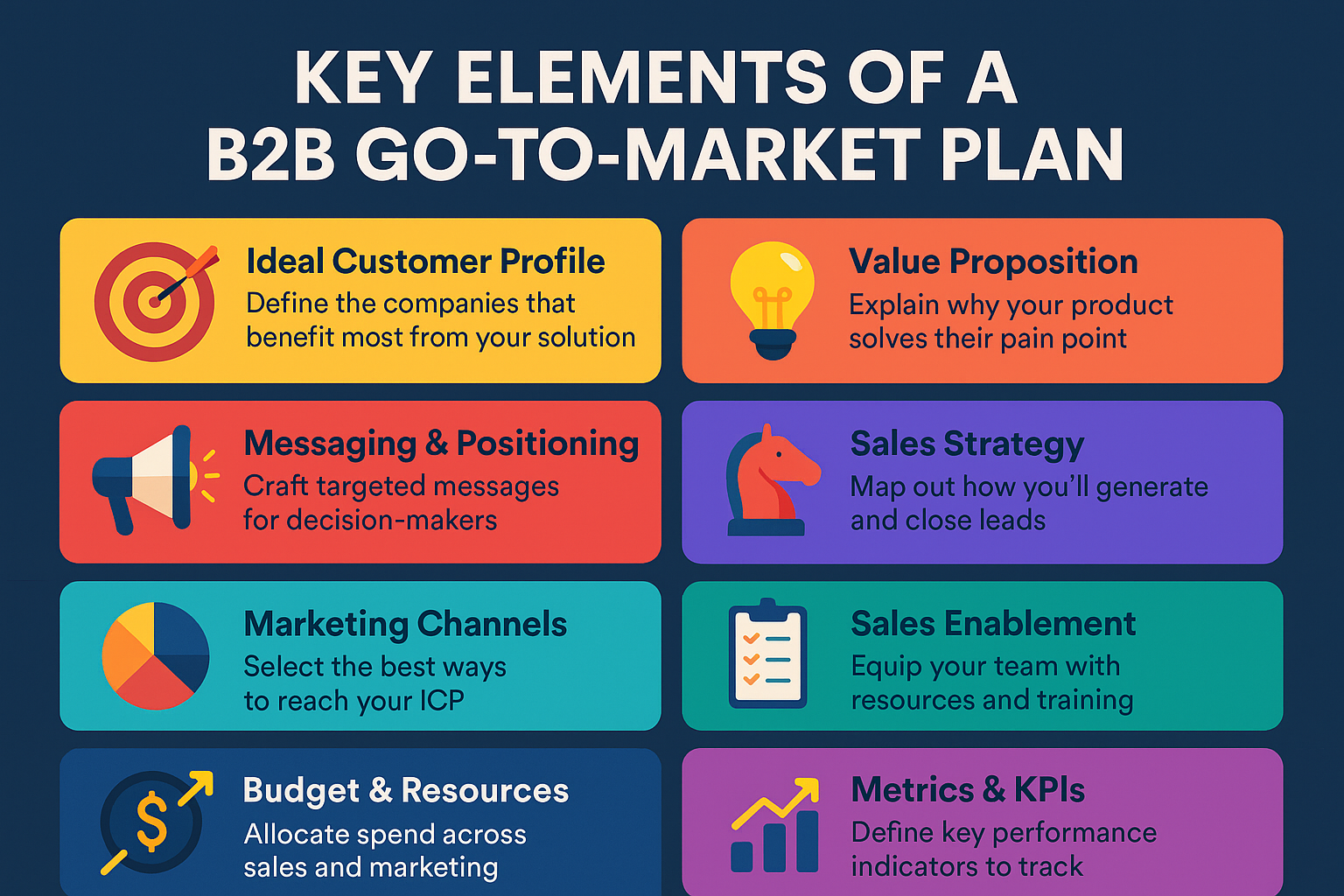
Step 1: Define Your ICP (Ideal Customer Profile)
Your ICP is the foundation of your entire go-to-market strategy.
If you get this wrong, everything else (messaging, targeting, sales) becomes harder and more expensive.
Let’s break this down step by step.
1. Start with Firmographics – The Basics
Find out answers to these questions:
- What industry are they in? (e.g., B2B SaaS, FinTech, Manufacturing)
- How big is the company? (e.g., 50–200 employees, $10M–$50M ARR)
- Where are they located? (e.g., US West Coast, EMEA: UK + Germany)
- What’s their company structure? (e.g., flat, siloed, or rapidly scaling)
Pull this data from your CRM (like Salesforce). Use Lindy to scan existing deals, firmographics, and buyer behavior.
2. Map Pain Points & Strategic Goals
Go beyond features and try to understand what problems your product solves.
Ask:
- What urgent, recurring problem does the buyer face?
- Example: “Our manual compliance process takes 40+ hours/month and causes errors.”
- What’s the impact of not solving it?
- Lost revenue, inefficiency, compliance risk, churn, employee burnout
- What are their bigger goals?
- Reduce costs, improve efficiency, increase market share, lower churn
Use sales call notes, survey data, and customer support logs to find recurring pain points.
3. Understand Their Tech Stack and Buying Environment
Look at:
- What tools they already use (e.g., Salesforce, Slack, Marketo)
- Whether your product integrates easily or replaces an existing tool
- Their buying behavior: are they budget-conscious or premium buyers?
This helps identify positioning, integration angles, and messaging.
4. Identify Trigger Events – The Timing Factor
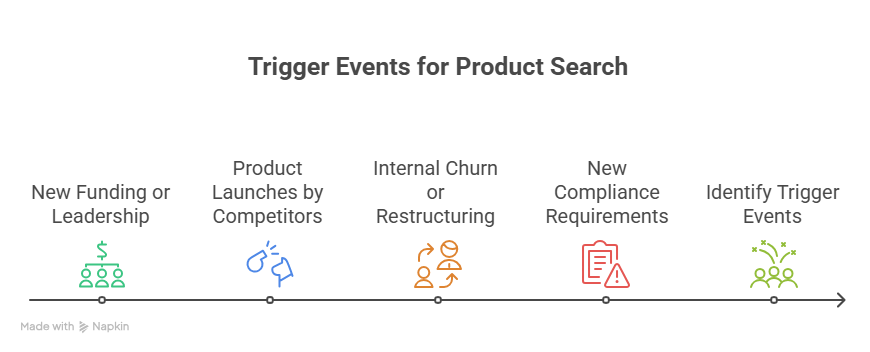
Figure out what events prompt them to start looking for a product like yours.
Here are a few examples:
- New funding or leadership (e.g., VP of Sales, CTO)
- Product launches by competitors
- Internal churn or restructuring
- New compliance requirements
These triggers help you time your outreach and prioritize accounts.
5. Segment Accounts Like a Pro
Break down accounts based on:
- Company size
- Industry
- Pain point severity
- Buying process role
Use this segmentation to build tailored nurture tracks and personalized outreach campaigns.
6. Map the Buying Committee
In B2B, you're rarely selling to just one person.
Identify:
- Who makes the final decision (e.g., CTO, VP of Ops)
- Who influences it (e.g., end-users, IT, legal, finance)
- Their unique motivations (e.g., sales want speed, legal wants compliance)
- The language they use (e.g., "reduce churn" vs. "increase LTV")
Use tools like LinkedIn and ZoomInfo to map org charts and track stakeholder roles.
7. Track High-Intent Buying Signals
Watch for signs that indicate active interest:
- Multiple visits to pricing or demo pages
- Long time spent on key product pages
- Inbound requests from several people at the same company
Set up Lindy to automatically flag high-intent leads and alert your team.
8. Use Social Listening for Feedback Loops
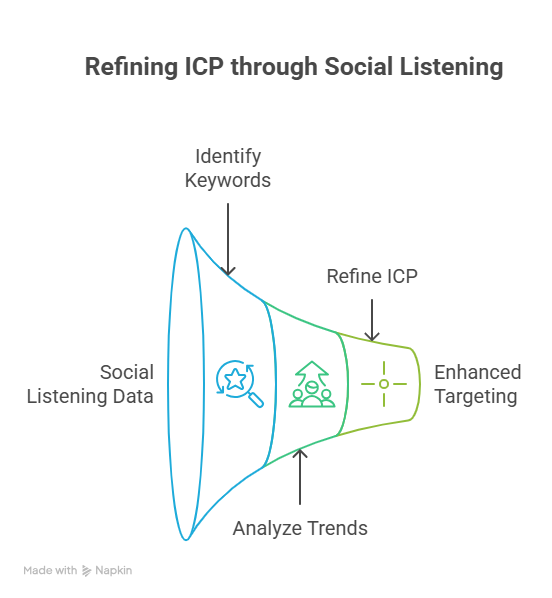
Monitoring stuff like this can help:
- Keywords tied to your product category or competitors
- Trends in complaints and unmet needs across review platforms or forums
Feed these insights back into your ICP to constantly refine your targeting.
9. Run the Final Litmus Test
Ask: “If I had 100 leads that matched this ICP, would at least 20 realistically buy?”
If the answer is no, your ICP needs more refinement.
10. Document and Share Internally
Create a centralized document that clearly defines your ICP and buyer personas.
Your sales, marketing, and success teams should all refer to this before planning any outreach or campaign.
You should be able to spot your ICP instantly on LinkedIn or at a conference and say, “That’s our ideal customer.”
Use Lindy to enrich this profile with firmographics, recent activity, and email-ready outreach insights.
{{templates}}
Step 2: Test Your Core Assumptions Before Going All In
Before you invest heavily in building elaborate marketing funnels, hiring a sales team, or spending months on product development based only on your GTM plan, validate your core assumptions.
Is there genuine market demand for what you're offering, presented in the way you plan to offer it?
Think of this as de-risking your GTM strategy. You're looking for market pull, not just polite nods.
How to test and validate:
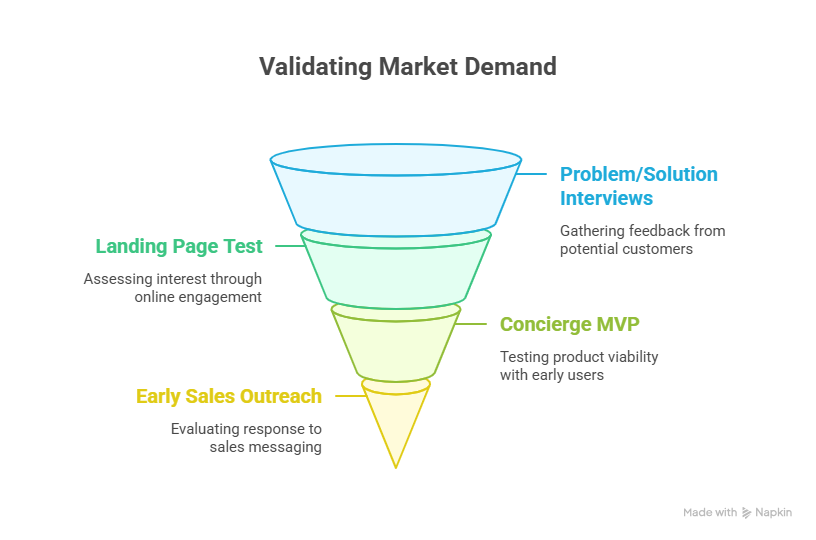
1. Problem/Solution Interviews
- Reach out to 20–30 people who fit your ICP (use LinkedIn, personal networks, industry groups).
- Don't pitch. Ask for 15–20 minutes of their time to discuss the problems they face in the area your product addresses. Listen intently.
- Then, briefly introduce your proposed solution concept and gauge their reaction. Is there excitement? Skepticism? What are their immediate questions or concerns?
- Key questions: "How are you solving this today?" "What do you like/dislike about current solutions?" "If a solution like [yours] existed, would that be valuable?" "What would make this a must-have for you?"
2. Simple Landing Page Test
- Create a basic landing page that clearly articulates your value proposition (from Step 3).
- Include a clear Call to Action (CTA), e.g., "Sign up for early access," "Request a demo," "Download our guide."
- Drive a small amount of targeted traffic to it (e.g., $200-$500 in LinkedIn Ads or Google Ads aimed at your ICP).
- Track clicks, sign-ups (conversions), and bounce rate. Are people engaging? Are they taking the desired action? This tests your messaging and initial interest.
3. "Concierge" MVP or Beta Program
- Offer a limited, early version of your product/service (even if parts are manual on your end initially – the "concierge" part) to a handful of ideal customers.
- Charge for it, even a nominal amount, to test willingness to pay.
- Talk to every single user. Get detailed feedback. What do they love? What's confusing? What's missing? How are they actually using it?
4. Early Sales Outreach (Pre-Launch)
- Craft a few compelling cold emails based on your ICP and messaging.
- Send them to a small, targeted list.
- Are people replying? Are they curious? Are they booking discovery calls? This tests the resonance of your outreach messaging.
Use this data to refine your ICP, messaging, product roadmap, and overall GTM strategy.
Step 3: Develop Your Unique Value Proposition
You can’t just be “another option.” Your prospects already have tools in place, or are being pitched by your competitors.
You need a clear, direct statement that shows why you’re the best choice.
A strong, unique value proposition (UVP) that separates your brand from the pack.
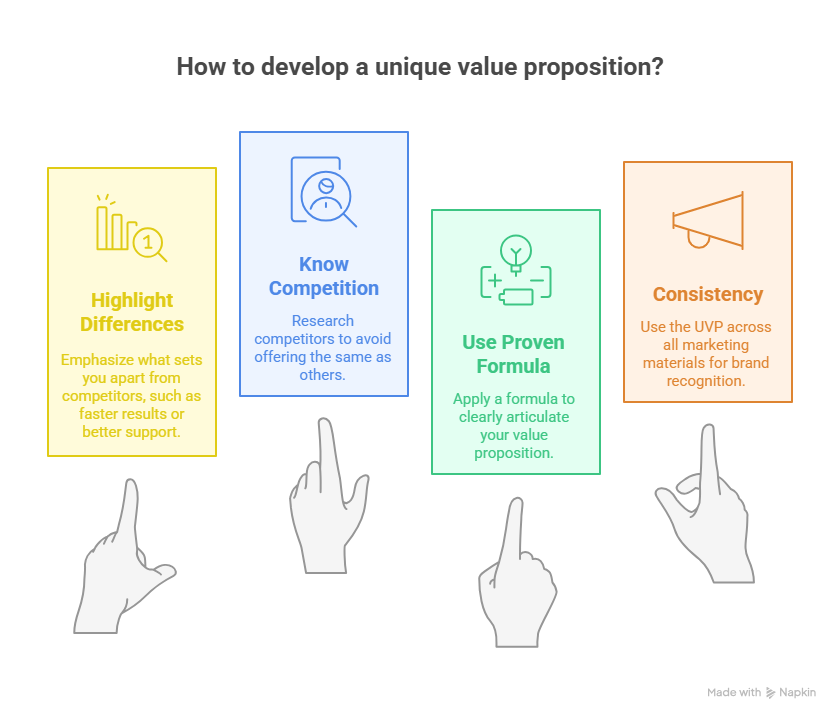
Here’s how you can tell your prospects that you’re better than their current solution.
- Highlight what makes you different: Dive into what sets you apart from competitors. Maybe you offer faster results, better support, or an easier integration process. Whatever it is, make sure it’s crystal clear.
- Know your competition: Run some competitive research and see what’s out there. The last thing you want is to promise something everyone else is already doing.
Agents like Lindy’s HubSpot integration can help you understand competitor performance, product offerings, and even their customer satisfaction levels.
Use that insight to build a UVP that makes your prospects say, “Why haven’t I switched sooner?”
Here’s a proven formula:
“We help [your Ideal Customer Profile] achieve [key outcome] by providing [your unique approach], unlike [alternative], which results in [measurable benefit].”
Example:
“We help fintech startups (50–200 employees) struggling with manual, time-consuming compliance reporting achieve effortless compliance by automating data collection and report generation, without needing any code. Unlike expensive consultants or messy spreadsheets, we save them 20+ hours a month and reduce audit risks by 75%.”
Once you’ve nailed your UVP:
- Use it everywhere: Homepage headline, cold emails, LinkedIn bio, slide decks, ad copy, sales calls. Consistency is key.
- Tailor it to your audience: Speak in their language. A CTO cares about speed and uptime. A Head of Ops cares about efficiency. Rewrite your UVP for each persona if needed.
- Focus on the outcome, not the feature: Your product isn’t the star, your buyer’s success is.
A/B test UVP variations across emails, landing pages, or sales messages, and double down on what converts best.
Step 4: Map Out the Buyer's Journey
Your content should guide the buyer through each stage of their journey. Start by helping them recognize the problem with educational content.
Then, offer solution-focused assets like case studies or webinars to build trust. As they get closer to a decision, use proof-driven content (demos, ROI tools, and testimonials).
Make the purchase process smooth with clear steps and resources. After the sale, keep them engaged with training, support, and upsell opportunities to drive long-term value.
Let me explain it with a table:
| Stage | Buyer’s Mindset | Your Goal | Content Example |
|---|---|---|---|
| Awareness | “Something’s off” | Educate about the pain | Blog: “5 Signs Your CRM Is Slowing Down Sales” |
| Consideration | “What are my options?” | Show how solutions work | Case studies, webinars, comparison guides |
| Decision | “Which vendor should I pick?” | Prove your product wins | ROI calculator, product demo, customer reviews |
| Purchase | “Let’s go ahead with this” | Make it easy to buy | Contract templates, onboarding videos |
| Post-Sale | “Was this the right call?” | Keep them happy + expand usage | Training, support docs, check-ins, upsell campaigns |
Automate the flow with Lindy to:
- Keep leads warm with zero manual effort
- Send personalized follow-ups
- Automate onboarding
- Book sales meetings
Step 5. Build a Multi-Channel Marketing Strategy
If you want your B2B go-to-market strategy to stick, you can’t rely on just one channel. Your prospects move across platforms, so your marketing needs to follow. That means email, LinkedIn, webinars, ads, events, even direct mail if it makes sense.
Start with just 2–3 channels. Ask yourself:
- Where does my ICP hang out?
- What type of content do they respond to?
- What channels do my competitors use (or ignore)?
- What is my team good at (e.g., writing, video, email)?
Here’s how to get real results:
1. Pick The Right Channels (Based On Data)
Don’t guess. Use tools like Google Analytics, LinkedIn Insights, and CRM data to see where your prospects hang out and engage.
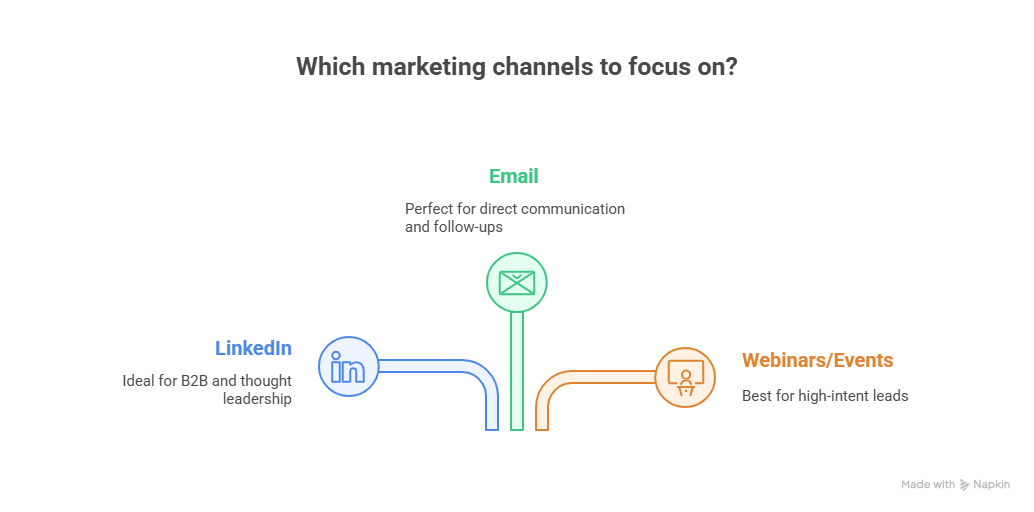
- LinkedIn great for B2B and thought leadership
- Email perfect for direct communication and follow-ups
- Webinars and events for high-intent leads
Double down on what works and cut what doesn’t.
2. Keep Your Messaging Consistent
No matter where your message shows up—email, LinkedIn, blog, or sales call—it should feel like it came from the same team.
- Same tone
- Same core value props
- Same visual identity
This builds trust and reinforces your brand. You can use Lindy to help generate and repurpose messaging across all your channels.
Lindy’s content creation agents can help you out here.
3. Automate What You Can
Use tools (like Lindy) to save time and reduce busywork.
- Auto-schedule email sequences
- Queue up social media posts
- Trigger follow-ups when leads engage
This keeps your pipeline warm without constant manual effort.
4. Double Down on Content Marketing
Content builds trust. Publish blogs, whitepapers, how-to guides, and case studies that solve real problems for your audience.
Start with the most common pain points, then build a content plan that addresses each stage of the buyer journey.
Content won’t convert overnight but it will fuel every other channel.
5. Personalize Every Campaign
Nobody likes a one-size-fits-all blast. Segment your audience by role, industry, company size, or pain point.
Then speak directly to each group with messaging that actually hits.
Example:
- IT leads care about security and integrations
- Ops teams want process efficiency
- Execs want ROI and growth
Use CRM data and marketing automation tools to tailor every touch.
Multi-channel doesn’t mean doing everything, it means doing the right things in the right places, with smart messaging and personalized delivery.
Step 6: Automate Lead Generation
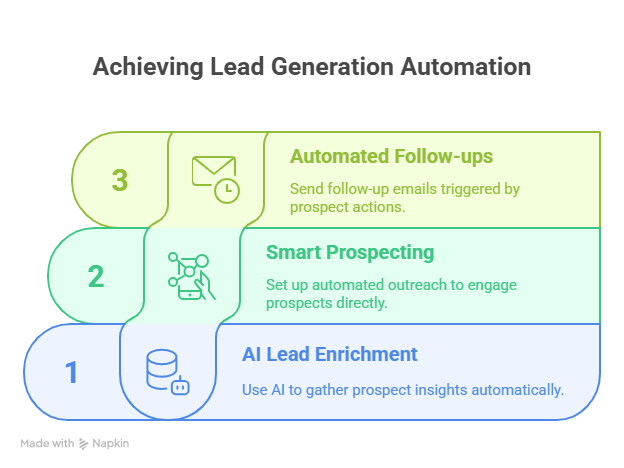
Lead generation in B2B can feel slow and tiring. But when you automate research and outreach with an AI agent like Lindy, it gets a lot easier.
Here’s how to crush lead gen automation:
- Use AI for lead enrichment: Instead of manually collecting data on prospects, let AI do the heavy lifting.
With a Lead Enrichment AI agent, you can automatically gather insights about your prospects, like company size, industry, and key contacts, without lifting a finger.
- Set up smart prospecting: Stop waiting for leads to come to you and set up automated outreach to engage prospects directly.
Lindy’s Lead Outreach agent can reach out with a personalized “hi!” email, wait three days, send a follow-up that adds value, and then alert you if the lead texts back. The best part? It will highlight the lead’s interest level to save you time.
- Send follow-up emails on autopilot: Prospects often get lost if you don’t follow up on time. Set up automated follow-up emails triggered by actions, like when someone opens your email or visits your site.
This keeps them engaged without you having to do it manually.
Step 7: Manage the Sales Funnel with AI
AI agents give you an automated way to nurture leads, keep your CRM organized, and close deals without losing momentum.
1. Automate post-meeting follow-ups
After a sales call, your prospect might walk into another meeting, get flooded with emails, or simply forget what was discussed.
If you don’t follow up quickly with next steps, your deal can go cold.
Lindy solves this by sending personalized follow-up emails, reminders, and meeting recaps, based on what was said in the meeting and how the lead interacts afterward.
This keeps the conversation alive while you move on to the next task.
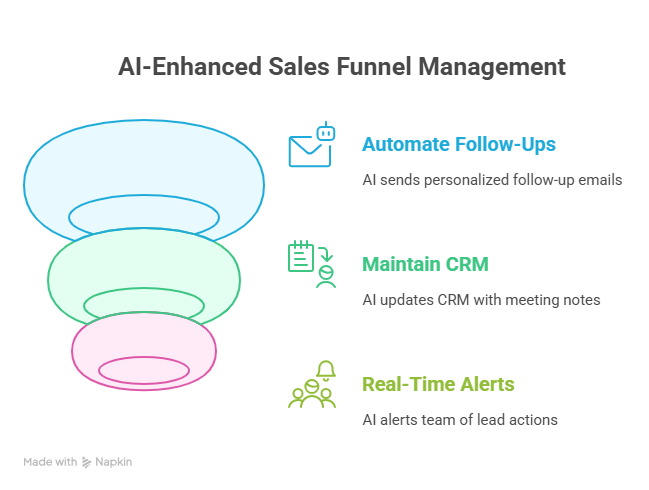
2. Keep your CRM clean automatically
Outdated contact info, missed notes, and forgotten updates lead to poor sales decisions.
AI keeps your CRM up to date by logging meeting notes, updating lead details, and tracking deal progress, without manual input.
Your team stays organized and focused on closing deals.
3. Get alerts when leads take action
With Lindy, you’ll know the moment a lead shows interest—like visiting your pricing page or replying to an email.
Set up real-time Slack alerts so your team can respond fast while the lead is still warm. So you don’t miss important signals or follow-ups.
Step 8: Create A Feedback Loop So You Keep Getting Better
Your B2B go-to-market strategy requires constant adjusting and refining to stay relevant.
Gather insights from both customers and internal teams and then use that data to improve your strategy continuously.
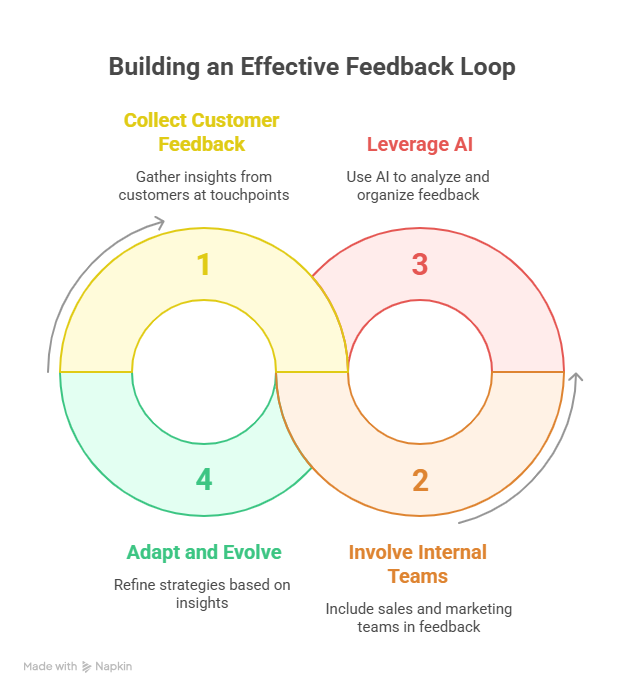
Here’s how to build an effective feedback loop:
- Collect customer feedback at every touchpoint: Use options like post-meeting surveys, follow-up emails, and even direct interviews to gather valuable insights from your customers.
Understanding how they interact with your product or service helps you identify areas where your GTM strategy may need refinement.
Lindy can even help you chat with your meetings and then disseminate those insights among your team.
- Involve your sales and marketing teams: Your internal teams are on the frontlines of customer interactions and have insights into what’s working and what’s not.
Regularly loop them into the feedback process to get a complete picture of your strategy’s effectiveness.
- Don’t let that knowledge go to waste: Don’t just collect feedback for the sake of it.
You can leverage AI-powered agents to develop a searchable, intelligent knowledge base by integrating various platforms and data sources to truly understand customer behavior.
- Adapt and evolve: Use the insights you gather to refine messaging, adjust your value proposition, or tweak your sales process.
Step 9: Improve Onboarding & Retention
Winning a deal is just the start. Long-term success depends on how well you onboard, retain, and grow your customers.
Here’s how to get it right:
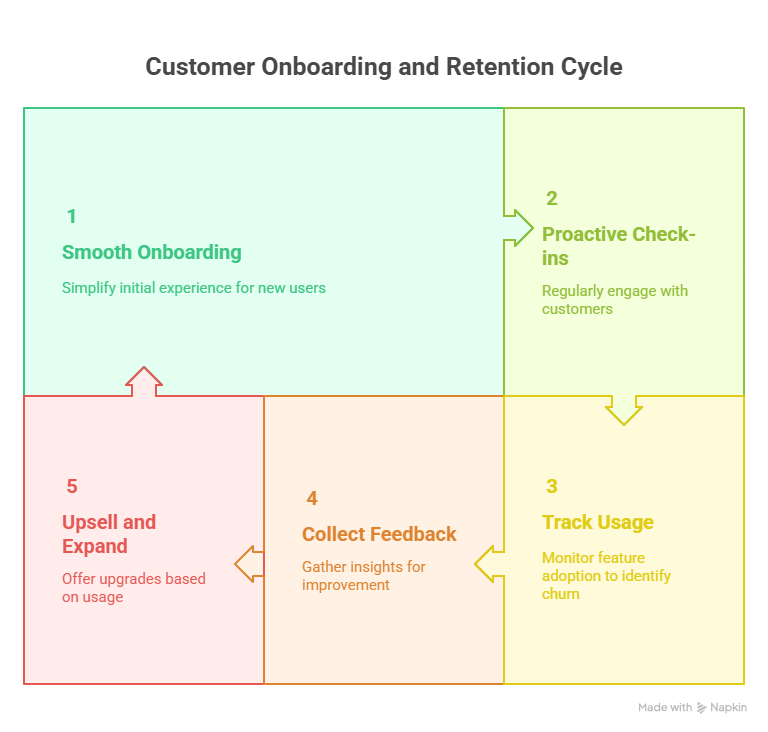
1. Smooth onboarding
Make the first experience simple and valuable. Use product tours, welcome checklists, and short videos to help new users get started fast.
Use Lindy to send step-by-step onboarding emails and track who’s completed key setup steps.
2. Proactive check-ins
Don’t wait for customers to raise their hands. Check in regularly to ask how things are going and offer help.
Lindy can schedule and send check-in messages at 7, 14, or 30 days after onboarding, so no one slips through the cracks.
3. Track usage
Monitor which features your customers are using and which they aren’t. Low usage is often an early sign of churn.
Train Lindy to flag inactive accounts or low usage patterns and notify your success team instantly.
4. Collect feedback
Ask for input early and often. Use surveys, in-app polls, or direct chats.
Lindy can run NPS surveys, summarize feedback, and highlight recurring issues from support conversations.
5. Upsell and expand
Look for accounts that are getting value and could benefit from more. Whether it’s a bigger plan, more seats, or a new feature, timing matters.
Lindy can identify usage signals that show a customer is ready for an upgrade and recommend the best next offer.
A strong onboarding and retention system keeps revenue steady and turns happy customers into local ones.
10. Review and Improve Your Strategy Monthly
Your GTM plan is not a one-time project. Things change like buyer needs, team priorities, market conditions. What worked last month might not work next month.
That’s why you need a monthly review loop.
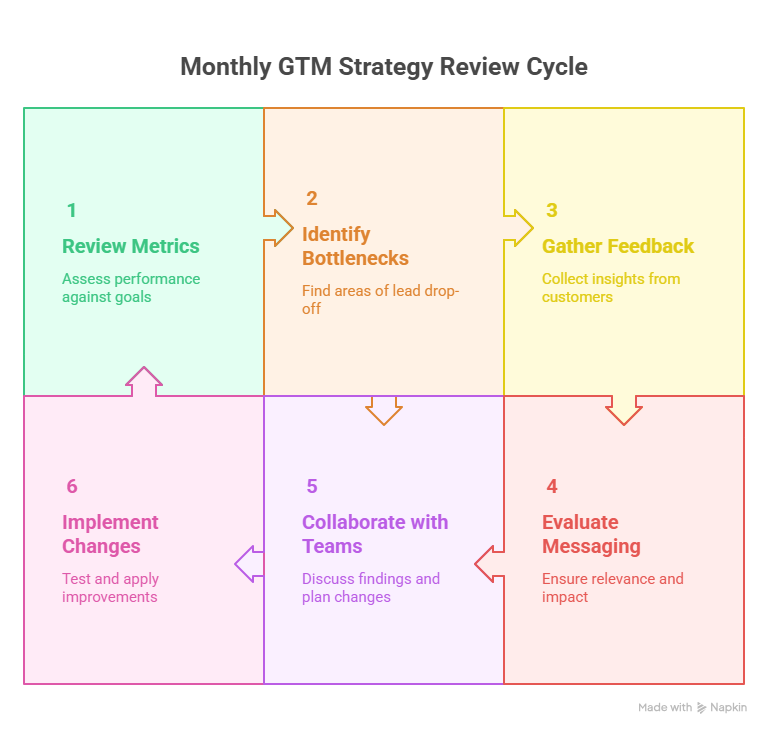
Each month, ask:
- Are our core metrics improving?
- Where are leads dropping off in the funnel?
- What feedback are we hearing from customers?
- Is our messaging still hitting the mark?
Meet with your sales, marketing, and customer success teams. Review your performance, discuss what’s working, and set 1–2 clear changes to test next month.
Lindy can help by:
- Summarizing sales calls
- Pulling customer feedback from surveys or chats
- Highlighting bottlenecks in your funnel
- Tracking progress toward key goals
The best GTM strategies don’t stay static. They evolve. Build a system that learns and adapts—and you’ll always stay ahead of the curve.
Go-to-Market Strategy Example List for B2B
Successful B2B companies tailor their approaches to fit their market, product, and customer base.
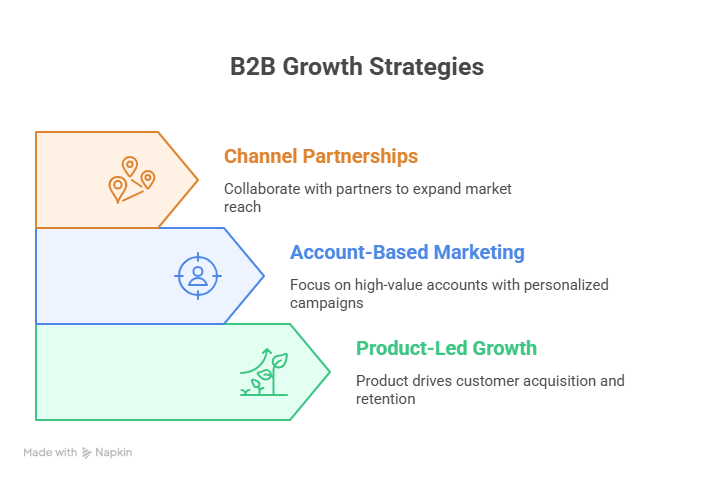
Here are three solid strategies to do just that:
1. Product-Led Growth (PLG): Let Your Product Do the Heavy Lifting
Product-led growth flips the script on traditional marketing strategies by putting the product itself at the center of the GTM strategy. In this model, your product is the main driver for acquiring, activating, and retaining customers.
Dropbox and Slack are two iconic examples of companies that mastered this approach.
How it works:
- Free trials or freemium models: Allow potential customers to experience the product’s core value without committing upfront.
- In-product growth features: Include shareable features or collaboration tools within the product to spread it through user networks.
- Customer self-service: PLG strategies often depend on a self-service model where users can onboard and start using the product with minimal friction.
PLG works well in markets where the product’s value can be easily demonstrated through use. For B2B SaaS companies, in particular, it lowers customer acquisition costs and accelerates sales cycles by using a bottom-up adoption model.
2. Account-Based Marketing (ABM): Precision Targeting For High-Value Accounts
Instead of casting a wide net, ABM zeroes in on specific high-value accounts that have the most potential for getting you those big bucks.
Marketing and sales teams work closely together to deliver highly personalized campaigns that speak directly to each target account.
How it works:
- Mega-focused campaigns: Identify a shortlist of target accounts based on criteria like company size, industry, and potential value.
- Personalized outreach: Tailor messaging and content to resonate with decision-makers at each company.
- Sales and marketing on the same page: ABM requires close collaboration between sales and marketing teams to deliver a consistent, customized experience for target accounts.
ABM is ideal for businesses that deal with complex sales cycles involving multiple stakeholders. By concentrating efforts on a few high-value accounts, companies can build deeper relationships and increase their chances of closing bigger deals.
3. Channel Partnerships: Expand Your Reach Through Strategic Alliances
Channel partnerships involve collaborating with other businesses to promote and sell your product. In the B2B marketing strategy framework, this can look like teaming up with resellers, distributors, or technology partners to use their market presence and customer base.
How it works:
- Partner network: Build relationships with businesses that can resell or refer your product to their customers.
- Co-marketing initiatives: Get your collab on with marketing campaigns, events, or webinars to generate leads and awareness.
- Revenue-sharing models: Offer partners a percentage of sales or a referral fee to incentivize them to promote your product.
Channel partnerships let B2B companies tap into new markets or customer segments without having to invest heavily in their own sales and marketing resources. It’s a cost-effective way to scale, especially for companies selling complex solutions that need a high level of trust and expertise.
Take Your GTM B2B Strategy to the Next Level with Lindy
Creating a B2B go-to-market strategy is about much more than just putting your product out there.
With Lindy, you can automate time-consuming tasks and focus on the valuable stuff, like driving growth, maximizing efficiency, and staying ahead of the competition.
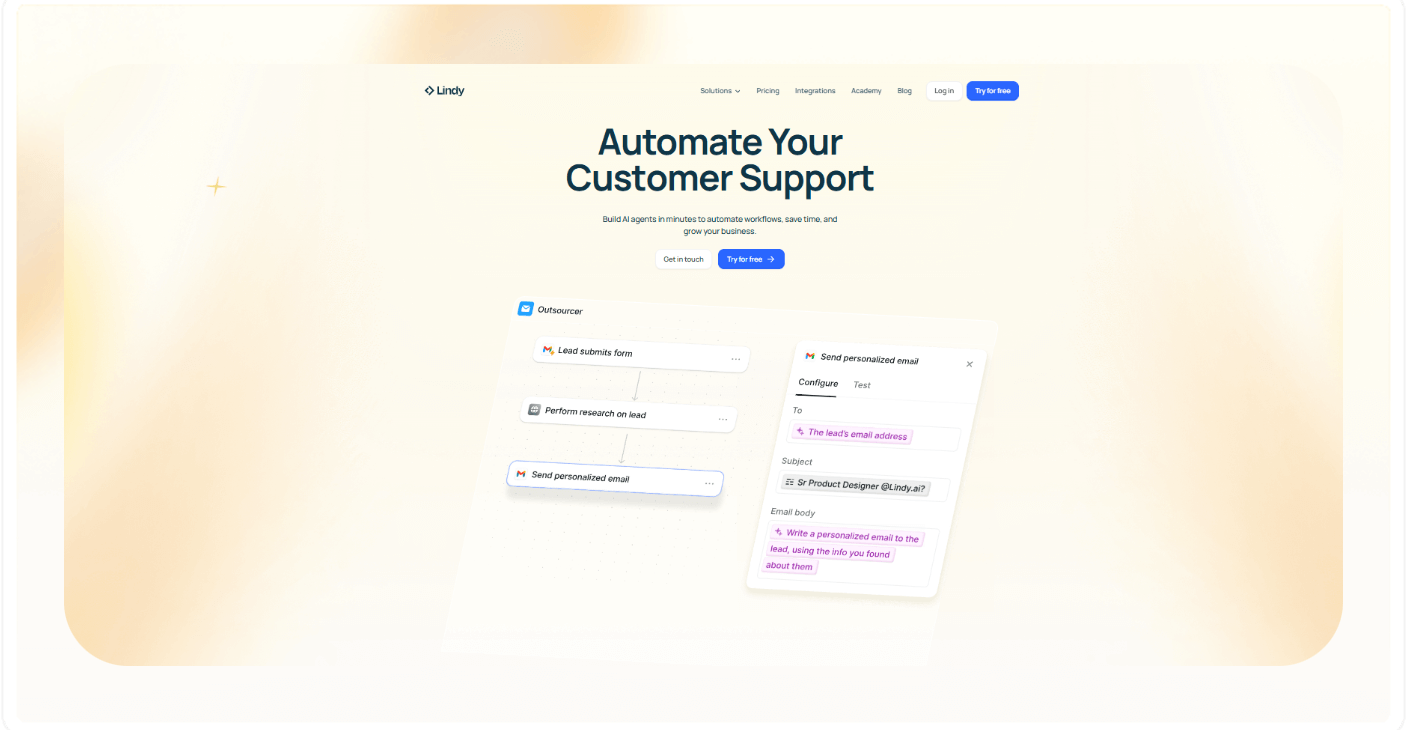
Plus, you can go way beyond just B2B GTM. Lindy can help you create AI agents that write content, schedule meetings, code, and much more, all while working as a team. Check out the full list of agents.
{{cta}}
Frequently Asked Questions
What is a B2B go-to-market strategy?
A B2B go-to-market (GTM) strategy is the plan a company uses to launch and sell its product to other businesses. It includes targeting the right audience, picking sales channels, setting pricing, and aligning teams. The goal is to reach ideal customers, shorten sales cycles, and drive predictable revenue.
What are the 4 Cs of B2B marketing?
The 4 Cs of B2B marketing are Customer, Cost, Convenience, and Communication. They shift focus from the product to the buyer’s needs. Instead of just pushing features, they emphasize understanding customers, pricing strategically, delivering access easily, and building meaningful communication for stronger relationships and conversions.
What is the B2B marketing strategy?
A B2B marketing strategy is a plan to attract and convert business buyers. It includes defining buyer personas, choosing channels (like LinkedIn or email), creating content, and aligning with sales. It’s less emotional than B2C, focusing on logic, ROI, and relationship-building to win long-term business deals.
What are the 7 GTM motions?
The 7 GTM motions are strategies used to reach and convert B2B buyers, including product-led, sales-led, marketing-led, ecosystem-led, community-led, event-led, and channel-led. Each motion focuses on a different way to drive demand and customer growth, depending on your product type, audience, and business goals.
What are the GTM motions for B2B?
GTM motions for B2B include product-led (free trials), sales-led (outreach), marketing-led (demand gen), and ecosystem-led (partners). Others include community-led (user groups), channel-led (resellers), and event-led (webinars). Businesses often blend these to match their audience and stage, aiming for faster adoption and lower customer acquisition costs.
How do I avoid over-relying on AI tools during GTM?
AI tools are powerful for scaling GTM tasks, but they can’t replace strategy or human insight. Use AI to automate research, follow-ups, and lead scoring—but validate critical decisions like messaging, ICP fit, or pricing through real conversations with users and internal alignment with sales and product teams.
What’s the best way to align GTM strategy with product roadmap?
GTM and product teams should collaborate from day one. Use customer interviews, sales feedback, and market insights gathered during ICP development to inform feature prioritization. Align quarterly planning sessions across both teams to ensure your product evolves with market needs and supports GTM campaigns effectively.
How can I tell if my GTM messaging is too generic?
If your messaging could apply to five competitors without changing a word, it's too vague. Your value prop should reference specific pain points, outcomes, or integrations your ICP cares about. Run it by your sales team or target customers—they’ll quickly spot if it lacks relevance or punch.
What if my product serves multiple ICPs?
Create separate GTM playbooks for each segment. Customize your value proposition, messaging, and buyer journey content per ICP. Avoid blending them into one campaign—it dilutes impact. Use segmentation tools in your CRM or marketing automation to ensure the right message reaches the right persona.
How do I budget for a GTM launch if I’m resource-constrained?
Start lean. Prioritize one or two high-impact channels where your ICP is active. Reuse landing pages, record lightweight demos, and automate follow-ups with free/affordable tools. Invest time in outreach and interviews instead of overproducing content. The goal is traction, not perfection in your first cycle.
How do I train my sales team on a new GTM strategy?
Hold short, focused sessions that walk through the updated ICP, UVP, and messaging. Role-play common objections and buying signals. Create one-pagers and email templates aligned to each persona. Use sales enablement tools or internal wikis so reps can easily access assets during outreach and demos.
How can I measure if my GTM strategy is working in the early stages?
Track early indicators like reply rates, demo requests, bounce rates on landing pages, and stakeholder engagement (e.g., multiple contacts from one account). These metrics show whether messaging, targeting, and positioning are resonating, well before revenue impact. Iterate fast based on feedback loops, not just closed deals.
Should I prioritize inbound or outbound in early GTM?
Outbound gives faster feedback on messaging and ICP fit, making it ideal for early validation. Inbound takes longer but compounds over time through SEO, content, and brand. Start with outbound to learn, then build inbound once you’ve nailed positioning and know what content your ICP responds to.
How do I manage GTM for a product still in beta?
Use the beta to refine both the product and GTM strategy in parallel. Limit access to ICP-matching accounts, and over-communicate during onboarding. Treat feedback like gold—it’s your blueprint. Create light content (FAQ docs, demos) as you go, and avoid broad marketing until core value is validated.
What’s the best way to handle objections during early outreach?
Log every objection in a central place, sales calls, emails, and social DMs. Categorize them (pricing, integrations, trust, etc.). Then update your messaging, sales scripts, and onboarding materials to address these proactively. Use AI to summarize objection patterns and help improve your UVP and content strategy.