


The Ultimate Guide to AI Voice Bots in 2026


Businesses today use AI voice bots to answer inbound calls for customer support, appointment scheduling, and lead qualification. AI can also make outbound calls for follow-ups, reminders, and sales outreach.
Instead of routing callers through phone menus, these AI voice bots understand natural speech, respond clearly, and take action after the call ends.
In this guide, we'll cover:
- What an AI voice bot is
- How modern voice bots process calls and respond in real time
- The best voice bot platforms in 2026
- How we tested these tools
- Which industries benefit most from using voice bots
- Whether AI voice bots are worth it for small businesses
- A direct comparison between voice bots and traditional IVRs
First, let's define an AI voice bot and see how it differs from most conventional phone systems.
What is an AI voice bot?
An AI voice bot is an AI agent that can have real-time, two-way conversations with callers. It can understand what they say, respond clearly, and even take actions like logging a note in your CRM or sending a follow-up email.
They use conversational AI to understand intent, interpret what the person is saying, and respond dynamically, instead of forcing them through a rigid decision tree.
AI voice bots sound natural and do the tedious repetitive calling work — answering FAQs, routing high-intent leads, booking meetings, or triggering backend workflows. That's a big shift from legacy systems that play pre-recorded messages or forward calls to humans.
Voice bot solutions like these are becoming essential across industries where high call volumes and quick resolutions are the norm, especially in support, sales, and service teams. They're often integrated into larger voice bot platforms or used alongside human teams to handle repetitive tasks.
Next, let's walk through how they work behind the scenes.
How does a voice bot work?
An AI voice bot isn’t a fancy answering machine. It’s programmed to process intent, pull relevant context, and make real-time decisions.
Here's a simple breakdown of what happens when it receives a call:
- Speech-to-text: The voice bot listens and transcribes what the caller says. Speech recognition models like Whisper or Deepgram handle this, and they are built to handle accents, background noise, and natural speech patterns.
- Natural Language Processing (NLP): Once the words are transcribed, the bot needs to understand their intent. That's where conversational AI models step in. They figure out what the caller wants, not just the literal words, but the meaning. This is where AI voice bots go beyond keyword-matching scripts and start acting more like assistants.
- Generates a response: After deciding how to respond, the voice bot uses text-to-speech (TTS) to speak. Many platforms now use advanced models that sound natural and can even adjust tone or pace depending on the conversation.
- Involves logic and memory: The system evaluates the next steps: Should it ask another question? Escalate to a human? Trigger an internal action? This logic is usually built in via workflows or code, depending on the platform.
- Triggers actions: Voice bot solutions trigger actions after a call ends. A modern AI voice bot can send a follow-up email, update a CRM, ping someone in Slack, or qualify a lead in real time.
When it works well, the process feels seamless to the caller. But it's a chain of tightly connected systems — voice recognition, language models, business logic, and integrations — working together to handle the conversation end to end.
Let's look at some of the voice bot companies building these systems in 2026, and what they each bring to the table.
The top 5 AI voice bot platforms in 2026
Some tools focus on no-code deployment. Others give you complete control with APIs and model customizations. Here are five standout voice bot companies shaping the space in 2026:
- Lindy – Best for teams that want no-code voice automation and workflow integrations
- Vapi – Best for engineering teams building AI voice agents with custom LLMs
- Synthflow – Best for outbound sales teams and small businesses needing a fast setup
- Retell AI – Best for low-latency, real-time calling powered by your own choice of models
- Cognigy – Best for enterprise contact centers that need scale
Next, we'll break down each of these voice bot solutions, including pricing, ideal use cases, and what makes them stand out.
1. Lindy – No-code voice automation and workflow integrations

Lindy is an AI automation platform with prebuilt AI voice agents for inbound and outbound calls. It’s built for ops, support, and GTM teams who need voice bots that can be deployed quickly at scale, can talk and act, all without writing code.
Lindy also goes beyond call automation and AI voice bots. It connects your voice workflows to related tasks like updating CRMs, sending follow-ups, or assigning tasks internally. That's the difference between a voice bot and an AI automation system with built-in voice capabilities.
Features
- Inbound and outbound calling in 30+ languages
- No-code builder with support for logic branches, conditions, and triggers
- Knowledge base for dynamic Q&A
- Integrates with 2500+ tools like Slack, Salesforce, HubSpot, Gmail, Notion, Twilio, and more
- Agents can trigger actions like follow-ups, calendar events, summaries, or human handoffs
- Support advanced LLMs like GPT-4, Claude, or custom models depending on use case
It also lets you query transcripts or set up voice-based flows that behave differently based on call outcomes.
Pros
- Fast to deploy, even for non-technical teams
- Combines voice + automation in one place
- Flexible to serve both sales and support use cases
- HIPAA and SOC 2 Type II certified
Cons
- Free plan doesn’t come with voice features
- Might be overkill for teams that only need basic voice routing
Pricing
- Free: 400 credits/month
- Pro: $49.99/month for 5,000 credits
- AI phone numbers: $10/month
- Average calling cost: ~$0.19/min (based on GPT-4o)
Lindy works well when voice automation is part of a bigger workflow, not just a standalone feature. It's beneficial for teams that want agents to act like assistants and trigger automated workflows pre- and post-call.
{{templates}}
2. Vapi – For AI voice agents with custom LLMs
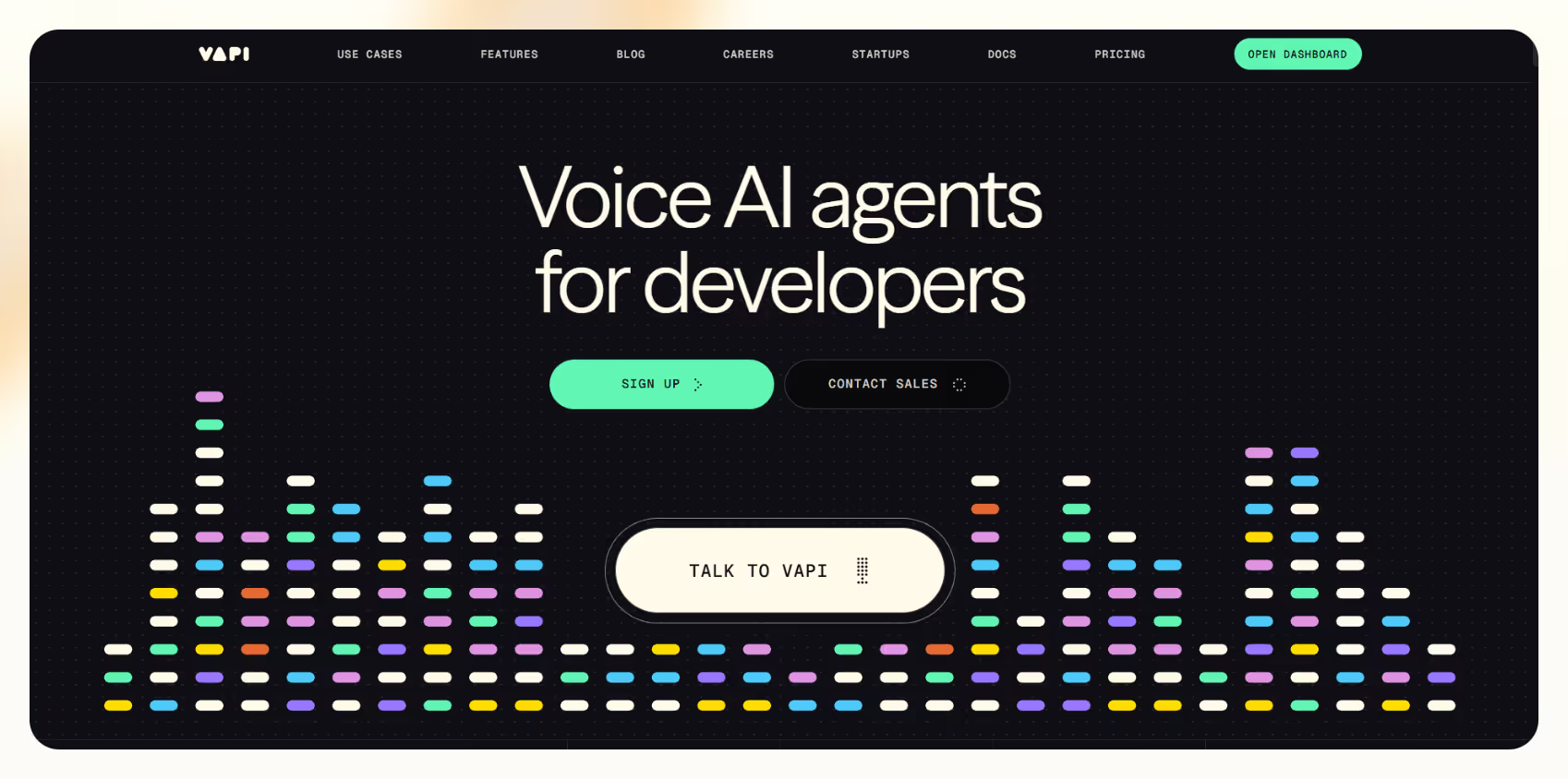
Vapi is a developer-first voice API platform built for teams that want to craft custom, high-performance AI voice bots from scratch.
If you have engineering resources and want complete control, Vapi could be a good fit. You can choose your voice engine, manage latency, and decide which model powers the responses — giving you full control over how the system is assembled.
Features
- Real-time streaming API for voice input and output
- Custom STT, TTS, and LLM plug-ins (including GPT-4, Claude, open models)
- Granular controls for pauses, interruptions, and barge-in detection
- Telephony layer included
- Support for both inbound and outbound calls
- SOC 2 and HIPAA-compliant
You can use Vapi to build assistants that run inside apps, handle support calls, or scale outbound call campaigns. But every use case requires developing time.
Pros
- Total control over architecture
- Fast, responsive voice pipeline
- Ideal for model experimentation or agent-as-infrastructure setups
Cons
- Setup requires considerable engineering skills and time
- Usage pricing adds up fast if calls get long
Pricing
- Voice calls: $0.05/min
- LLM and TTS costs billed separately
Vapi works best when you want to build something custom, not tweak templates. If you're looking to embed AI voice into an existing app or create something bespoke from the ground up, this is a solid place to start.
3. Synthflow – For outbound sales teams needing a fast setup
Synthflow is a no-code AI voice bot platform designed to help small teams launch outbound calling workflows quickly. It's built for lead gen, appointment reminders, and cold call campaigns — not complex integrations or custom workflows.
If your team doesn't need post-call automation or deep backend actions, Synthflow is the fastest way to get a working voice bot live.
Features
- Drag-and-drop visual builder for voice flows
- Prebuilt templates for follow-ups, reminders, and lead routing
- Customizable tone, voice style, and call pacing
- Integrations with tools like HubSpot, Zapier, Cal.com, GoHighLevel
- Simple CRM sync and webhook triggers
It supports basic branching logic and personalization, which are enough for most outbound use cases, such as qualification, surveys, or follow-ups.
Pros
- Extremely quick to get started — most bots go live in under a day
- Clean UI that non-technical teams can manage
- Works well for agencies and local services with templated flows
Cons
- Not built for real-time inbound support
- No free plan available
- Limited post-call automation compared to platforms like Lindy
- Custom logic and workflows are restricted to what the builder allows
Pricing
- Starter: $29/month, billed monthly
- Pro: $450/month, billed monthly
- Growth: $900/month, billed monthly
Synthflow is a good fit for sales-first teams who want simple voice bot solutions to run repetitive outbound campaigns, without hiring another rep or spending weeks building logic.
4. Retell AI – Low-latency, real-time calling using models of your choice
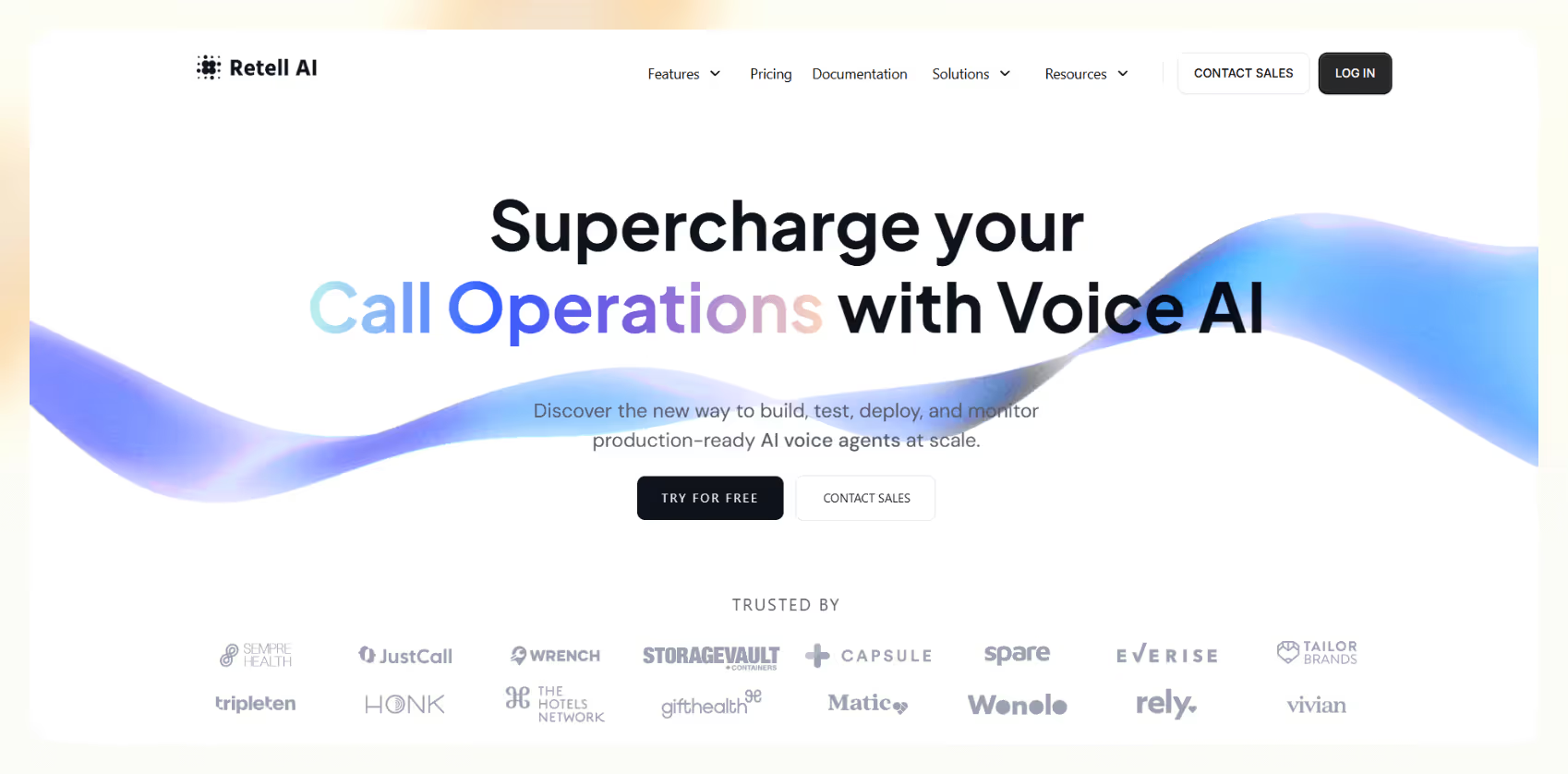
Retell AI is somewhere between a no-code builder and a full developer platform. It offers real-time voice bots powered by your choice of language models — from GPT-4 to Claude — and gives you enough control to tune performance without rebuilding everything yourself.
It's designed for businesses that want high-quality conversations at scale, without sacrificing speed or compliance.
Features
- Real-time, low-latency voice pipeline
- Bring your own LLM (GPT-4, Claude, open-source models)
- Inbound and outbound support
- API-based setup with call summaries and logging
- Compliance: HIPAA, SOC 2, GDPR
Retell includes a basic visual flow editor, but it’s not as user-friendly or extensive as the drag-and-drop builders found in no-code platforms like Lindy or Synthflow. It's beneficial for contact centers, feedback collection, and long-form customer service interactions where voice quality matters.
Pros
- Strong voice quality and fluid dialogue management
- Supports multiple LLMs out of the box
- Scalable infrastructure for large teams
- Flexible pricing if you want to fine-tune cost/performance tradeoffs
Cons
- Requires engineering skills to set up flows and integrations
- Usage pricing varies widely depending on LLM choice
- Limited out-of-the-box automation unless custom-built
Pricing
- Voice Engine: $0.07 – $0.08/min
- LLM Agent: $0.006 – $0.06/min
- Telephony Layer: Usage-based pricing
Retell AI best suits teams that care about latency and customization but don't want to build every component themselves. It provides a solid middle ground between plug-and-play simplicity and full-stack control.
5. Cognigy – For enterprise contact centers that need scale
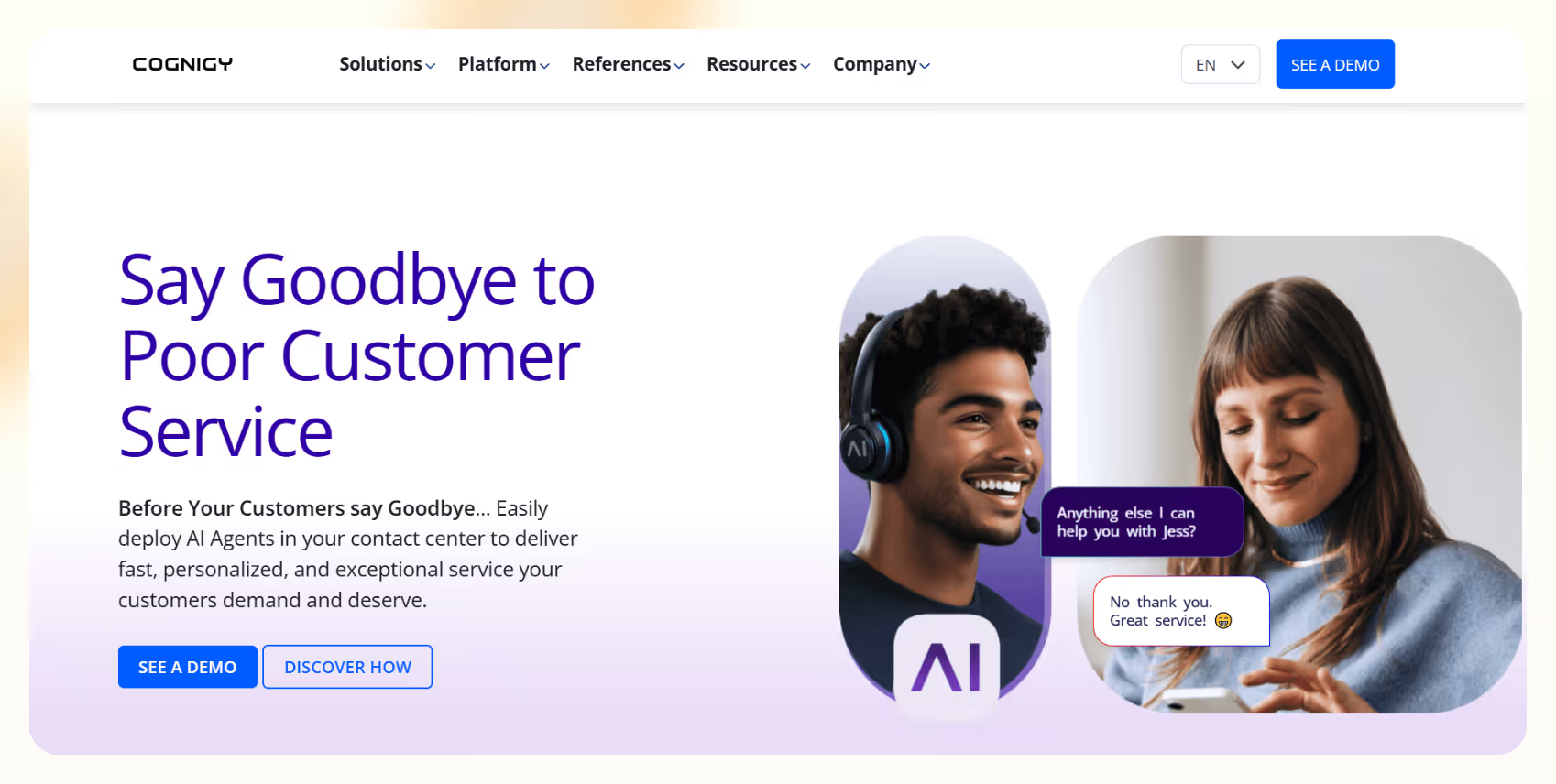
Cognigy is an enterprise conversational AI platform that handles large-scale customer interactions across voice, chat, and messaging. It's not ideal for small teams or quick deployments.
It's a complete automation platform designed for conglomerates, government services, and global contact centers. Cognigy stands out in environments where voice is just one part of a larger omnichannel strategy.
Features
- Advanced NLP engine with multilingual support
- Omnichannel orchestration –– voice, chat, WhatsApp, SMS, more
- Built-in handoff logic to live agents
- Integrates with Salesforce, Microsoft Dynamics, SAP, and other enterprise platforms
- Visual flow editor with conditional logic
- Enterprise-grade compliance
Pros
- Built for complex enterprise workflows
- Supports global scale and heavy compliance needs
- Highly customizable flows with shared component logic
- Offers hybrid bot + human experiences
Cons
- Pricing is high, not viable for startups or SMBs
- Setup requires dedicated implementation resources
- Overhead is significant for teams that don't need complete omnichannel control
Pricing
- Pricing isn’t listed publicly, but according to a third-party source, it’s around $2,500/month
- Total cost of ownership is typically ~$115,000/year
For organizations handling thousands of calls per day, Cognigy provides the structure and flexibility to support enterprise-grade automation. It's less about building a voice bot and more about transforming the entire contact center stack.
Now that we’ve covered the tools, let’s understand how we selected them.
How we tested the best AI voice bots
We tested over two dozen voice bot solutions across structured workflows and real-world scenarios to understand how these tools perform. Each tool was evaluated on its ability to speak naturally, follow logic, take action, and integrate with other tools used by teams.
These are the factors that mattered while testing:
Human-like speech
The first thing we tested was whether the bot could handle a realistic back-and-forth. That meant more than just recognizing a question — it had to complete a task.
We ran calls that included lead qualification, appointment booking, and post-call follow-up triggers. The best voice bot solutions combined accurate speech recognition with action logic. The weakest ones could "talk," but didn't do much beyond that.
Several platforms stood out for handling context across multiple turns — asking clarifying questions or remembering prior answers without falling off track. That's a key marker of effective conversational AI.
Voice quality and realism
We ran simulated support and sales calls using the same scripts across tools. We evaluated tone, pacing, inflection, and how well the bot handled interruptions or non-linear responses.
The more lifelike bots could pause naturally, handle barge-ins without freezing, and shift tone slightly depending on what the user said. Tools using top-tier voice synthesis models (like GPT-4o or ElevenLabs) were notably more realistic.
Functional performance in live calls
We tested both inbound and outbound calls. Here’s what we paid attention to:
- Response time
- How well the bot followed the conditional logic
- Ability to handle vague or off-script inputs
- Could it take backend actions (send follow-ups, update lead status, etc.)?
For example, we’d drop a phrase like, "Can you email me that?" mid-conversation. Only some platforms could interpret that request, trigger the right action, and continue the call smoothly.
Ease of setup and integration
It’s one of the most important factors while selecting a business tool. Each platform was evaluated on:
- Time to get a voice bot live
- Whether a no-code option existed (or if dev help was needed)
- Workflow customization flexibility
- Integration with standard tools (HubSpot, Salesforce, Slack, internal CRMs)
Platforms like Synthflow were easy to set up but limited in logic. Lindy was the perfect middle ground — quick to deploy with customizable agents and workflows.
Cognigy required more setup effort and was best suited for structured, scaled deployments. Vapi and Retell fell in the middle — offering solid performance but needing developer time to unlock their full potential.
Next, we explore how these tools integrate with the tech stack teams use.
{{cta}}
Can AI voice bots integrate with CRMs or helpdesks?
The best voice bot platforms integrate with your existing tools, update records, assign tasks, and align your systems. That's especially important for sales, support, and CX teams that already rely on CRMs or helpdesk tools to track conversations and follow-ups.
Common integrations you'll find
Connecting to your favorite tools is one of the most important aspects of an AI voice bot. Here are the most popular integrations to look for:
- CRM systems like HubSpot and Salesforce: Voice bots can log notes, update lead statuses, or create new contacts based on call outcomes.
- Helpdesks like Zendesk: Bots can automatically create a support ticket or tag a conversation for human review.
- Internal ops tools like Slack: They can send a message when a high-priority lead comes in or when a bot needs human takeover.
Some platforms let you customize how these actions are triggered post-call. Others only support basic data syncing.
For example, platforms like Lindy support deeper actions: logging complete summaries, triggering follow-ups, or escalating issues based on call logic. Tools like Synthflow or Retell offer lighter, webhook-based integrations that work well for simpler use cases.
We know how capable these AI voice bots are. So, let’s explore the industries where they make the most impact.
What industries benefit most from voice bots
Any team dealing with repetitive phone conversations — where speed, scale, or consistency matter — can benefit from adding one.
Here's where they're making the biggest impact:
Call centers
Voice bots are increasingly used in inbound support teams to handle FAQs, triage requests, and route to the right human when needed. For outbound, they're used to confirm appointments, send reminders, or handle follow-ups.
When paired with the right CRM or helpdesk, a voice bot for call centers can free up reps to focus on complex issues, reduce average handle times, and ensure conversations are logged consistently.
Sales and lead qualification
Voice bots can make initial outreach calls, ask qualifying questions, and route leads to the right rep. If integrated properly, they can also handle missed call follow-ups or automatically re-engage stale leads.
In B2B sales, this is especially useful for SDR teams juggling high call volumes.
Recruiting and hiring
Instead of a recruiter calling every applicant to ask the same screening questions, a voice bot can handle that front-line interaction — collecting basic info, checking qualifications, and passing notes.
Healthcare
From appointment scheduling to prescription refills to test result updates, voice bots help clinics and provider networks automate common workflows while staying within privacy and compliance limits.
Some even support multi-language interactions, which helps expand accessibility across regions.
eCommerce and logistics
Order status, shipping delays, and return confirmations are routine, phone-based interactions that a voice bot can take off your support team's plate. And when connected to your order system or ERP, it can give accurate answers based on real-time data.
These bots benefit these domains. But do they suit small businesses? We’ll answer that next.
Are AI voice bots good for small businesses?
They absolutely are beneficial, especially the no-code platforms. Small businesses repeatedly receive the same calls: appointment requests, follow-ups, order status, and FAQs.
AI voice bots handle these conversations well, and doing it with software means no more missed calls, no more voicemails left unanswered, and no need to hire extra reps just to stay on top of the phone.
A quick example
A local clinic or wellness studio misses 10–15 calls a day. With a voice bot in place, every missed call can trigger a polite follow-up that asks why they called, offers appointment slots, and confirms bookings without human intervention.
Platforms like Synthflow are often the easiest entry point here. They're affordable, easy to configure, and don't require custom logic. For small teams looking for deeper automation, like follow-ups via SMS or CRM syncing, options like Lindy bring more capability without making things overly technical.
Voice bots are no longer enterprise-only tools. With affordable starting prices, they're now part of the small business automation stack.
But how do they compare to the traditional IVRs? We’ll explore that.
Are AI voice bots better than IVR systems?
Traditional IVR systems are slow, impersonal, and often frustrating — both for callers and businesses. AI voice bots aim to fix that by offering faster responses, more natural conversations, and a smoother experience.
Instead of forcing callers through menus, AI bots understand intent and figure out the next steps automatically, making interactions feel more personal and efficient.
Here’s how they compare:
For teams looking to reduce call handling times, improve customer experience, or get better data from calls, switching from IVR to a modern voice bot is a no-brainer. These AI platforms can handle the conversation from start to finish, log it, and take action after it ends.
Try Lindy, your AI voice and automation platform
If you’re looking for an easy-to-use AI solution that provides voice automations and triggers post-call workflows around emails, meetings, and sales, go with Lindy.
Out of all the AI voice bot platforms, here’s why we think Lindy takes the gold:
- Simple no-code interface: You won’t need coding, programming, or technical skills to create your automations with Lindy — it offers a drag-and-drop visual workflow builder.
- AI agents customized to your needs: You can make versatile AI agents that understand plain English and accelerate your productivity in many ways. For instance, create a Lindy that bolsters your sales funnel by finding leads from websites and business intelligence sources like People Data Labs. Then, make a Lindy that sends out emails to each lead and schedules meetings with members of your sales team.
- Affordability: Build your first few automations with Lindy’s free version and get up to 400 tasks. With the Pro plan, you can automate up to 5,000 tasks, which offers much more value than Lindy’s competitors.










Blog
Related Articles
.avif)
.avif)

%20(1).png)
%20(1).png)


The AI assistant that runs your work life
Lindy saves you two hours a day by proactively managing your inbox, meetings, and calendar, so you can focus on what actually matters.
