What Is an AI SDR? How They Work & How to Implement in 2026
Michelle broke down how AI SDRs handle lead enrichment, outreach, and qualification, weighing scalability, consistency, and the limits of automated judgment.


Most sales teams have heard the term but aren't sure what an AI SDR actually does or whether it's worth the switch. After analyzing the leading tools and workflows, here's everything you need to know, including how to set one up in five steps.
What is an AI SDR?
An AI SDR, or AI Sales Development Representative, is software that uses artificial intelligence to handle early-stage sales work like prospecting, outreach, follow-ups, and basic qualification. It reduces manual work and allows human reps to spend more time on conversations that lead to revenue.
Instead of manually researching leads, writing cold emails, and chasing replies, teams configure an AI SDR to do that work automatically. The system pulls in lead data, sends messages based on rules you define, tracks engagement, and responds or follows up when prospects take action.
An AI SDR replaces repetitive sales tasks that slow teams down. Most AI SDRs can handle tasks like:
- Researching and enriching leads with firmographic and role-level data
- Sending outbound emails or messages at scale
- Monitoring opens, clicks, and replies
- Following up based on timing or engagement
- Flagging interested leads for human handoff
AI SDRs work best when teams treat them as assistants to handle volume, speed, and repetition, while human reps handle judgment, negotiation, and relationship building.
How does an AI SDR work?
An AI SDR pulls in data, takes action based on rules, and adjusts its next step based on how prospects respond. Most tools differ in features, but the basic workflow stays the same. Here’s how they work:
Lead sourcing and enrichment
An AI SDR starts with a list of leads or a defined audience. It enriches those leads with context before any outreach goes out.
The enrichment usually includes:
- Company size, industry, and location
- Job title and role relevance
- Recent company activity or news
- Public signals like website visits or content engagement
It’s an important step because outreach without context hardly clicks. Enrichment gives the AI SDR enough signal to tailor its message.
Message creation and outreach
Once the AI SDR understands who it is contacting, it creates outbound messages based on rules you define. Those rules often cover:
- Which channel to use first, like email or LinkedIn
- When to send the first message
- What tone or structure to follow
- Which data points to reference
The AI SDR sends messages at scale while keeping each one tied to the lead’s role or company. The goal here is to start a conversation. Optimizing your ai email outreach ensures these automated sequences capture prospect interest effectively.
Engagement tracking and follow-ups
After the outreach, the AI SDR tracks what happens next. It monitors:
- Opens and clicks
- Replies and sentiment signals
- Time since last interaction
Based on that behavior, the AI SDR decides what to do next. It might send a follow-up, pause outreach, or escalate the lead to a human rep without the need for manual effort or reminders.
Qualification and handoff
When a prospect responds, the AI SDR evaluates the reply against the qualification criteria you set. Those criteria can include:
- Buying intent
- Budget or timeline mentions
- Fit based on role or company size
If the lead qualifies, the AI SDR hands it off to a human SDR or account executive (AE) with full context. That handoff includes message history, enrichment data, and engagement signals. Preparing AE reps to deliver the best saas demo ensures those qualified leads convert after the handoff.
Continuous improvement through feedback
AI SDRs improve when teams give feedback. Sales teams review replies, adjust rules, and refine messaging. Over time, the system aligns more closely with what converts.
The result is a repeatable outbound engine that runs without constant supervision while still leaving humans in control where it counts. Teams looking to expand their workflow often integrate modular ai plugins software to connect additional data sources and tools.
AI SDR vs human SDR
AI SDRs offer scale and consistency, while human SDRs excel at judgment and relationship building. Here’s how they compare:
| Aspect | AI SDR | Human SDR |
|---|---|---|
| Primary role | Handles high-volume prospecting and follow-ups | Manages conversations and builds trust |
| Speed | Works continuously without downtime | Limited by work hours and capacity |
| Outreach volume | Sends and tracks hundreds of messages at once | Manages a smaller set of leads |
| Personalization | Uses data and rules to tailor messages | Uses context, intuition, and live feedback |
| Follow-ups | Never forgets or delays follow-ups | Can miss or delay follow-ups |
| Adaptability | Follows predefined logic and signals | Adjusts in real time based on conversation |
| Qualification | Flags leads based on set criteria | Qualifies based on nuance and judgment |
| Best for | Keeping the top of the funnel active | Advancing and closing qualified leads |
{{templates}}
Benefits of using an AI SDR
AI SDRs remove the tradeoffs that come with manual outbound work, like handling volume, timing, and consistency without adding headcount. Teams include AI SDRs in their sales strategy for these reasons:
Scale outbound without burning out your team
Outbound campaigns break down when reps juggle too many leads. They miss follow-ups, rush through the research, and eventually, good prospects fall through the cracks.
An AI SDR handles outreach and follow-ups at a volume no human team can match. It keeps every lead active while your reps focus on calls and conversations that matter. For voice-based outreach, implementing ai cold calling can automate phone conversations alongside text channels.
Improve consistency across outreach
Human reps vary in execution. Some follow the process, while others drift away from it over time. However, an AI SDR follows the same rules every time. It sends messages on schedule, applies the same qualification logic, and tracks every interaction. That consistency makes pipeline performance easier to predict and improve.
Respond faster to interested leads
AI SDRs respond immediately based on engagement signals. When someone replies, clicks, or shows intent, the system can follow up or route the lead without delay. That speed gives teams an edge without forcing reps to stay glued to their inbox.
Free reps to focus on high-value work
SDRs spend a large part of their day on work that does not require judgment, like research, data entry, or follow-ups. An AI SDR removes that workload. Reps spend more time qualifying live prospects, running discovery calls, and building relationships.
Lower cost per qualified lead
Hiring and training SDRs takes time and budget. Scaling a team adds fixed costs before revenue follows. AI SDRs scale without adding seats, resulting in a lower cost per qualified lead. The system handles volume while humans step in only when intent appears.
Limitations of using AI SDRs
AI SDRs work best with predictable workflows and struggle when conversations drift outside those boundaries. You can expect these limitations when you try to implement them:
- Limited judgment in nuanced conversations: AI SDRs follow logic and signals. They can miss hesitation, indirect objections, or internal politics that humans pick up naturally.
- Generic outreach without strong inputs: AI SDRs rely on your data and messaging rules. Weak lead data or overused templates can make outreach feel repetitive or impersonal.
- Difficulty handling edge cases: Unexpected questions, custom requests, or sudden changes in buying intent often require human intervention. AI SDRs need clear escalation paths for these moments.
- Ongoing setup and tuning required: AI SDR automation requires ongoing monitoring and optimization. You must regularly review campaign analytics, adjust workflows, and refresh messaging to ensure the highest conversion rates in changing markets.
- No relationship building: AI SDRs start conversations but do not build trust. Complex deals, long sales cycles, and high-value accounts still depend on human connection.
{{cta}}
How to integrate an AI SDR into your sales workflow: 5 easy steps
Adding an AI SDR works best when teams treat it like a workflow upgrade, not a plug-and-play shortcut. These steps keep the rollout simple and controlled.
1. Start with one clear use case
Pick a narrow problem first. Good starting points include outbound follow-ups, inbound lead responses, or early lead qualification. A clear scope prevents confusion. It also makes it easier to measure impact before expanding to other parts of the funnel.
2. Connect your sales tools
An AI SDR needs access to the same systems your team uses. Most teams start by connecting:
- CRM data for lead status and ownership
- Email or messaging tools for outreach
- Calendars for routing meetings
These connections give the AI SDR context so it acts on real data instead of guesses.
3. Define rules and guardrails
Decide how the AI SDR should behave before it goes live. Set rules for:
- Who it can contact
- When it should follow up
- What counts as a qualified lead
- When to pause or escalate to a human
4. Keep humans in the loop early
Review messages and decisions during the first phase. Human oversight helps teams spot gaps in targeting, tone, or qualification logic. Once results look consistent, teams can relax controls on low-risk actions while keeping approvals for sensitive steps.
5. Measure, adjust, then expand
Track performance like any other sales process. Look at reply rates, handoff quality, and time to first response. Use those signals to refine rules and messaging. Expand to new workflows only after the first use case proves its value.
Try Lindy’s AI SDR to scale personalized outreach
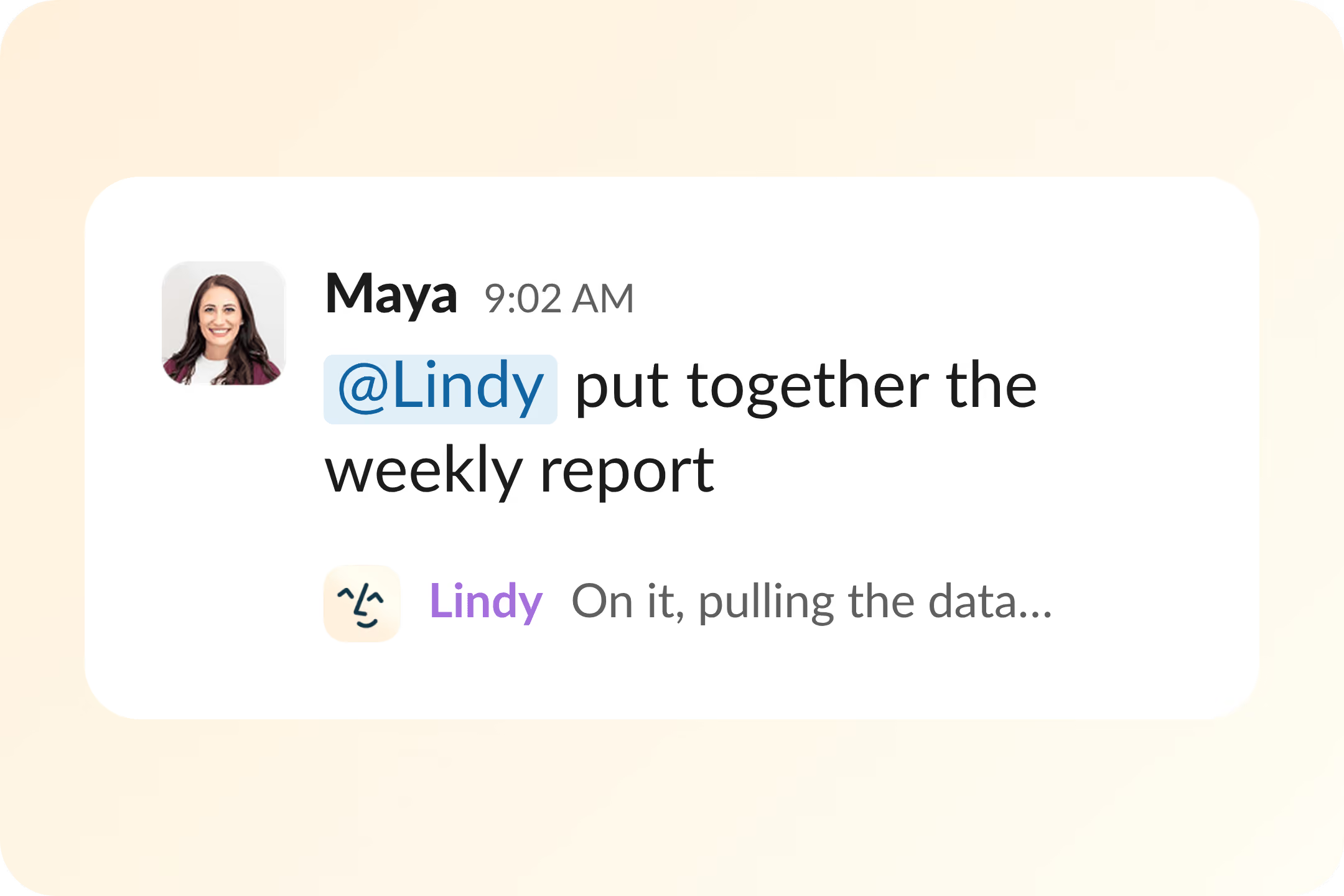
Lindy is an AI SDR that you can ask in plain English to automate your sales workflows so you can reach more prospects with consistent and relevant messaging. You can choose from prebuilt templates and customize them to launch automations quickly.
You can also connect Lindy with your sales tools and CRMs easily, as it offers 4,000+ integrations. Here’s how Lindy can be an ideal AI SDR for your team:
- Just tell it what you need: You don’t need technical skills or a complicated setup. Just text Lindy in plain English, and it handles the task, whether that’s sending a follow-up, updating your CRM, or organizing notes from a meeting.
- Generate and qualify leads in minutes: Ask Lindy to find and qualify leads in minutes. It delivers curated lead lists, updates your CRM, and even handles follow-ups, so your team can focus on building relationships, not spreadsheets.
- Personalized email outreach and replies: You can tell Lindy to craft personalized outreach and manage replies autonomously. This way, your team can send professional replies without hours of manual effort.
- Supports tasks across different workflows: Lindy also handles meeting notes, website chat, lead generation, and content creation, reducing manual work in training, content, and CRM updates.
- Update CRM fields without manual entry: Instead of just logging a transcript, you can ask Lindy to update CRM fields and fill in missing data in Salesforce and HubSpot without manual input.
- Human-in-the-loop control: Lindy lets teams decide when AI acts alone and when it asks for review. Low-risk follow-ups can run automatically. High-stakes messages can wait for approval.
- Lead enrichment: Ask Lindy to research prospects and to provide sales teams with richer insights before outreach.
- Support in 30+ languages: Lindy supports phone calls in over 30 languages, letting your team handle calls in new regions.
- Cost-effective: You can try Lindy’s 7-day free trial to see how it fits your workflows. The paid version starts from $49.99/month and offers a ton of functionality.
Try Lindy’s free trial and create your first AI SDR without a complex setup.
Frequently asked questions
What does an AI SDR do day-to-day?
An AI SDR handles early-stage sales tasks like lead research, outreach, follow-ups, and basic qualification. It monitors engagement, sends messages based on set rules, and routes interested leads to human reps, keeping the top of the funnel active without manual effort.
Can an AI SDR replace a human SDR?
An AI SDR replaces the repetitive tasks that slow human SDRs down, but it cannot replace human judgment. Human SDRs still handle discovery calls, objections, negotiation, and relationship building.
What channels can an AI SDR handle?
Most AI SDRs work across email and CRM-based workflows. Some also support LinkedIn messages, chat, and inbound lead routing. Channel support depends on the tool and its integrations. Teams usually start with email before expanding to other channels.
Is using an AI SDR safe for outbound sales and compliance?
AI SDRs are safe when teams set clear rules and follow compliance standards. That includes honoring opt-outs, managing consent, and following email regulations like CAN-SPAM or GDPR where required.
How personalized can AI SDR outreach be?
AI SDR outreach can be highly personalized, depending on data quality and setup. With strong lead enrichment and clear rules, outreach can reference role, company context, and timing signals.
What types of teams benefit most from using an AI SDR?
Outbound-heavy teams benefit the most from using an AI SDR. That includes startups, B2B SaaS teams, agencies, and lean sales organizations that need consistent follow-ups. Teams with long sales cycles also benefit because AI SDRs prevent leads from going cold.
How long does it take to set up an AI SDR?
Initial setup for an AI SDR typically takes several days, especially when integrating with CRMs and email tools. More complex, customized workflows and data mapping may require a few weeks for full optimization.