What Is an AI Chatbot? How It Works, Benefits, and Use Cases
Marvin broke down what an AI chatbot is, how it works using machine learning and NLP, and how it compares with rule-based bots.


AI chatbots use machine learning, large language models (LLMs), and natural language processing to understand queries and respond in a relevant way. This guide explains what an AI chatbot is, how it works, and how it compares to rule-based bots.
What is an AI chatbot?
An AI chatbot is a software application that uses artificial intelligence and machine learning to understand user input and respond conversationally. You can think of them as virtual assistants that handle conversations at scale, while adapting to different questions and situations.
AI chatbots work around the clock, making them useful for 24/7 customer support. They can handle many conversations at the same time and scale as demand grows. This often lowers support costs by reducing the need for human agents to handle routine questions.
However, there’s a clear distinction between rule-based chatbots and AI chatbots. Rule-based chatbots rely on predefined rules and fixed responses. They only handle questions they were programmed for, which limits how useful they are outside basic scenarios.
How do AI chatbots work?
AI chatbots are trained on vast datasets that include countless conversations. It lets them interpret meaning and nuances in language, not just keywords. Some advanced chatbots allow continuous improvement via ongoing feedback and retraining.
Here’s how they work:
Interpret the inputs
AI chatbots improve with every interaction. Each conversation helps them identify patterns, understand phrasing, and refine how they interpret intent. Over time, this makes their responses more accurate, even when questions are vague or poorly worded.
As a result, AI chatbots can handle complex questions and hold fluid conversations instead of relying on fixed scripts.
Understand context
AI chatbots track context across a conversation, not just individual messages. They can follow topic changes, reference earlier messages, and stay aligned with the user’s intent as the discussion evolves.
For example, if a conversation changes from ordering pizza to discussing favorite movies, an AI chatbot can recognize the shift in topic and respond accordingly.
In contrast, most rule-based chatbots need explicit programming for every scenario, and they often give generic responses when they encounter unexpected topics.
Respond
AI chatbots generate responses depending on the situation. They rely on what they have learned from prior interactions and data, which makes replies feel more natural. Over time, they can also adapt to user preferences and personalize responses.
{{templates}}
Benefits of using an AI chatbot
AI chatbots save time and handle more requests than any human ever can. Here’s how they benefit teams:
Save time and reduce costs
AI chatbots can handle the majority of customer questions, especially common inquiries. It reduces support costs and allows human agents to focus on complex or sensitive issues that require escalation.
Always available
AI chatbots operate 24/7. While human teams need breaks, chatbots stay online and respond instantly, which helps customers get support whenever they need it.
Consistent experiences
AI chatbots don’t get tired, distracted, or inconsistent, which helps maintain a reliable and consistent customer experience. However, the quality of responses depends on their training data quality, the models they use, and the complexity of the queries.
Before deployment, teams often train AI chatbots on large datasets of real conversations. It helps them recognize objections, understand customer pain points, and respond in a clear and relevant way. The result is faster, more personalized support.
Cater to users who prefer chatbots
Research shows that almost 40% of customers don’t mind whether they’re speaking with a human or a chatbot, as long as they get quick answers. As chatbot capabilities improve, that preference is likely to grow.
AI chatbots vs. rule-based chatbots
AI chatbots use machine learning to understand intent and adapt, while rule-based chatbots respond only to predefined commands.
Engineers develop AI chatbots by training them on large datasets of real conversations. It allows them to understand natural language, interpret intent, and generate conversational responses.
Rule-based chatbots rely on predefined rules and “if-then” logic to match keywords to scripted replies. If a question falls outside those rules, the chatbot can’t respond meaningfully.
Here’s a quick side-by-side comparison:
| Feature | AI chatbots | Rule-based chatbots |
|---|---|---|
| How they work | Learn from data and recognize intent | Follow fixed rules and keyword matches |
| Language understanding | Natural language and context-aware | Limited to predefined phrases |
| Response type | Dynamic and adaptive | Pre-written and static |
| Handling complex questions | Strong | Very limited |
| Ability to improve over time | Yes | No |
| Cost and setup | Higher upfront investment | Lower cost, simpler setup |
If you need a chatbot that can personalize responses, handle varied questions, and scale customer support, AI chatbots are the better fit. Rule-based chatbots work best for simple use cases, such as answering basic FAQs on a website.
Everyday use cases of AI chatbots
AI chatbots can handle a lot of everyday tasks for both businesses and individuals. Here’s how teams across industries and domains use AI chatbots:
- Customer service and support: AI chatbots can manage FAQs, basic requests, order tracking, and transactions. More advanced setups handle complex scenarios, personalize replies, and pass conversations to human agents when needed.
- Lead generation and qualification: AI chatbots can start and guide conversations with potential customers. They pick up on language cues, ask relevant follow-up questions, and help identify qualified leads with more accuracy.
- Personalized learning and education: AI chatbots adapt explanations based on how someone responds. They provide tailored feedback, answer detailed questions, and adjust tone or depth as understanding improves.
- Personal assistance and task management: AI chatbots can set reminders, manage calendars, and handle scheduling. Some assistants suggest next steps based on past behavior or connect with other services to complete tasks like booking appointments.
- Healthcare support workflows: AI chatbots help with symptom checks, appointment scheduling, and patient guidance. In controlled environments, some assist with compliant documentation or post-care instructions to reduce admin work.
- Research and information gathering: AI chatbots can search across websites, databases, and internal tools to collect information. They can summarize findings, compile reports, and highlight patterns when working with large datasets.
- Email triage and inbox management: AI chatbots can sort emails, flag urgent messages, draft routine replies, and surface items that need attention. Some adapt to a user’s writing style to produce more consistent drafts.
- Document and knowledge management: AI chatbots organize files, categorize content, and maintain internal knowledge bases. They also help retrieve information quickly and summarize long documents when needed.
- Reminders and follow-up tasks: AI chatbots track deadlines, follow up on open action items, and send reminders. In some cases, they suggest rescheduling or provide progress updates when conflicts arise.
How to create an AI chatbot with Lindy
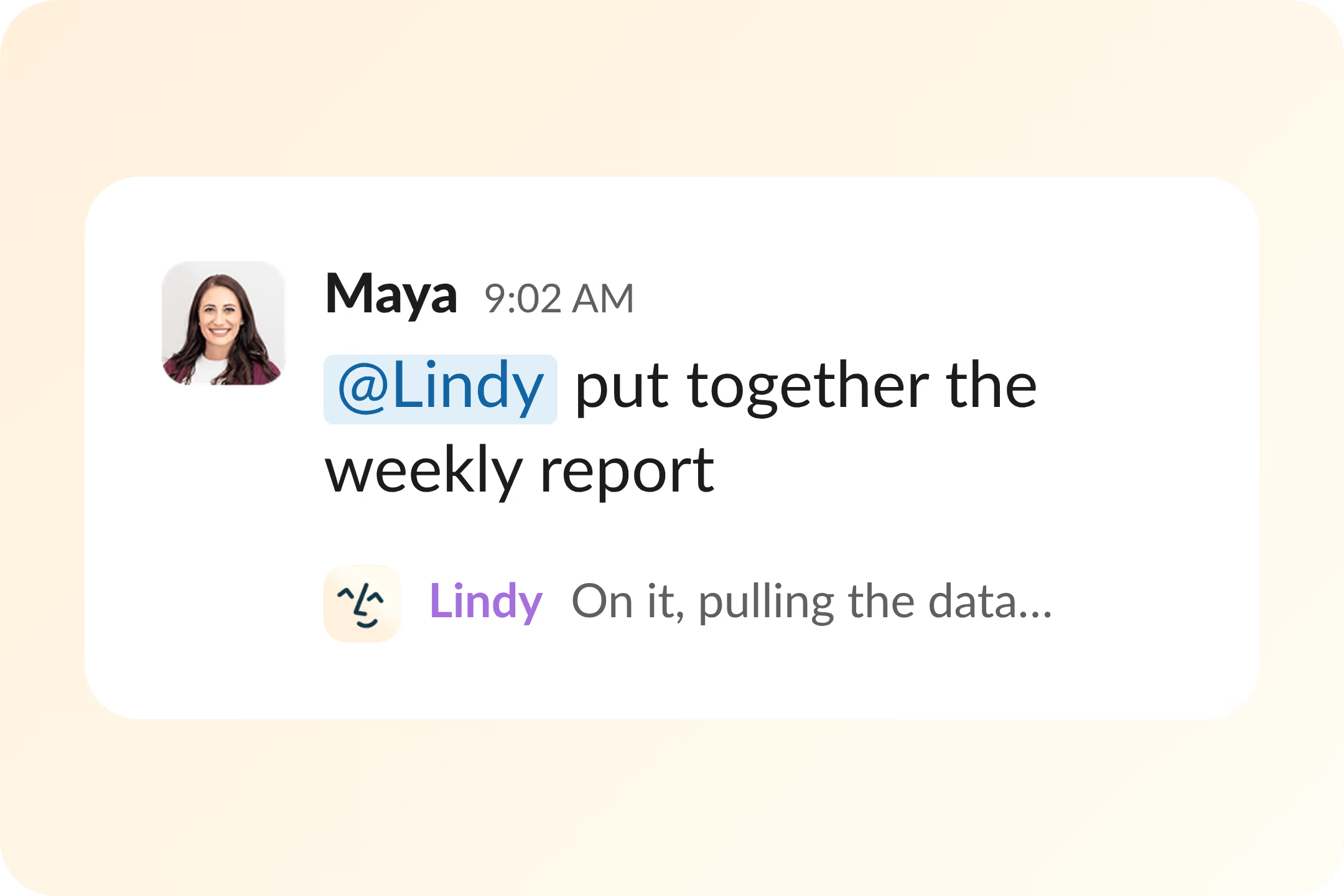
Lindy can be your AI chatbot without having a complex setup. It offers hundreds of ready-to-use templates that you can customize for your use cases.
Here’s a simple breakdown of how the setup process works:
Step 1: Sign up and choose a template
Create an account and select a template based on the task you want to automate, such as scheduling, customer support, task tracking, or research. You can also start from a blank template if you need more control.
Alternatively, you can simply describe what you want Lindy to do in natural language. You can then tweak the chatbot to match your use case.
Step 2: Provide instructions
Define what you want the chatbot to do, like answering questions or booking meetings. Clear instructions and examples help the chatbot respond more accurately. As a chatbot, Lindy can understand when to respond. It can be new emails or calendar updates.
Lindy connects with 4,000+ apps, including email platforms, calendars, and support software, so you can link the chatbot to the systems you already use.
Step 3: Configure email and Slack workflows
Ask Lindy to monitor your inbox in your email and Slack. For example, it can watch a support inbox for new tickets or schedule meetings based on incoming messages or invites.
A few things to keep in mind: Clear task definitions lead to better results. Ongoing feedback also helps improve responses over time, especially as workflows become more complex.
{{cta}}
Try Lindy to create AI chatbots and automate other tasks
You can simply ask Lindy in plain English to act as an AI chatbot for your use cases, and it will. There’s no need to learn coding. You can also find templates to automate other tasks across support, sales, and admin workflows.
Here’s why Lindy should be in your corner:
- Just tell it what you need: You don’t need technical skills or a complicated setup. Just text Lindy in plain English, and it handles the task, whether that’s sending a follow-up, updating your CRM, or organizing notes from a meeting.
- Integrates with major apps: Lindy connects with your favorite tools like Airtable and Salesforce, keeping all your training data in one place.
- Generate and qualify leads in minutes: Ask Lindy to find and qualify leads quickly. It delivers curated lead lists, updates your CRM, and even handles follow-ups, so your team can focus on building relationships, not spreadsheets.
- Personalized email outreach and replies: You can tell Lindy to craft personalized outreach and manage replies autonomously. This way, your team can send professional replies without hours of manual effort.
- Supports tasks across different workflows: Lindy also handles meeting notes, website chat, lead generation, and content creation, reducing manual work in training, content, and CRM updates.
- Cost-effective: You can try Lindy’s 7-day free trial to see how it fits your workflows. The paid version starts from $49.99/month and offers a ton of functionality.
Try Lindy’s free trial and create your first AI chatbot without a complex setup.
Frequently asked questions
What is a chatbot used for?
A chatbot is used for tasks like customer support, lead qualification, scheduling, research, and internal assistance. Businesses also use chatbots to answer FAQs, route requests, and automate routine conversations.
What is the difference between AI chatbots and rule-based chatbots?
AI chatbots understand intent and adapt over time, while rule-based chatbots follow predefined rules and fail outside scripted inputs.
Are AI chatbots free?
Some AI chatbots offer free plans or trials with limited features. For example, Lindy offers a free trial for 7 days. However, you may need a paid plan to access advanced AI features, higher usage limits, integrations, and customization options.
Are AI chatbots safe to use?
AI chatbots can be safe when developed and operated with strong security measures, including data encryption, proper user authentication, and compliance with relevant privacy standards. For organizations in regulated industries, it's important to ensure that the chatbot tool meets certifications like SOC 2 and HIPAA.
Can AI chatbots improve customer support and experience?
Yes, AI chatbots can improve customer support by providing fast, consistent responses and handling high volumes of requests. They reduce wait times and allow human agents to focus on complex issues.
Can AI chatbots integrate with other business systems?
Yes, AI chatbots can integrate with systems like CRM tools, email platforms, calendars, and help desks. These integrations allow the chatbot to take action instead of only answering questions.
Will AI chatbots replace human jobs?
AI chatbots will replace humans who handle repetitive tasks. Most teams use chatbots to reduce manual workload while keeping humans responsible for judgment, strategy, and complex decisions.