


Top 10 AI Agent Companies for 2026: Tested and Reviewed


To find the top 10 AI agent companies for 2026, I tested the popular ones across research, operations, calling, sales, and other everyday workflows. Discover how you can use them to create, train, and deploy custom AI agents to automate your specific tasks.
Top 10 AI agent companies: TL;DR
I compiled this list of AI agent companies after considering different users and their cases. Here’s how they compare side-by-side:
1. Lindy: Best AI agent platform for workflow automation
What it does: Lindy acts as your personal AI assistant using AI agents. Just text what you need, and Lindy will handle things like email, scheduling, lead follow-ups, and more. There’s no need to hire an AI agent dev company or learn to code.
Who it’s for: Operators, founders, and lean teams looking to offload repetitive tasks like sales ops, customer support, or internal admin work without hiring or coding.
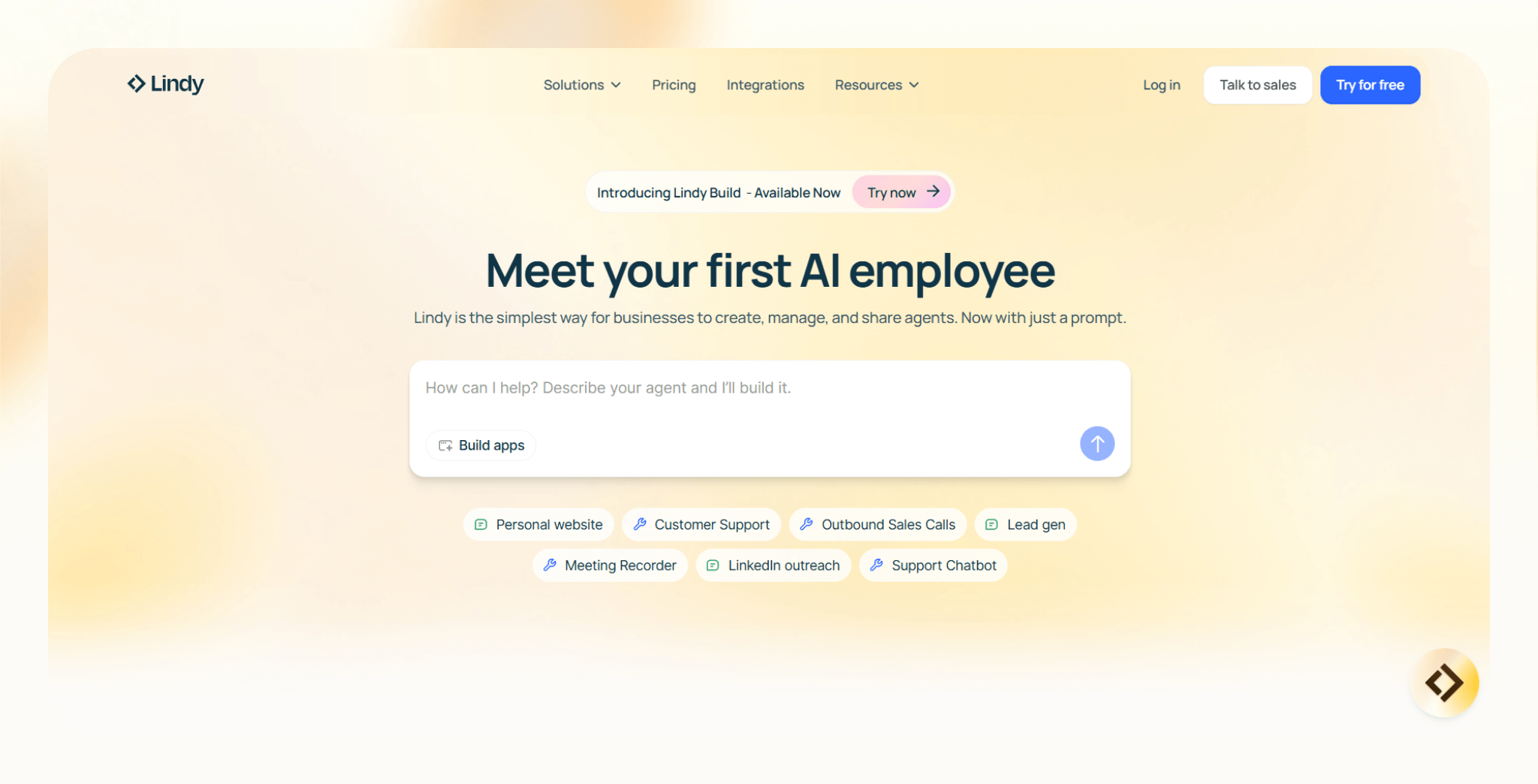
You can ask Lindy to handle business tasks such as managing your inbox, scheduling meetings, sending follow-ups, and extracting data. You don’t need a technical setup; just tell Lindy in natural language and it completes the task.
Lindy also offers ready-to-use templates to launch workflows fast, like an email triager, meeting scheduler, and follow-up email drafter. You can also modify these templates without writing code to match your use cases.
Lindy can also handle inbound and outbound phone calls, and is 1,100 ms faster than the competition. It’s fast enough to feel human, while being smooth enough to never break the flow. You can use it for customer support, lead generation and follow-up, book appointments, and more.
Key features
- Automation across channels: Lindy can communicate over email, phone, Slack, and web, which is useful if your workflows span channels.
- Human-in-the-loop support: Add approvals or checkpoints when full automation isn’t ideal.
- Prebuilt templates: Hundreds of ready-made workflows for lead routing, support responses, scheduling, and more.
- 4,000+ integrations: Integrates with all major apps without complex setup.
Pros
- Fast setup with no-code builder
- Integrates natively with CRMs, support tools, calendars, and more
- SOC 2 and HIPAA-compliant for enterprise security requirements
Cons
- Credit-based pricing on lower tiers may limit power users
- May take some time to fine-tune agents for complex workflows
Pricing
- Free trial to test the tool
- Paid plans from $49.99/month, billed monthly
Bottom line
If you want a reliable AI assistant that can manage everyday tasks using AI agents without a technical setup, Lindy’s a strong choice. Just ask it what you want it to do, and it’ll do it, helping you save time and focus on what matters.
{{templates}}
2. CrewAI: Best for multi-agent task orchestration
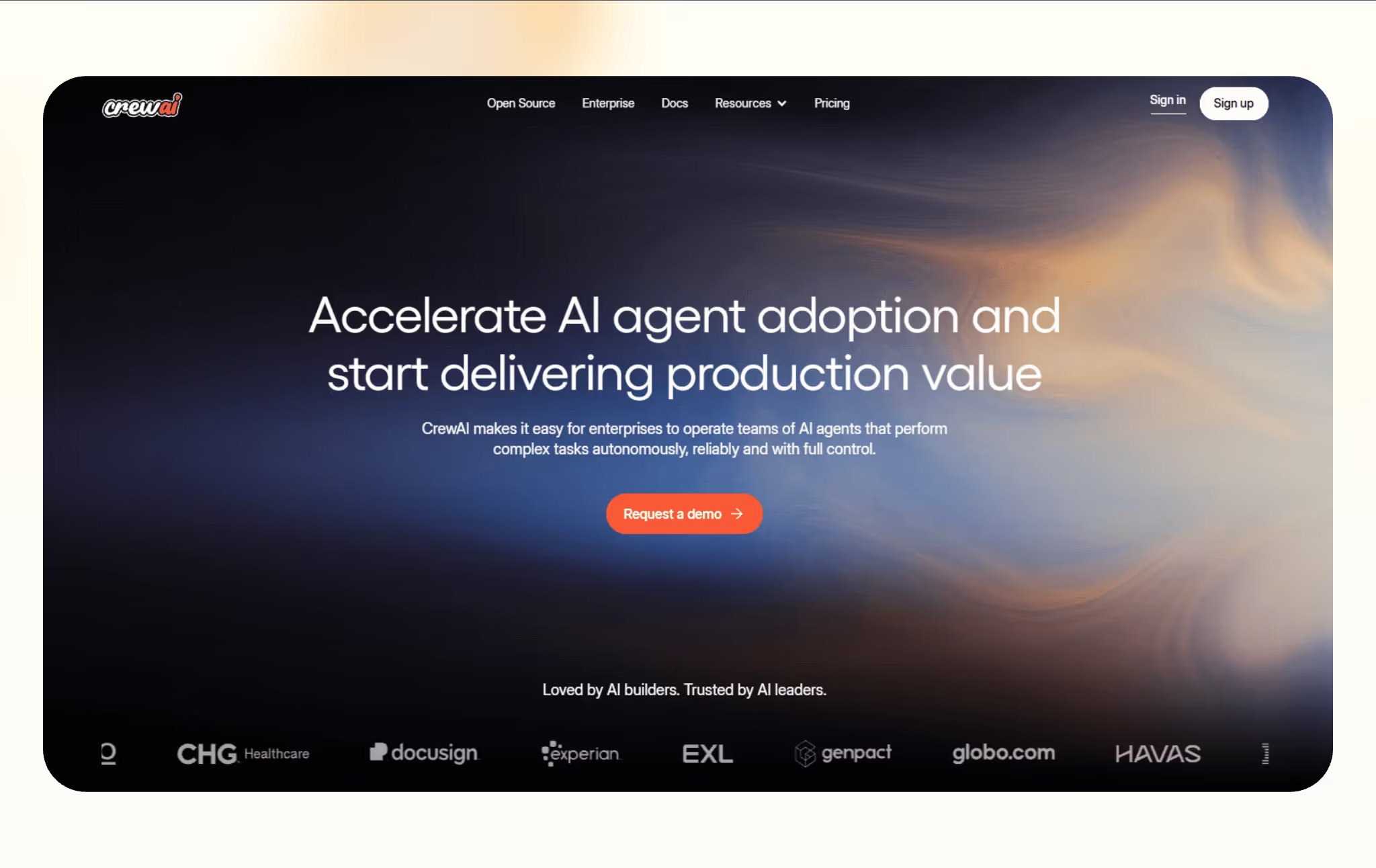
What it does: CrewAI is an open‑source framework for coordinating multiple AI agents, each with defined roles, to work together on complex tasks.
Who it’s for: Developers and teams who want to design multi-step, multi-agent systems.
CrewAI lets you create ‘crews’ of agents, like a researcher, writer, and editor, that work together with defined responsibilities. While it’s not plug-and-play, it’s flexible and developer-first and fits well in research, data analysis, and technical project workflows.
Key features
- Role-based orchestration: Assign custom tasks to each agent
- Python-based framework: Build logic flows and memory sharing
- Open-source: Fully customizable for specific team needs
Pros
- Strong for task delegation at scale
- Works with any LLM
- Ideal for technical builders and prototypers
Cons
- Requires Python knowledge
- Can seem expensive for the hosted plans
Pricing
- Free under an open-source license
- Paid plans start from $25/month
Bottom line
CrewAI is for technical teams exploring how multiple agents can solve layered problems together. It isn’t for beginners, but it’s great for building custom agent tools.
3. Cognition: Best for autonomous software engineering
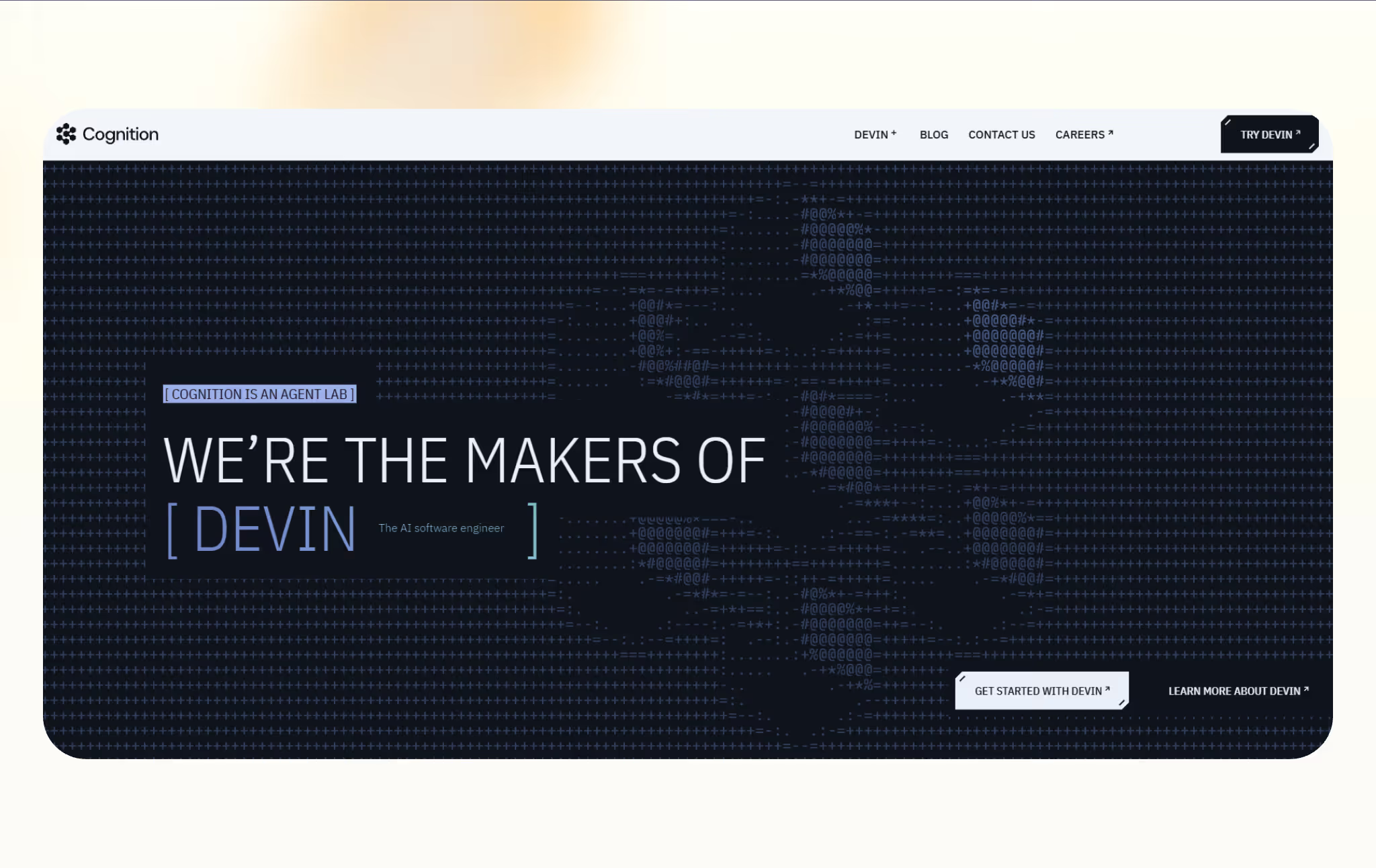
What it does: Cognition builds autonomous AI agents for software engineering teams.
Who it’s for: Engineering teams, technical founders, and product leaders exploring AI-assisted development for web apps or developer tools.
Devin, by Cognition, is an AI software engineering agent that can assist with planning, coding, debugging, and deploying applications. It can also write large portions of a codebase, set up environments, and push changes to GitHub.
However, it still benefits from human guidance for complex or production-grade projects. Devin works best as a highly autonomous engineering assistant rather than a fully hands-off replacement for a software team.
Key features
- End-to-end coding support: From feature spec to working deployment
- Built-in IDE (Devin 2.0): Can host, run, and test code internally
- Error recovery: Can detect and fix its own bugs mid-process
Pros
- Ideal for rapid prototyping
- Can run live code in secure sandboxes
- Teams can audit the output before merging it to production
Cons
- Not open-source
- Performance depends on clearly defined goals and prompts
Pricing
- No free plan
- Pay-as-you-go plan from $20
- Devin Team: $500/month
- Custom pricing for enterprise deployments
Bottom line
Devin is best if you want to automate software development. It's for technical teams and can save hours for developer-heavy organizations.
4. Vocode: Best for AI-powered phone agents
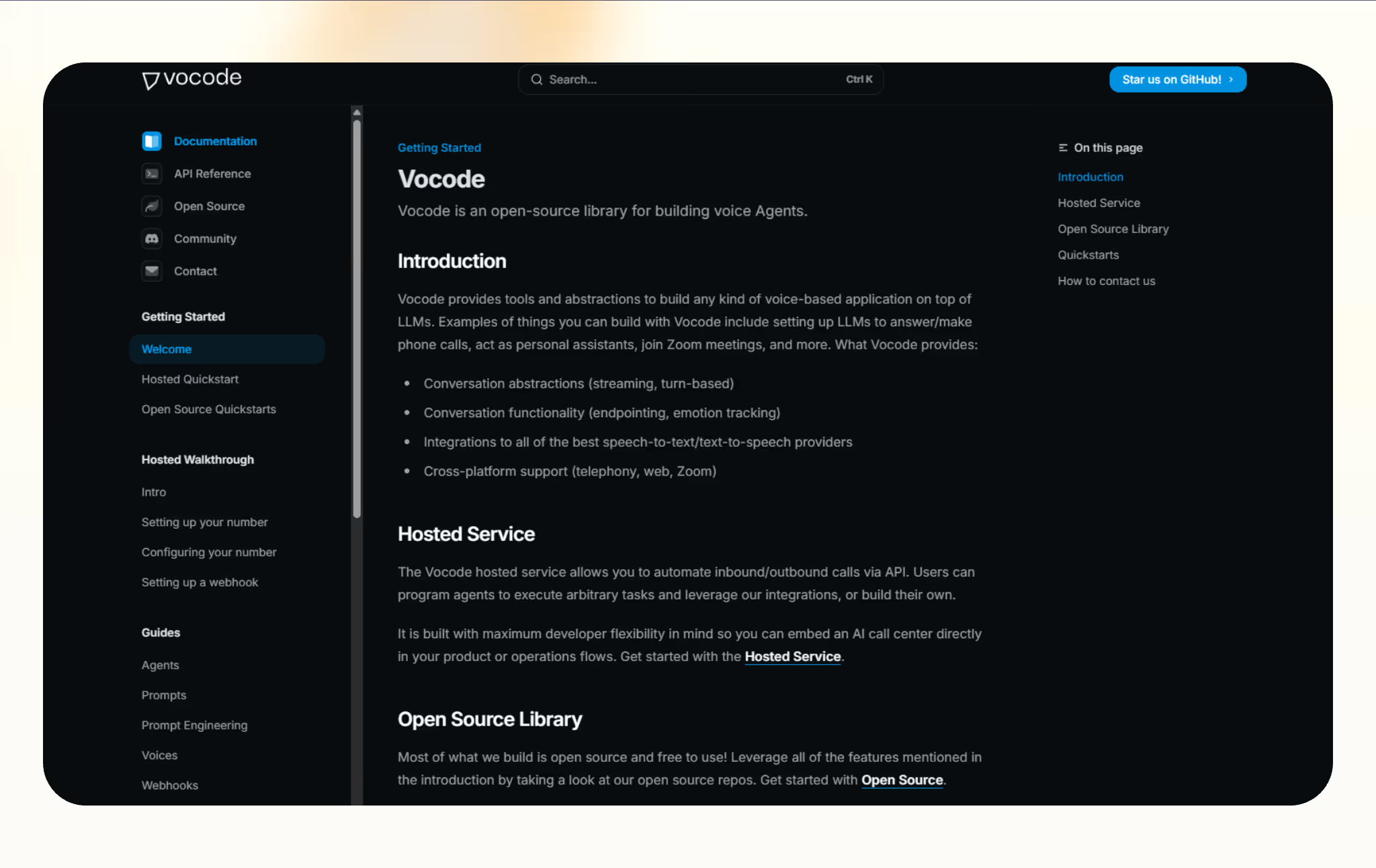
What it does: Vocode is an open‑source platform for building conversational phone agents, including both inbound and outbound call flows.
Who it’s for: Developers building voice agents for customer support, appointment booking, or phone-based data collection.
Vocode lets you create custom phone agents that sound natural and can switch between languages. Developers can deploy agents on Twilio or use their stack. It’s lightweight and flexible, but for coders.
Key features
- Real-time voice agents: Handles live calls with speech recognition + synthesis
- Multilingual support: Can operate in multiple languages
- Custom APIs: Plug in your own logic or backend flows
Pros
- Good voice quality
- Fully open-source and customizable
- Active developer community
Cons
- Need to have technical skills
- Requires setup and infrastructure to deploy
Pricing
- Free to use under an open-source license
- Costs vary by provider, as telephony providers like Twilio set carrier/API pricing
Bottom line
If you’re building voice-first agent tools, Vocode is a strong foundation. Just be prepared to write some code.
5. OpenAI Operator: Best for browser-level task automation
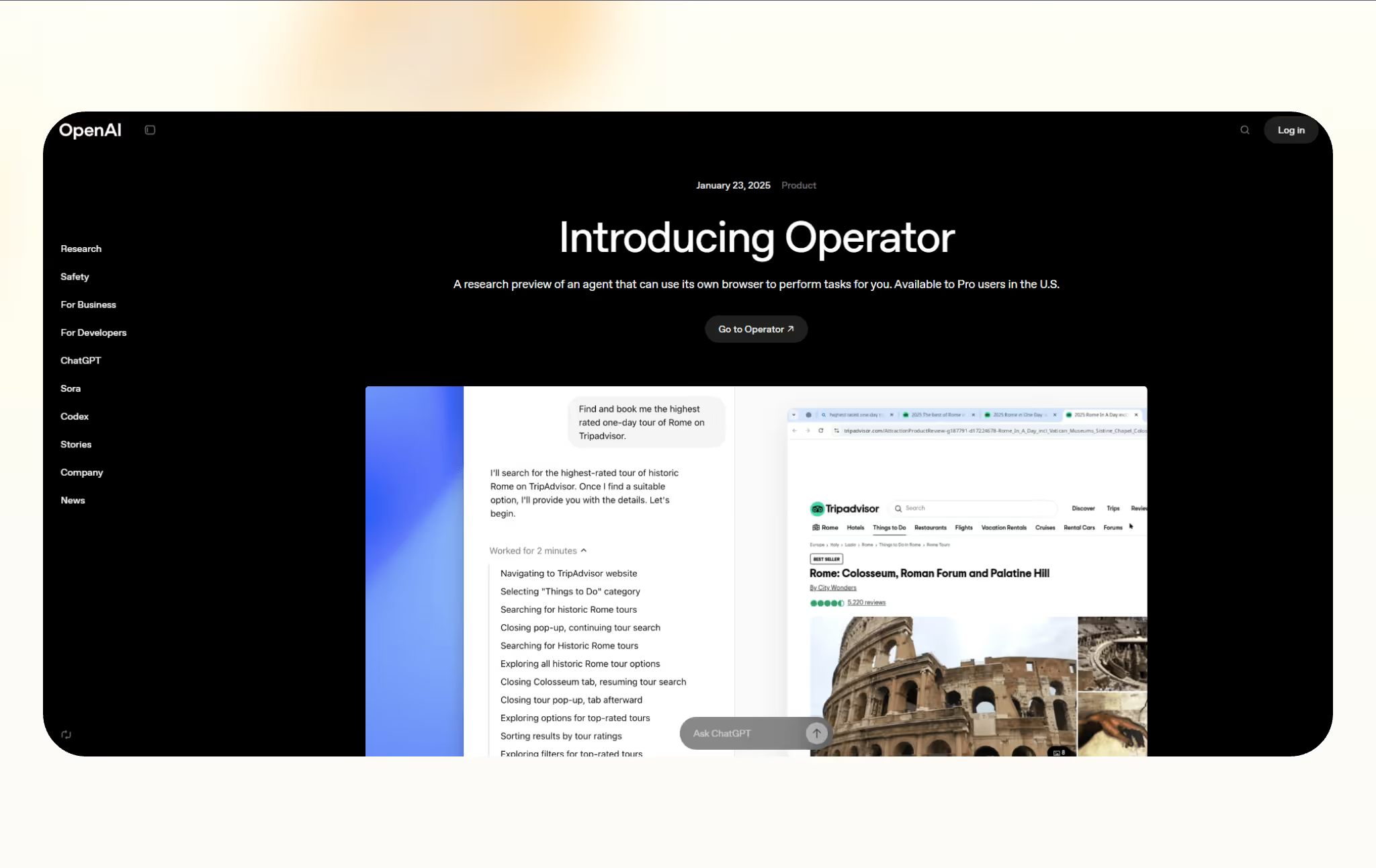
What it does: OpenAI Operator can complete tasks directly inside a live web browser and can click, type, scroll, and navigate websites much like a human user.
Who it’s for: Office users, researchers, and teams that need AI agents to perform real-world web tasks across tools that don’t expose clean APIs.
Operator can handle tasks like filling out forms, navigating dashboards, gathering information from multiple sites, and completing repetitive browser-based workflows. Because it works at the browser level, it’s useful for automations that traditional workflow tools struggle with, especially when dealing with legacy systems or custom internal tools.
Key features
- Live browser control: Executes actions like clicking, typing, and scrolling in real time
- Tool-agnostic automation: Works across websites without needing native integrations
- Task reasoning: Breaks down goals into step-by-step browser actions
Pros
- Handles tasks APIs can’t reach
- Useful for legacy tools and internal dashboards
- Reduces manual, repetitive browser work
Cons
- Requires monitoring for longer or complex tasks
- Not optimized for high-volume automation
- Limited customization compared to dedicated agent builders
Pricing
- Included with ChatGPT Pro plan and higher
- Costs from $20/month, billed monthly, for the Pro plan
Bottom line
Operator is best for teams that need AI to work inside the browser. It’s a strong option for task automation in messy, real-world environments, but it works best with human oversight rather than as a hands-off agent.
6. Stack AI: Best for internal AI agents and workflows
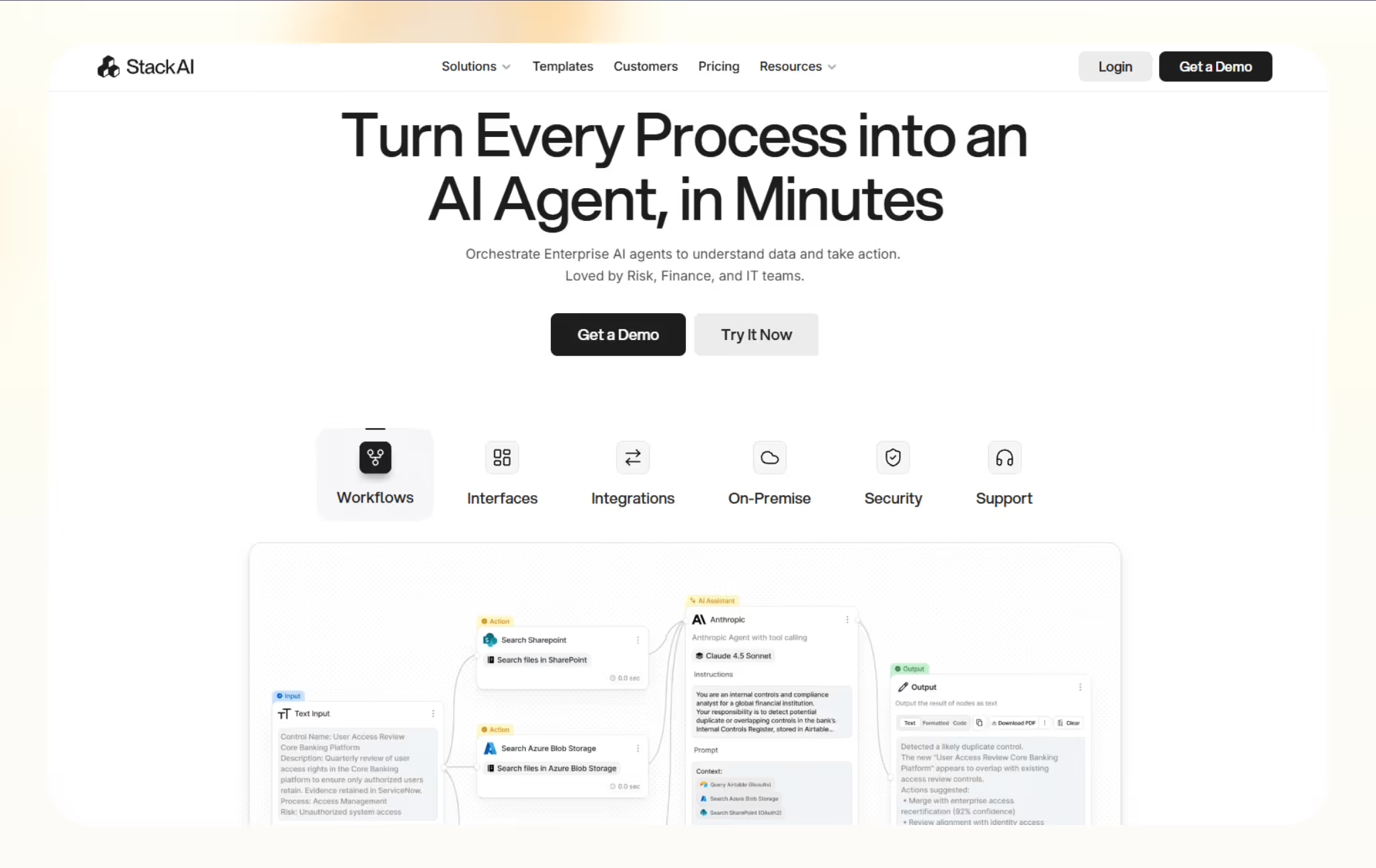
What it does: Stack AI is a no-code platform for building internal AI agents that connect to company data, documents, APIs, and workflows.
Who it’s for: Business teams, operators, and technical PMs who want to deploy AI agents internally without building everything from scratch.
Stack AI lets you create agents that can query internal knowledge bases, interact with APIs, and follow structured logic to complete tasks. Common use cases include internal chatbots, research assistants, document analysis tools, and lightweight workflow automation.
Compared to developer frameworks, Stack AI emphasizes usability and faster deployment over deep customization.
Key features
- No-code agent builder: Create AI agents using a visual interface
- Data and API connections: Connect agents to internal documents, databases, and services
- Workflow logic: Control how agents respond, route tasks, and take actions
Pros
- Easy to set up without engineering support
- Well-suited for internal-facing use cases
- Faster time-to-value than custom agent builds
Cons
- Limited flexibility for highly complex agent systems
- Less control than open-source or code-first frameworks
- Not for real-time or multi-agent coordination
Pricing
- Free plan with 500 runs/month
- Custom paid plans depending on your needs
Bottom line
Stack AI works well for teams that want practical internal AI agents without committing to custom development. It trades customization for speed and accessibility, which makes it a good fit for internal tools and business workflows.
7. Voiceflow: Best for conversational AI agent design
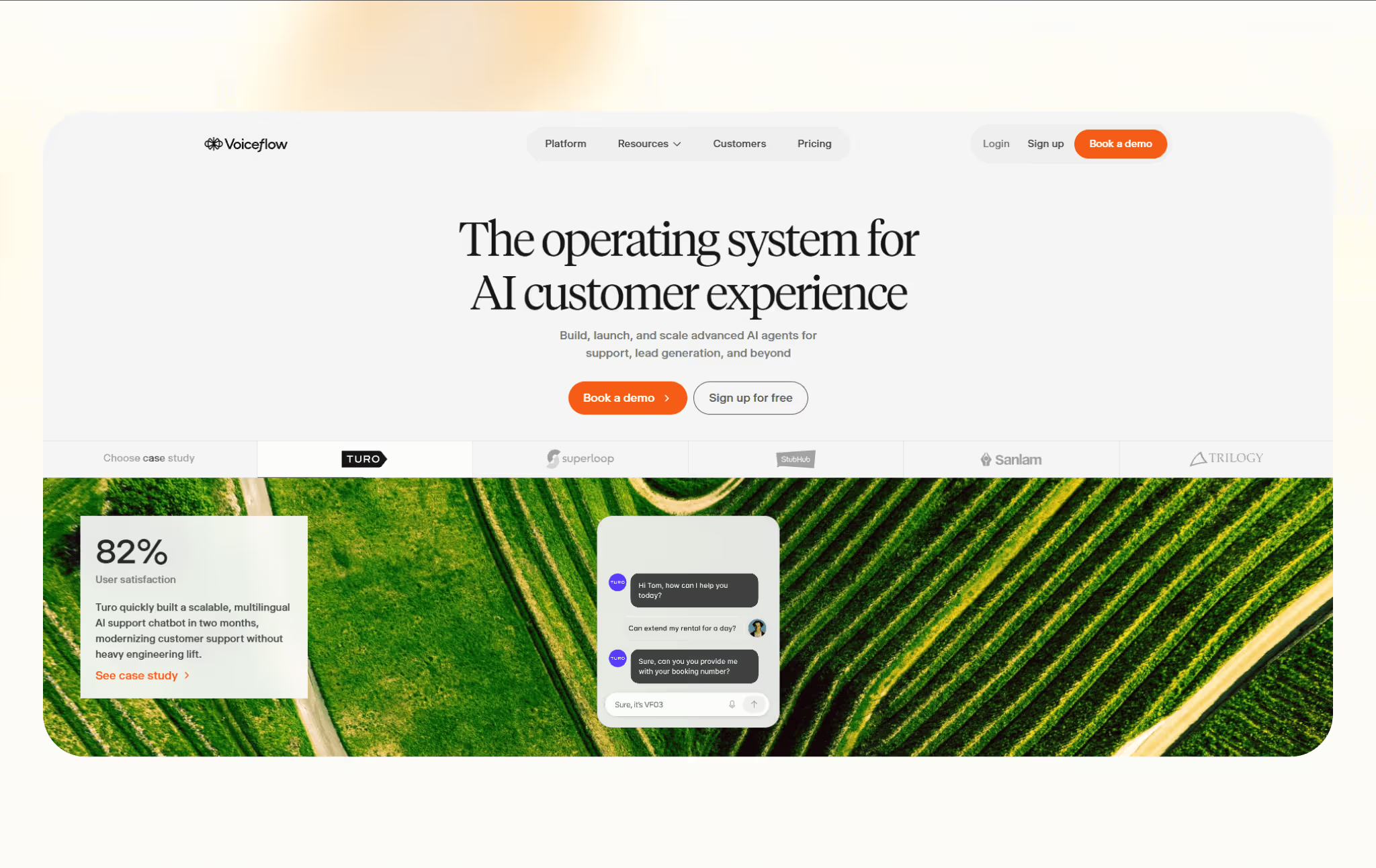
What it does: Voiceflow is a visual platform for designing, prototyping, and deploying conversational AI agents across chat and voice channels. It focuses on conversation logic, user flows, and integrations rather than full workflow automation.
Who it’s for: Product teams, conversation designers, and developers building customer-facing AI assistants for chat or voice experiences.
Voiceflow lets you design conversations using a drag-and-drop interface, define intents, manage dialogue states, and connect agents to external APIs. It works best when the primary goal is controlling how an AI converses rather than executing complex backend workflows.
Teams can use it for customer support bots, onboarding assistants, and voice or chat interfaces embedded into apps and websites. While it supports integrations and workflow customizations, Voiceflow is not a general-purpose agent automation platform.
Key features
- Visual conversation builder: Design dialogue flows and logic without writing code
- Multi-channel support: Build agents for chat and voice experiences
- API and tool integrations: Connect conversations to external systems and data
Pros
- Strong tooling for conversation design
- Easy to collaborate on how agents behave and the workflows
- Well-suited for customer-facing assistants
Cons
- Limited workflow automation beyond conversations
- Not ideal for backend-heavy or ops workflows
- Advanced use cases may require developer support
Pricing
- Free plan with 100 credits/month
- Paid plans start from $60/month, billed monthly
Bottom line
Voiceflow is best for teams that care about conversation quality and user experience. It’s ideal for building chat and voice assistants, but it cannot replace broader agent automation or workflow platforms.
8. Gumloop: Best for no-code agent workflows
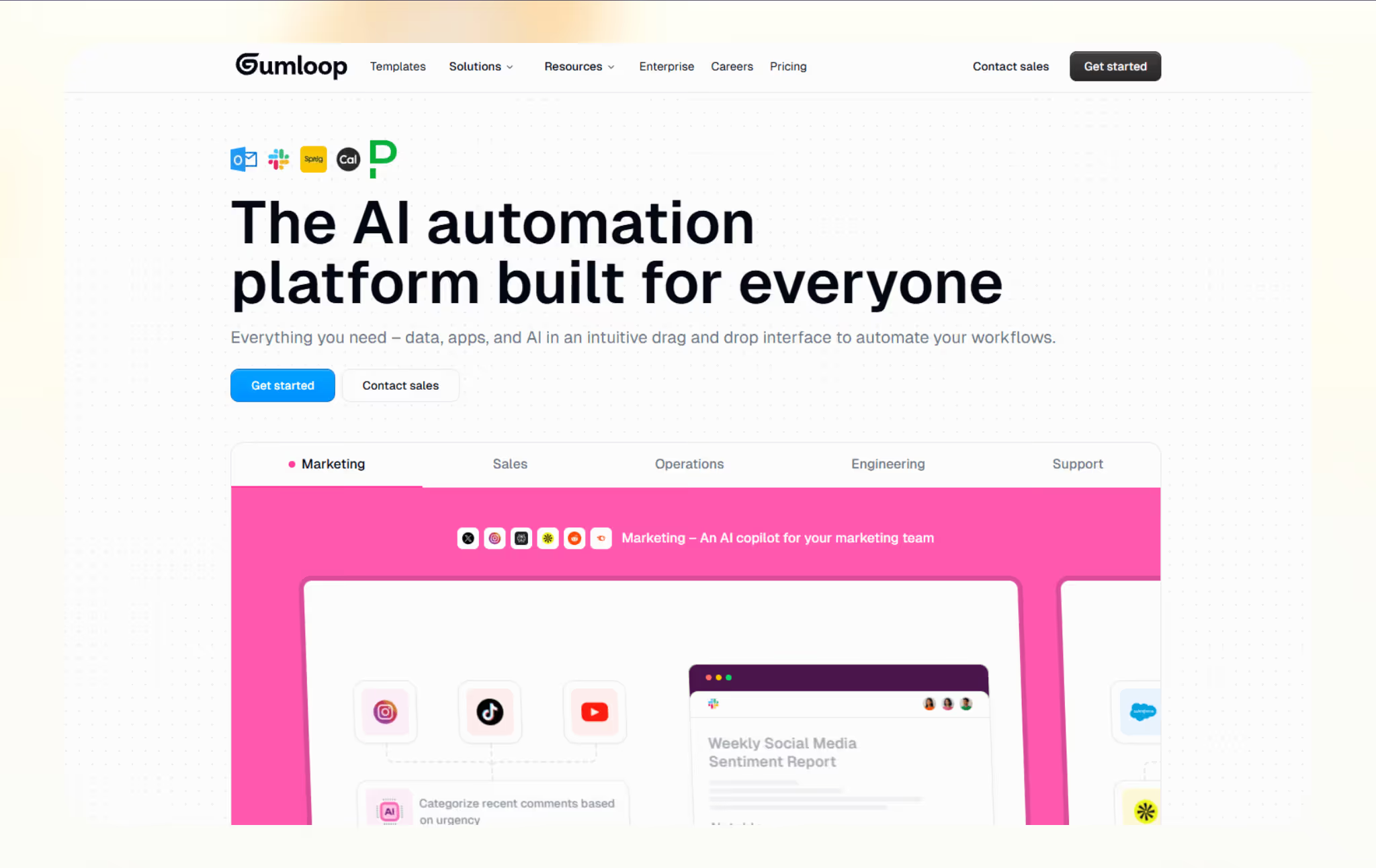
What it does: Gumloop is a no-code platform for building complex automation workflows that use large language models. It focuses on helping non-technical users create agents that can process data, move information between tools, and complete structured tasks.
Who it’s for: Operators, growth teams, and non-technical users who want to automate repeat tasks using AI without writing code.
Gumloop lets you design workflows using a visual, drag-and-drop interface where AI steps can analyze text, extract information, generate content, or make decisions. These workflows can connect to common business tools and data sources, making the tool useful for tasks like lead processing, research, content operations, and internal automation.
It’s not built for advanced agent reasoning or multi-agent systems, but it works well for repeatable workflows where AI handles parts of the task instead of a human.
Key features
- Visual workflow builder: Create AI-powered automations without code
- LLM-powered steps: Use AI to analyze, transform, or generate data within workflows
- App integrations: Connect workflows to common tools and data sources
Pros
- Easy for non-technical users to adopt
- Good balance between automation and AI flexibility
- Useful for repeatable, process-driven tasks
Cons
- Limited support for complex automation workflows
- Not designed for real-time or autonomous agents
- Less control than developer-first platforms
Pricing
- Free plan with 2,000 credits/month
- Paid plans start from $37/month, billed monthly
Bottom line
Gumloop delivers value for teams that want AI-assisted automation without the overhead of custom development. It’s best suited for structured workflows where AI augments the process, rather than fully autonomous agents operating on their own.
9. LangChain: Best for custom LLM agent development
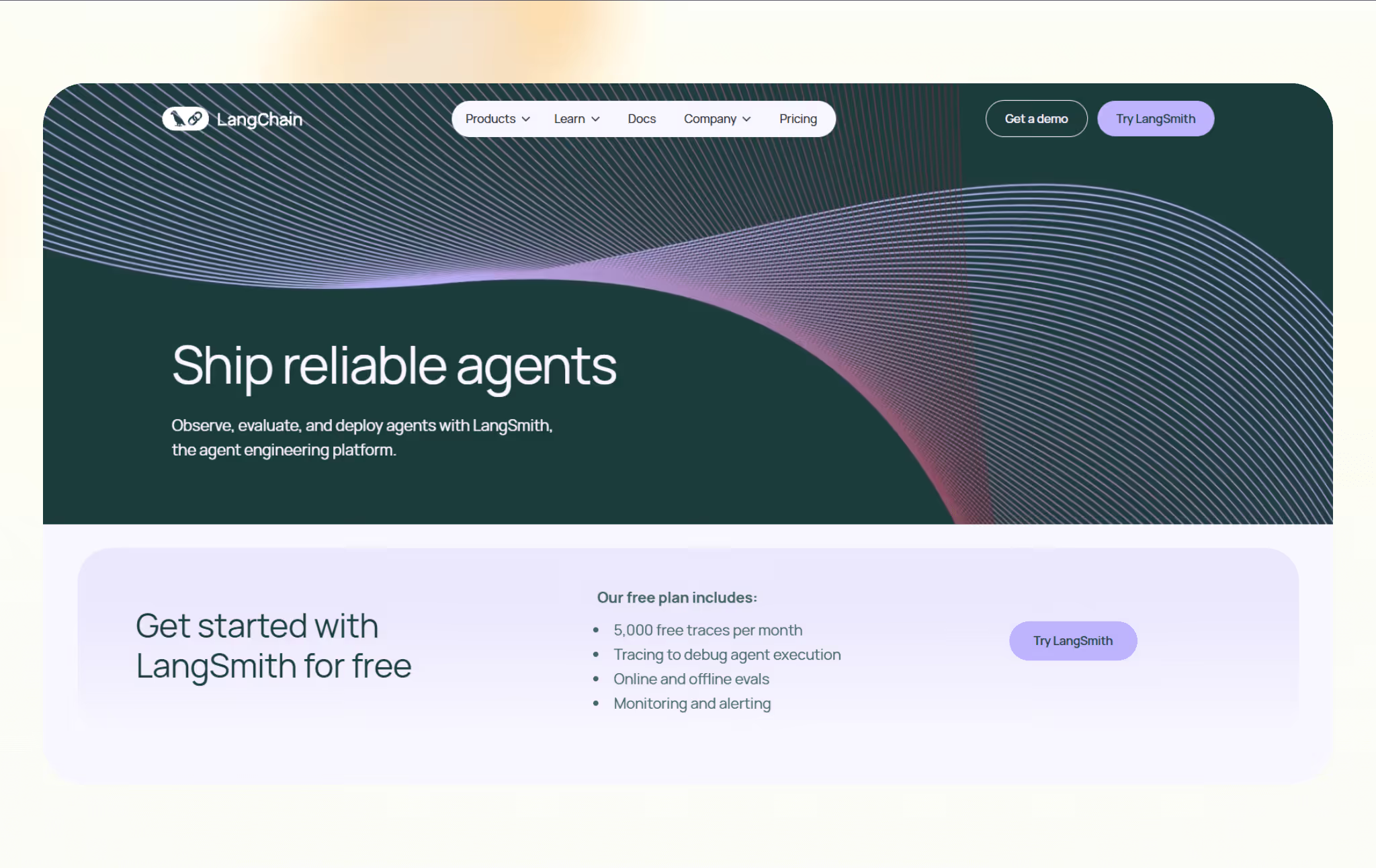
What it does: LangChain is a development framework for building apps powered by language models, including custom agents that use tools, memory, and reasoning steps.
Who it’s for: Engineers and AI researchers building LLM-powered systems from the ground up.
LangChain supports function-calling, tool chaining, prompt engineering, and long‑term memory. It gives you everything you need to build custom AI agents with complete control over agent logic and data routing.
Key features
- Tool chaining: Connects multiple functions in a flow
- Memory modules: Store and retrieve context mid-conversation
- Framework flexibility: Compatible with any LLM or backend
Pros
- Extremely customizable
- Strong open-source community
- Great for POCs and experiments
Cons
- No visual interface
- Steep learning curve for non-engineers
Pricing
- Fully open-source under MIT license
- Hosted plans include LangGraph and LangSmith, from $39/seat/month
Bottom line
LangChain is one of the most mature open-source frameworks for building AI-powered agents from scratch, but it's only useful if you have engineers on hand.
10. Moveworks: Best for enterprise IT and employee support agents
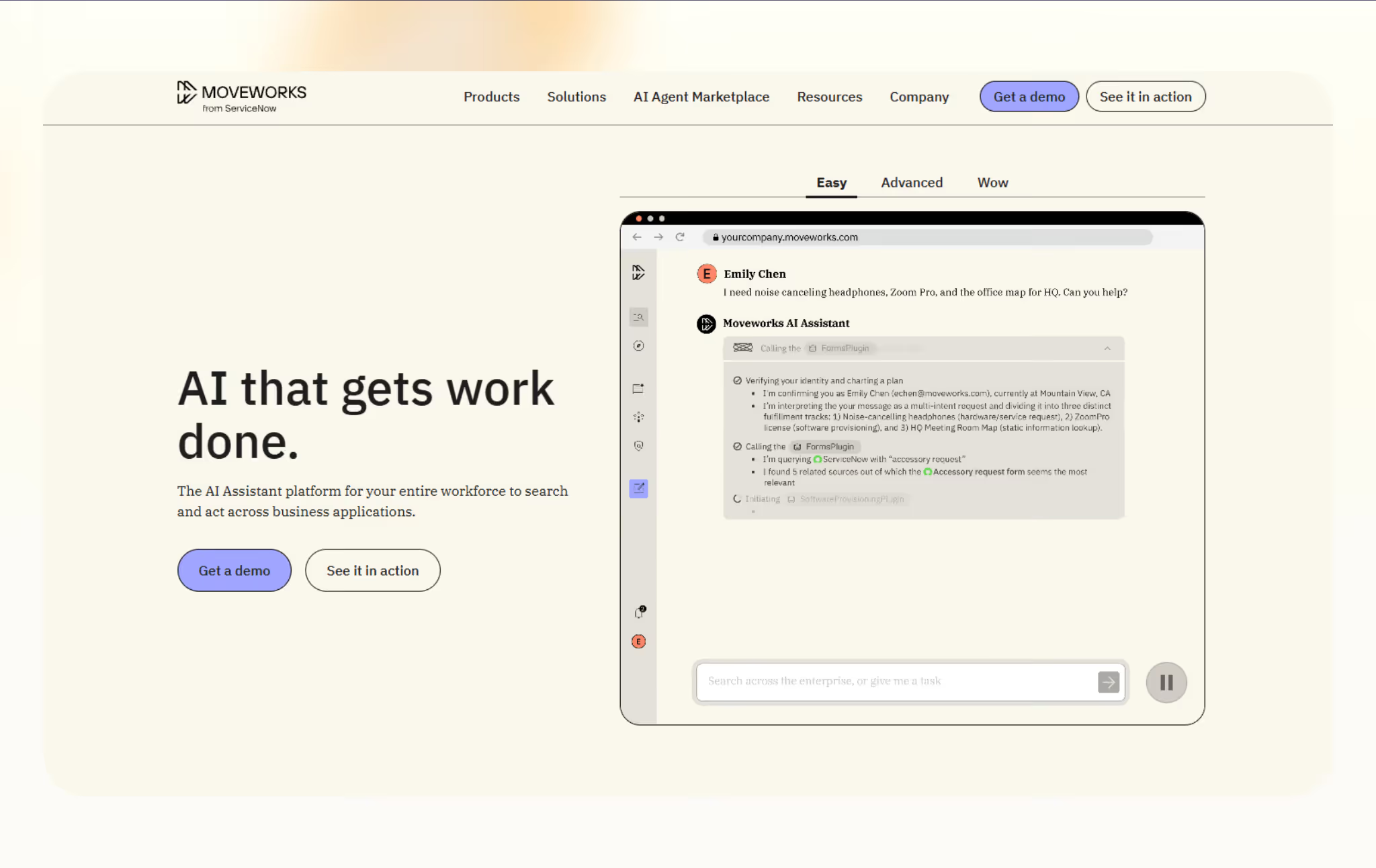
What it does: Moveworks is an enterprise AI platform that deploys agents to handle employee support across IT, HR, and internal operations.
Who it’s for: Large organizations and IT teams looking to automate high-volume internal support and service desk workflows.
Moveworks integrates deeply with enterprise tools like ServiceNow, Jira, Workday, and internal knowledge bases. Employees can interact with agents through chat tools like Slack or Microsoft Teams to reset passwords, request access, troubleshoot issues, or get answers from company documentation.
The agents can resolve issues, answer questions, and take action inside enterprise systems without human intervention for routine requests. It’s not a general-purpose agent builder, but it excels at automating repetitive internal requests in complex enterprise environments.
Key features
- Employee-facing AI agents: Resolve IT, HR, and ops requests through chat interfaces
- Deep enterprise integrations: Connects with service desks, identity systems, and knowledge bases
- Automated resolution: Handles common issues end-to-end without human escalation
Pros
- Proven at enterprise scale
- Strong security and compliance posture
- Reduces service desk workload significantly
Cons
- Expensive and enterprise-focused
- Limited customization outside supported use cases
- Not suitable for SMBs or lightweight workflows
Pricing
- No free plan or trial
- Need to contact their team for more details
Bottom line
Moveworks suits enterprises that want AI agents to take work off of internal support teams. It’s highly effective within its scope, but it’s overkill for smaller teams or anyone looking for a flexible, build-your-own agent platform.
How I tested these AI agent companies
I wanted to understand these tools and what it’s like to use them before recommending any of them, especially from the perspective of an operator or builder.
I created test flows across sales, support, scheduling, and document workflows. For tools without public access, I reviewed product docs, user demos, and community feedback to assess how the agents behave in real-world use.
Here’s what I looked for:
- Time to deploy: Could I go from zero to a working agent in under an hour? Speed matters, especially for lean teams without dedicated engineering support.
- Task reliability: Did the agent complete workflows accurately and consistently, without breaking on edge cases?
- Integration depth: Could the tool connect to everyday business systems, like CRMs, calendars, or support platforms, without complex setup?
Additional factors considered
- Security and compliance: Some agents handle sensitive data, so I looked at SOC 2, HIPAA, and access control options.
- Flexibility for different roles: Not all tools serve the same user. I assessed how well they fit ops teams, developers, and cross‑functional users.
Which AI agent company should you choose?
You should choose the right AI agent company based on what kind of work you’re trying to offload and how technical your team is. Here’s how to think about fit based on your use cases:
Choose Lindy
- If you run everyday business tasks at a startup or mid-size team
- If you want to automate email, scheduling, CRM updates, or support tasks
- If you don’t have engineering resources, but still need reliable automation
Lindy works well if you want a practical, business-focused AI assistant. It’s especially useful for lean ops teams who need to move fast.
Choose other platforms
- OpenAI Operator: If you need an agent to complete tasks directly in a browser, especially across legacy tools or sites without APIs
- Cognition (Devin): If you want an autonomous coding agent to help plan, write, and ship internal software with human oversight
- Vocode: If you’re building AI-powered phone or voice agents and want an open-source, developer-friendly voice stack
- CrewAI: If you’re building multi-agent systems for research, data analysis, or technical workflows and want full control over agent roles
- LangChain: If you have engineers who want fine-grained control over agent logic, memory, and tool chaining
- Stack AI: If you want internal AI agents connected to company docs, APIs, and workflows without heavy engineering work
- Voiceflow: If you’re designing customer-facing chat or voice assistants and care most about conversation flow and UX
- Gumloop: If you want no-code, AI-powered workflows for repeatable business processes
- Moveworks: If you’re an enterprise looking to automate IT, HR, and internal support requests at scale
Final verdict
For non-technical teams that need reliable, everyday workflow automation, Lindy is the strongest fit on this list. It covers the most ground without requiring engineering resources and can handle tasks like inbox triage, meeting scheduling, follow-ups, and system updates.
If you’re a highly technical or research-focused team, Cognition (Devin) stands out for AI-assisted software development, while CrewAI and LangChain offer flexibility for developer teams building custom agent systems from the ground up.
For teams that need agents to operate in real-world environments, OpenAI Operator is useful for browser-based tasks that don’t rely on clean integrations. If your focus is internal tools and workflows without heavy engineering, Stack AI and Gumloop offer faster paths to deployment.
Customer-facing teams designing chat or voice experiences will find Voiceflow or Vocode better suited for conversation-driven agents, while large enterprises automating internal IT and employee support should look at Moveworks.
The space is evolving quickly, but the best agent platforms ship usable outcomes, not demos. So, pick a company that matches your use case and team needs.
{{cta}}
Try Lindy, an AI assistant that beats most AI agent companies
Lindy is an AI assistant that suits non-technical teams because of its visual workflow builder. It can help you with emails, meetings, sales, and other workflows.
Lindy stands out among other AI agent companies for three key reasons:
- No-code, visual setup for non-technical teams: You don’t need engineering support to launch AI sales calls. Lindy offers a visual interface that lets you define how calls should run without complex configurations.
- Text your assistant to run calls: Just tell Lindy what you need in plain English. You can ask it to call new leads, qualify prospects, book meetings, and log outcomes. Lindy can also manage dedicated AI phone numbers for inbound sales calls.
- Free to start, scalable for growing teams: You can test Lindy with a free trial before committing. Paid plans scale with your call volume, making it a practical option for mid-size teams that want automation without heavy overhead.
Frequently asked questions
What is the best AI agent company for businesses in 2026?
Lindy is the best AI agent company for businesses in 2026 as it suits non-technical users, offers ready-to-use templates, integrates with 4,000+ tools, and is SOC 2 and HIPAA compliant.
Cognition’s Devin is ideal if you want an autonomous coding agent to assist with software development. LangChain and CrewAI, meanwhile, are frameworks suited for developer-heavy teams looking to build highly customized AI agent solutions from the ground up.
Which companies are leading in AI agent development?
Lindy, Cognition, OpenAI, Gumloop, and LangChain lead AI agent development, each focusing on different parts of the stack from workflow orchestration to LLM tooling.
What’s the difference between an AI agent and a chatbot?
An AI agent is designed to complete tasks for users, while a chatbot primarily responds to user messages or inquiries. Agents can handle email, update CRMs, book meetings, or summarize documents, often without needing user prompts.
Can AI agents integrate with CRMs and calendars?
Yes, AI agent tools can integrate with CRMs and calendars, like Google Calendar, HubSpot, Salesforce, and others. Lindy, for example, supports over 4,000 integrations out of the box.
Are AI agent tools safe for enterprise use?
Many leading AI agent tools offer enterprise-grade security certifications like SOC 2 or HIPAA, especially cloud platforms such as Lindy or Moveworks. Always verify each platform’s compliance status based on your organizational requirements.
What industries benefit most from AI agents?
Healthcare, SaaS, professional services, real estate, and finance benefit the most from AI agents. These sectors rely on repetitive digital tasks that AI agents can help automate.
How customizable are AI agents for specific business needs?
AI agents are quite customizable, depending on the platform you use. They range from plug‑and‑play templates to fully customizable frameworks. Some tools offer templates, like Lindy, while others let you define every step, like LangChain or CrewAI.
What should I look for when choosing an AI agent platform?
When choosing an AI agent platform, look for ease of setup, reliability, strong integration options, and a fit for your team’s technical skills.










Blog
Related Articles
.avif)


.avif)
%20(1).png)

%20(1).png)

The AI assistant that runs your work life
Lindy saves you two hours a day by proactively managing your inbox, meetings, and calendar, so you can focus on what actually matters.
