AI Agents for Marketing: 12 Jobs You Can Hand Off in 2026
Lindy broke down AI agents for marketing, covering SEO content creation, email campaigns, and PPC optimization, plus how to calculate ROI for agentic workflows.


Most marketing teams have more campaign ideas than people to run them. One campaign turns into five channels, six tools, a dozen follow-ups, and a backlog that keeps growing while everyone moves on to the next launch.
AI marketing agents can take ownership of parts of that workload. Give one a goal, context, and access to the right tools, and it can research, draft, publish, and follow up across several steps.
What are AI agents for marketing?
An AI agent is software that completes a multi-step task on its own once you've set the goal. It decides which action to take next, pulls from the tools it's connected to, and keeps going until the task is done.
A chatbot only responds when someone messages it. An agent doesn't wait. It notices a trigger (a form fill, a new lead, a scheduled time) and acts on it.
It's also different from old-school marketing automation. A rule-based workflow only does exactly what you configured, step by step, with no room to interpret. An agent can look at context (what a lead said, how a campaign is trending) and decide what to do about it.
Why marketing teams are adding agents now
Marketing work rarely lives in one place. A single campaign can touch the CRM, email platform, spreadsheet, ad account, analytics dashboard, and project tracker, which means someone still has to keep the handoffs moving.
Agents pay off when those handoffs repeat every week: the same CRM update, the same status ping, the same report pull.
The clearest wins show up in the boring-but-important work: leads get followed up faster, nurture sequences stay current, campaign data gets cleaned up, and weekly reports arrive before someone has to spend Thursday night building them.
12 AI agents for marketing, by job
Here's how these agents break down by the actual work they do, with a concrete example of each one running.
1. Lead scoring and routing agent
Job: Score and route new leads before a rep ever sees them.
A demo request comes in from a 500-person SaaS company. Within minutes, the agent can enrich the account, check role and company fit, score the lead, assign the right rep, and trigger the next step in the CRM.
Lower-fit leads can move into nurture automatically. The biggest win here is response time, especially when good inbound leads would otherwise sit untouched until someone checks the queue.
Our sales agent breakdown goes deeper on lead research, qualification, outreach, and pipeline work.
2. Website chat agent
Job: Answer visitor questions and pass warm leads to sales while they're still interested.
Website conversations rarely happen on the sales team's schedule. Someone asks about pricing at 11 p.m., another wants to know whether you integrate with Salesforce, and a third is ready to book.
A website chat agent can answer from approved company knowledge, ask a few qualifying questions, and hand the conversation to sales with the context attached. By the time a rep opens the lead, they already know why the person reached out.
3. Lifecycle nurture agent
Job: Keep nurture programs from going stale.
Nurture sequences have a habit of becoming permanent the moment they launch.
A lifecycle agent can watch opens, clicks, replies, conversions, and drop-off points, then flag sequences losing momentum. If engagement falls, it might draft new subject lines, recommend a cadence change, or prepare a test for the next group of leads.
It's unglamorous next to writing a campaign from scratch, but it means someone is finally watching the sequence after it goes live.
4. Content repurposing agent
Job: Turn one strong asset into several channel-ready pieces.
I’d use this one immediately after a webinar, podcast, report, or long-form article goes live. Feed it the source material and it can pull out a recap email, LinkedIn drafts, newsletter copy, sales snippets, and moments worth clipping for video.
The useful agents understand the destination too. A LinkedIn post should feel like LinkedIn content, not a paragraph cut out of a webinar transcript.
5. SEO brief and optimization agent
Job: Give writers something better than a blank document.
The workflow starts with a keyword and ends with a usable brief. The agent can inspect ranking pages, compare existing site coverage, suggest internal links, pull related questions, and organize everything around search intent.
A writer can open the brief and see what competitors cover, what your site already says, and where there may be room to add something original.
For content teams producing briefs every week, this is the kind of repetitive research I'd hand off early.
6. Campaign reporting agent
Job: Explain what changed in the numbers.
Monday morning, instead of opening five dashboards, you get a Slack message: Spend rose 12%. Conversion stayed flat. One campaign missed its CPL target by 40%.
A reporting agent can pull from GA4, your CRM, ad platforms, and spreadsheets, compare the numbers with targets or previous periods, and write the first-pass analysis.
The best version tells you where to look first, so nobody has to read a table of metrics and guess.
7. Event and webinar follow-up agent
Job: Handle the rush of work after an event ends.
There’s a short window where webinar engagement is still fresh. This agent can use attendance and chat data to send different follow-ups to attendees, no-shows, and high-intent prospects.
Say the webinar ends at 2 p.m. By 2:15, attendees have the recording, no-shows have their own message, the CRM is updated, and sales has the people who asked buying questions.
Clear rules and short deadlines make this an especially clean agent workflow.
8. Paid media monitoring agent
Job: Catch performance problems before they eat more budget.
Paid media teams already have dashboards. The harder part is watching them closely enough to notice when something changes.
An agent can monitor CPL, CAC, CTR, ROAS, spend, and conversion trends, then flag campaigns that move outside your thresholds. It can also pull past winning creative or draft alternatives for review.
I’d keep actual budget and bid changes behind approval at first. Alerting is easy to automate. Spending more money deserves another pair of eyes.
9. ABM agent
Job: Give sales useful account context at the moment it matters.
Imagine one target account visits your pricing page three times, reads the integrations page, and downloads a guide within five days.
An ABM agent can catch that activity, pull recent company news and CRM history, then send the assigned rep a short brief with a draft outreach note.
The time savings come from consolidation. The rep gets one account summary without digging through analytics, the CRM, intent data, and company research separately.
10. Competitive intelligence agent
Job: Keep competitor monitoring running between strategy meetings.
This one works best on a schedule. Give it the competitors and sources that matter, then tell it what deserves attention.
It might watch pricing pages, release notes, product messaging, job listings, and new content. If a competitor changes packaging on Tuesday, the weekly brief can show what changed, the old version, the new version, and the original source.
The important setup decision is defining what counts as meaningful. Otherwise you end up with 30 homepage edits and no idea which one matters.
11. Social listening and response agent
Job: Surface conversations your team should respond to.
A customer complaint on X can sit unnoticed for hours if nobody happens to be watching. The agent can catch the mention, classify it, pull relevant customer context, and prepare a response for review.
The same setup can cover reviews, community posts, product mentions, and high-intent questions across several channels.
I’d keep the final public response with a person. The agent earns its keep by finding the conversation fast and doing the research before someone steps in.
12. Campaign QA agent
Job: Catch small launch mistakes before they become reporting problems.
This may be the least exciting agent on the list. It is also one of the easiest to justify.
Before launch, it can test forms, crawl links, inspect redirects, verify UTM parameters, and check whether conversion events fire correctly.
A Friday QA run catches one broken redirect before Monday’s paid campaign goes live. A single catch can save a week of unattributed traffic and a very annoying analytics meeting.
For more examples across other functions, our AI agent examples roundup covers 24 real-world builds.
How to build an AI agent for marketing
Building one doesn't require an engineering team. Most no-code platforms follow the same basic shape:
- Pick one repetitive task: Something high-volume and predictable, like lead routing or campaign reporting, not something that needs constant creative judgment.
- Define the trigger: Decide what starts the agent, such as a new form fill, a scheduled time, a Slack message, or a new row in a spreadsheet.
- Connect your tools: The agent needs access to whatever it's reading from and acting in, whether that's your CRM, your ad platform, or your inbox.
- Set the logic: Decide what the agent should do, and where it should pause and ask a human before acting (a draft that needs approval, a threshold that needs a sign-off).
- Test it on real data: Run it against a small batch before turning it loose on your full lead list or your whole campaign calendar.
- Review and adjust: Check its first week of output closely, then loosen the reins as it proves out.
For platform comparisons, our roundup of tools for creating AI agents ranks the options side by side.
Best AI agent platforms for marketing teams
The best fit usually comes down to where your marketing context already lives and how much work you want the agent to handle across tools. Here's a rough guide:
Lindy
Lindy works well when marketing work is scattered across Slack, CRM data, meetings, email, and other tools. It lives in Slack, connects with 1,000+ apps and MCP servers, and can run recurring jobs from plain-English requests.
A marketer could ask for a weekly campaign report, check what prospects said about pricing, or set up competitor monitoring without bouncing between systems.
I’d look at Lindy when the handoffs between tools are eating up more time than the work itself.
{{templates}}
HubSpot Agent Hub
If most of your customer and campaign data already sits in HubSpot, Agent Hub can use context your team has already collected. Its agents cover jobs such as prospecting, customer support, data work, and content creation.
Agent Hub is especially practical for HubSpot-heavy teams. CRM records, conversations, and marketing activity can feed the agent directly, which cuts down on the integration work you'd face with a separate platform.
Salesforce Agentforce
Salesforce Agentforce is Salesforce's platform for AI agents that work with customer data and processes already inside Salesforce.
Agents can take actions on your data, answer questions, run flows, and trigger custom actions inside the platform. For marketing specifically, Salesforce's Campaign Agent turns marketer-set goals into live campaigns and adjusts them as results come in.
Larger organizations may also care about the surrounding Salesforce controls for permissions, data access, and governance.
If your leads, campaigns, and customer records already live in Salesforce, Agentforce can act on them without a separate integration. The trade-off is that it's built around the Salesforce ecosystem, so it's a weaker fit if your marketing stack sits mostly elsewhere.
Jasper
Jasper has a narrower marketing focus. Its agents cover research, content creation, personalization, localization, SEO, and optimization, while Jasper IQ carries brand and product context across the work.
Picture a content team producing hundreds of assets across several markets. The harder problem quickly becomes keeping tone, positioning, and product details consistent. Jasper's marketing-specific setup is built for exactly that problem.
Relevance AI
Relevance AI is a no-code platform for building AI agents across marketing, sales, and operations. You can start from a library of pre-built agent templates or build your own with custom tools, knowledge, and multi-agent teams.
It's the more build-it-yourself option on this list. Teams with someone in marketing ops or RevOps who can own the setup get the most out of it. Pricing is based on how much work your agents do, so it's worth watching usage before you scale up.
It's a good match if you want custom agents for several marketing jobs and have a person who can maintain them.
Braze
Braze is a customer engagement platform, and its BrazeAI Agents handle campaign work like briefing, building segments, drafting content, and routing approvals. They can also send messages directly through the platform.
Lifecycle and retention teams already running email, push, and in-app messaging in Braze are the natural fit. The trade-off is that the agents live inside Braze, so it's less useful if your campaign work is spread across other tools.
Braze is worth a look if most of your customer messaging already runs through it and campaign setup is the bottleneck.
What makes a good marketing agent
A good marketing agent has a narrow job, the right context, clear guardrails, and an outcome you can measure. Before you connect one to live leads, campaigns, or budgets, check these five things:
- Clear scope: Give the agent one defined responsibility. Lead qualification, campaign reporting, and ad optimization each need different context and rules. Combining too much makes failures harder to trace.
- Grounded in your data: The agent should work from sources such as your CRM, brand guidelines, campaign history, product docs, and approved knowledge bases. Generic model knowledge will only get it part of the way.
- Human approval at high-stakes moments: Keep customer-facing messages, major CRM changes, and budget decisions behind an approval step until you know the workflow is reliable.
- An outcome you can measure: Tie the agent to something concrete, such as faster lead response, more qualified meetings, fewer reporting hours, or lower campaign QA time.
- A visible trail of what happened: You should be able to see what the agent did, what information it used, and why it took each action. If a lead lands with the wrong rep, debugging should take minutes, not guesswork.
Try Lindy for the marketing work between campaigns
Lindy is an AI teammate that lives in your company's Slack, with access to the tools and knowledge your team approves. Ask it for something and it pulls the context together and keeps the next steps moving.
Campaigns get the attention, but the reports, lead research, and follow-up around them are what pile up. Lindy works as an AI agent for marketing on that backlog:
- Turn scattered data into campaign reports: Pull context from connected tools and deliver recurring summaries in Slack.
- Give sales better lead context: Research accounts, surface relevant history, and prepare follow-up before a rep steps in.
- Keep event follow-up moving: Use meeting and customer context to prepare summaries, action items, and next steps.
- Watch recurring marketing work: Set up routines such as weekly competitor briefs, pipeline updates, or campaign checks in plain English.
- Create finished work from company context: Analyze data, write reports, and produce files without rebuilding the background every time.
- Approvals on sensitive actions come as standard: Anything with outside impact waits for a named approver before Lindy carries it out.
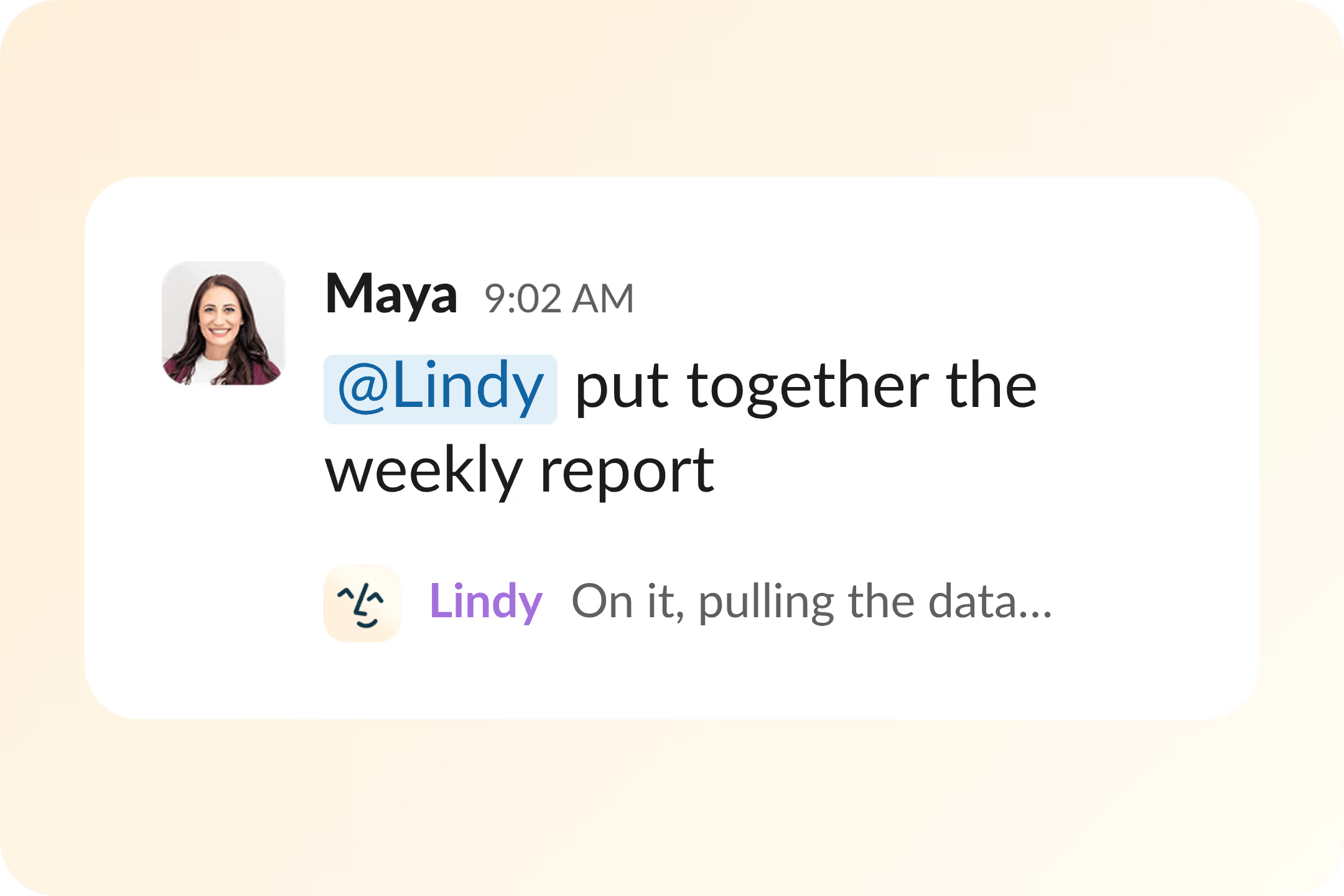
The useful part is that nobody has to set up another app first. One admin connects the approved company sources, then marketers can work with Lindy by mentioning it in Slack or sending it a DM.
Try Lindy free today.
{{cta}}
FAQs
1. What are the 7 types of AI agents?
A common framework lists seven: simple reflex, model-based reflex, goal-based, utility-based, learning, hierarchical, and multi-agent systems. Marketing teams are more likely to encounter goal-based agents and multi-agent setups built around specific jobs such as lead qualification, reporting, or content production.
2. What are the top 3 AI agents for marketing?
The top three are lead scoring and routing agents that speed up lead response, content agents that help with briefs and repurposing, and reporting agents that turn campaign data into recurring summaries. Which one pays off first depends on where your team loses time.
3. How do AI agents differ from marketing automation?
The main difference between AI agents and marketing automation is how they handle context and decisions. Traditional automation follows predefined rules, while an agent can interpret inputs, choose the next action, and work through several steps toward a goal.
4. How can I build an AI agent for marketing?
Start with one repetitive marketing job, define its trigger and goal, connect the data and tools it needs, then add approval rules for sensitive actions. Platforms such as Lindy let teams describe recurring work in plain English and run it across connected tools from Slack.
5. Which AI agent platform is best for marketing teams?
Lindy fits teams working across several tools from Slack, HubSpot Agent Hub suits HubSpot-heavy teams, Salesforce Agentforce fits Salesforce environments, and Jasper focuses heavily on marketing content workflows. Which is best depends on where your marketing work already lives.