I Tested 12 AI Recruiting Tools to Hire People: Manually Reviewed
Jack manually tested 12 AI recruiting tools, including HireVue, Workable, and Paradox, evaluating sourcing and screening quality, ATS integration, and pricing.


I spent months testing 12 of the most widely used AI recruiting tools to see which ones improved my workflow. The best didn’t just cut down on admin tasks, they helped surface better candidates, reduced time-to-hire, and made every hiring decision feel faster and more informed.
What is an AI recruiting tool?
AI recruiting tools are platforms that use artificial intelligence, like machine learning, natural language processing, and predictive analytics, to improve and automate core parts of the hiring process.
These AI hiring tools help streamline resume screening, candidate matching, interview scheduling, and early engagement, freeing up recruiters to focus on the human side of hiring.
What sets them apart from traditional tools is their ability to learn from recruiter behavior and candidate data to continuously improve recommendations. Instead of relying only on keywords or manual filters, these platforms can understand role requirements, detect soft skills, and even flag potential bias.
12 best AI tools for recruiting
- HireVue: Best for video interview screening and candidate assessment
- Workable: Best for end-to-end AI-driven recruitment
- Eightfold: Best for talent matching and internal mobility
- Xor.AI: Best for conversational AI and interview scheduling
- Textio Loop: Best for inclusive, bias-free job descriptions
- Zoho Recruit: Best for customizable AI recruitment
- HireEZ: Best for AI-powered candidate sourcing
- Paradox: Best for conversational recruiting
- Beamery: Best for talent lifecycle management
- Teamtailor: Best for employer branding and collaborative hiring
- Skillate: Best for AI-based resume screening
- Manatal: Best for affordable, user-friendly AI recruitment
Key terms you should know about AI HR tools
| Term | Full form | What it means |
|---|---|---|
| ATS | Applicant Tracking System | A software tool used to manage the recruitment process by collecting, sorting, and tracking job applications. |
| PTO | Paid Time Off | A policy that allows employees to take time off work while still being paid, typically for vacation, illness, or personal reasons. |
| CRM | Customer Relationship Management | A tool used to manage interactions with current and potential candidates or employees. |
| GDPR | General Data Protection Regulation | A data protection law in the EU that governs how companies collect, store, and manage personal data. |
| CCPA | California Consumer Privacy Act | A U.S. state law that gives California residents rights over their data held by businesses. |
| API | Application Programming Interface | A set of tools and protocols that allow different software systems to communicate with each other. |
| SOC 2 | System and Organization Controls 2 | A security framework for managing customer data based on five trust service principles: security, availability, processing integrity, confidentiality, and privacy. |
1. HireVue: Best for video interview screening and candidate assessment
What does it do? HireVue uses AI to assess candidates via video interviews and skills-based tests.
Who is it for? Best for HR teams that need to scale screening without losing structure or fairness.
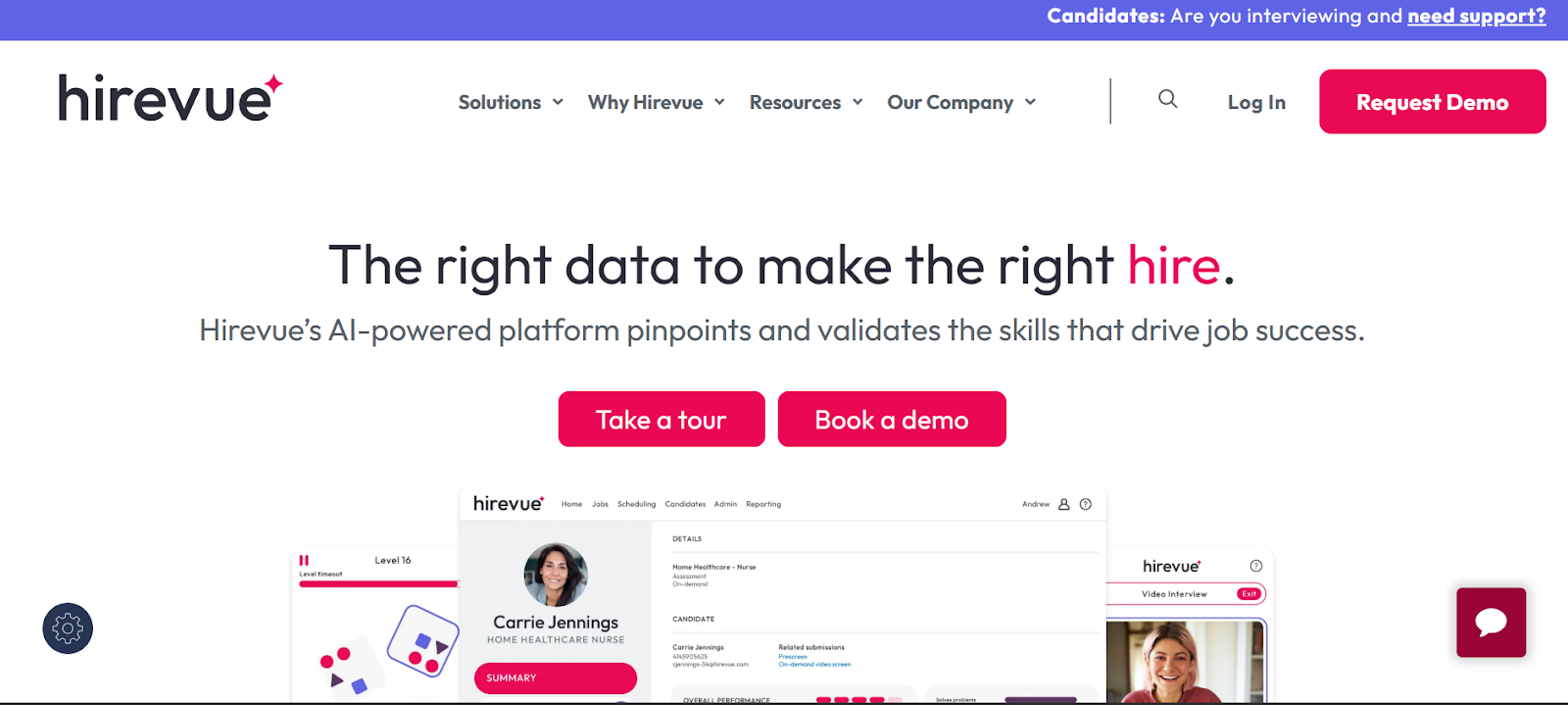
When I first tried HireVue, I wasn’t sure if video interviews and AI scoring would improve hiring or just add another layer to manage. But after one full hiring cycle, it was clear: this platform isn’t just about convenience, it’s about consistency and data you can act on.
The on-demand video interviews are especially useful for high-volume roles. Candidates record responses on their schedule, and the AI scores them based on behavioral signals and role fit. That alone saved our team hours that would’ve gone into resume reviews and early screening calls.
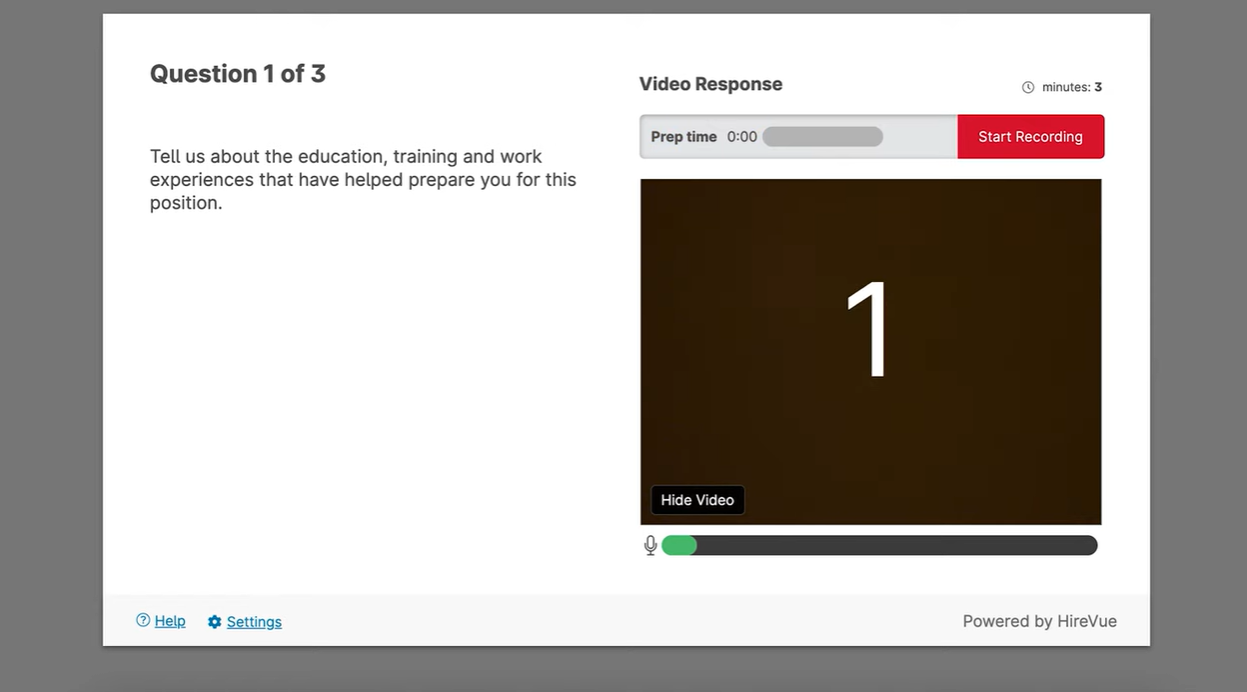
The assessments are solid, too. I tested out their game-based evaluations and coding tasks for technical roles, and the results were surprisingly aligned with what our final interview panels saw.
There’s also built-in scheduling and automated reminders, which keep the process moving without the usual delays or calendar chaos.
What stood out was how smooth the candidate experience felt.No apps, no logins, just a link that works on any device. It felt professional without being impersonal. HireVue is for large-scale hiring that still feels human.
Pros
- Scheduling and follow-ups run on autopilot
- No downloads or logins needed for candidates
- Game-based assessments validate skills objectively
Cons
- High pricing limits accessibility for smaller teams
- Some team members needed training to trust the AI scoring
Pricing
Custom pricing based on company size and usage
2. Workable: Best for end-to-end AI-driven recruitment
What does it do? Workable combines AI-powered recruiting and HR management in a single, scalable platform.
Who is it for? Ideal for growing teams that want an all-in-one system for hiring and HR.
Workable does more than just help you hire; it takes over your entire recruiting and HR flow without feeling bloated. What started as an ATS quickly became the central hub for our team’s hiring, onboarding, and even time-off tracking.
For hiring, the AI sourcing did well. I plugged in a few role details, and it pulled out passive candidates from a massive database of 400 M+ profiles.
It also drafted outreach emails that sounded human, not like templated spam. I had better engagement rates with way less effort.
The interview process is equally well supported. With built-in kits, role-based scorecards, and calendar integrations, we could run structured interviews with minimal coordination. The entire workflow, screening, interviews, and follow-ups, runs smoother because it’s all tied together.
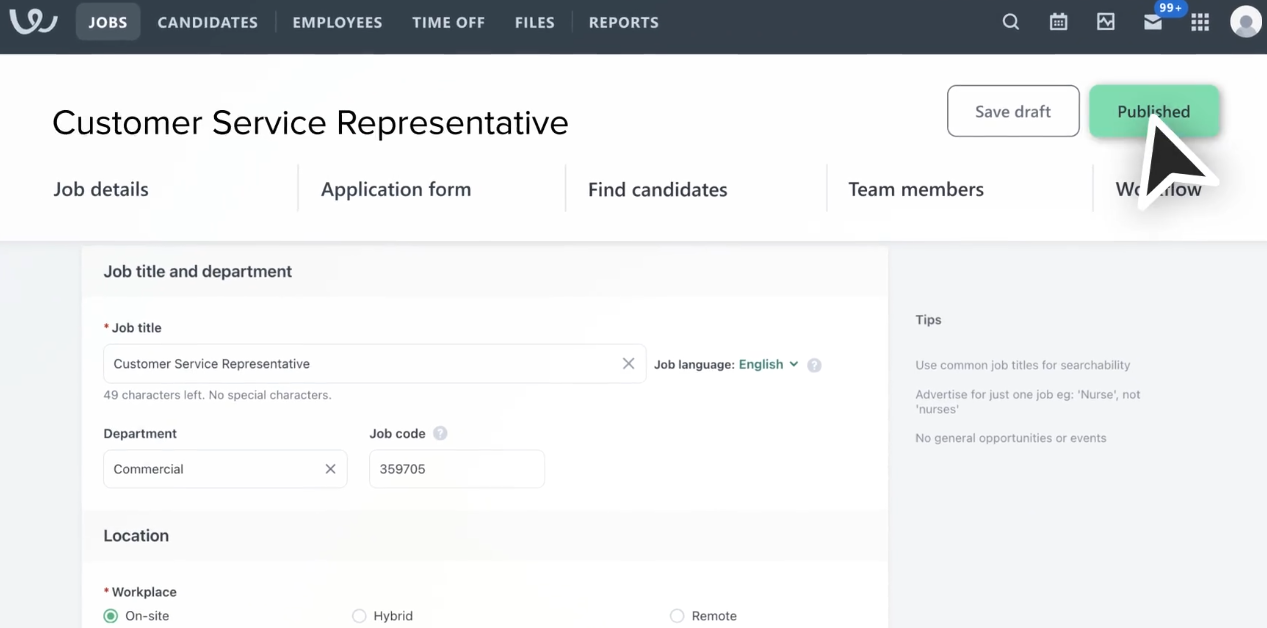
But where Workable impressed me was after the hire. Onboarding tasks, document sharing, and even basic HR management tools like PTO tracking are already built in. That continuity saved our team a lot of friction. I didn’t need separate tools or extra logins for half the things I used to manage manually.
If you’re tired of stitching together multiple tools to handle recruiting and HR, Workable simplifies the stack without compromising power.
Pros
- Self-service employee profiles
- Smooth shift from hiring to HR management
- Interview kits and pipelines are fully customizable
Cons
- Takes time to onboard if using the full feature set
- No public pricing, you have to request a quote
Pricing
- Free trial available
- Standard ($299/month): Core recruiting and HR, bundled
- Premier ($599/month): Advanced hiring and HR tools
- Enterprise ($719/month): Full feature set for larger teams
3. Eightfold: Best for talent matching and internal mobility
What does it do? Eightfold uses deep-learning AI to match people to roles based on skills, potential, and career growth.
Who is it for? Best for mid-to-large companies investing in internal mobility, diversity, and long-term talent planning.
I wasn’t looking for a total revamp of the talent strategy when starting with Eightfold, but a better way to surface internal talent and reduce redundant hiring. Turns out, Eightfold goes beyond just filling open roles, it helps identify internal talent, supports career development, and improves workforce planning throughout the entire employee lifecycle.
Eightfold does not rely on job titles or keywords, but analyzes skills, career trajectories, and adjacent roles to surface candidates I wouldn’t have picked from a resume alone. I used it to uncover underutilized talent on our own team and staff new projects faster than if I’d gone outside.
Its AI matching engine is shockingly good. Candidates get job suggestions tailored to their growth, not just their current resume, and the platform explains why someone is a match. That’s a huge plus when you’re trying to build trust in AI-driven hiring.
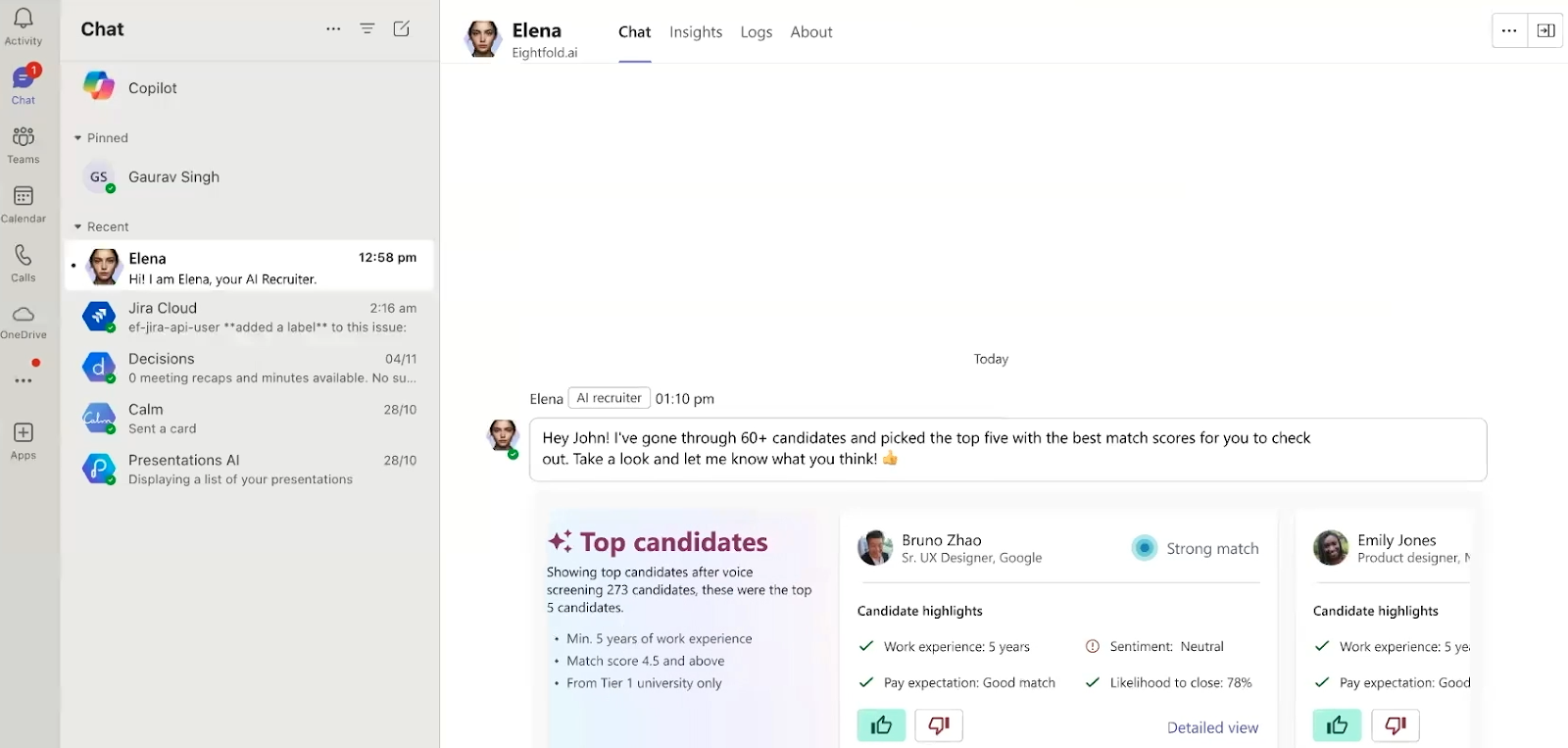
It handled internal mobility and upskilling well for me. Employees get personalized learning paths, and managers can plan career development without a separate tool.
The new Talent Tracking features automate job descriptions, compensation benchmarks, and offer workflows, which cut down the admin load.
Eightfold’s real strength is in helping you use what you already have like your people data, your existing talent and making it better. For any HR team aiming to build a future-ready workforce, it’s easily one of the most complete AI recruiting platforms I’ve tested.
Pros
- Internal mobility engine helps retain top performers
- Diversity tools built into the hiring and talent process
- AI explains matches, boosting transparency and trust
Cons
- Setup takes time due to deep integrations
- Advanced AI features require upfront training
Pricing
Custom pricing based on usage and features (contact sales)
4. Xor.AI: Best for conversational AI and interview scheduling
What does it do? Xor.AI automates candidate engagement, screening, and scheduling through chat and SMS.
Who is it for? Ideal for companies hiring at scale, especially for blue-collar or hourly roles.
In high-volume hiring, speed and responsiveness matter more than fancy features, and that’s exactly where Xor.AI shines. This platform takes over the front-end of the recruiting process without feeling clunky or robotic.
I used Xor to fill frontline roles where fast replies and streamlined screening were crucial. Candidates received a text right after applying, and the chatbot handled everything: pre-screening, scheduling, and answering basic FAQs about shifts, location, or pay. Even though it was fully automated, the interaction felt surprisingly personal.
The scheduling tool stood out the most. Once candidates cleared the screening, interviews were automatically booked based on my availability; no coordination needed.
You can also run a virtual hiring event through Xor, and it worked like a lightweight career fair with real-time chat and video. Attendance and engagement were stronger than expected.
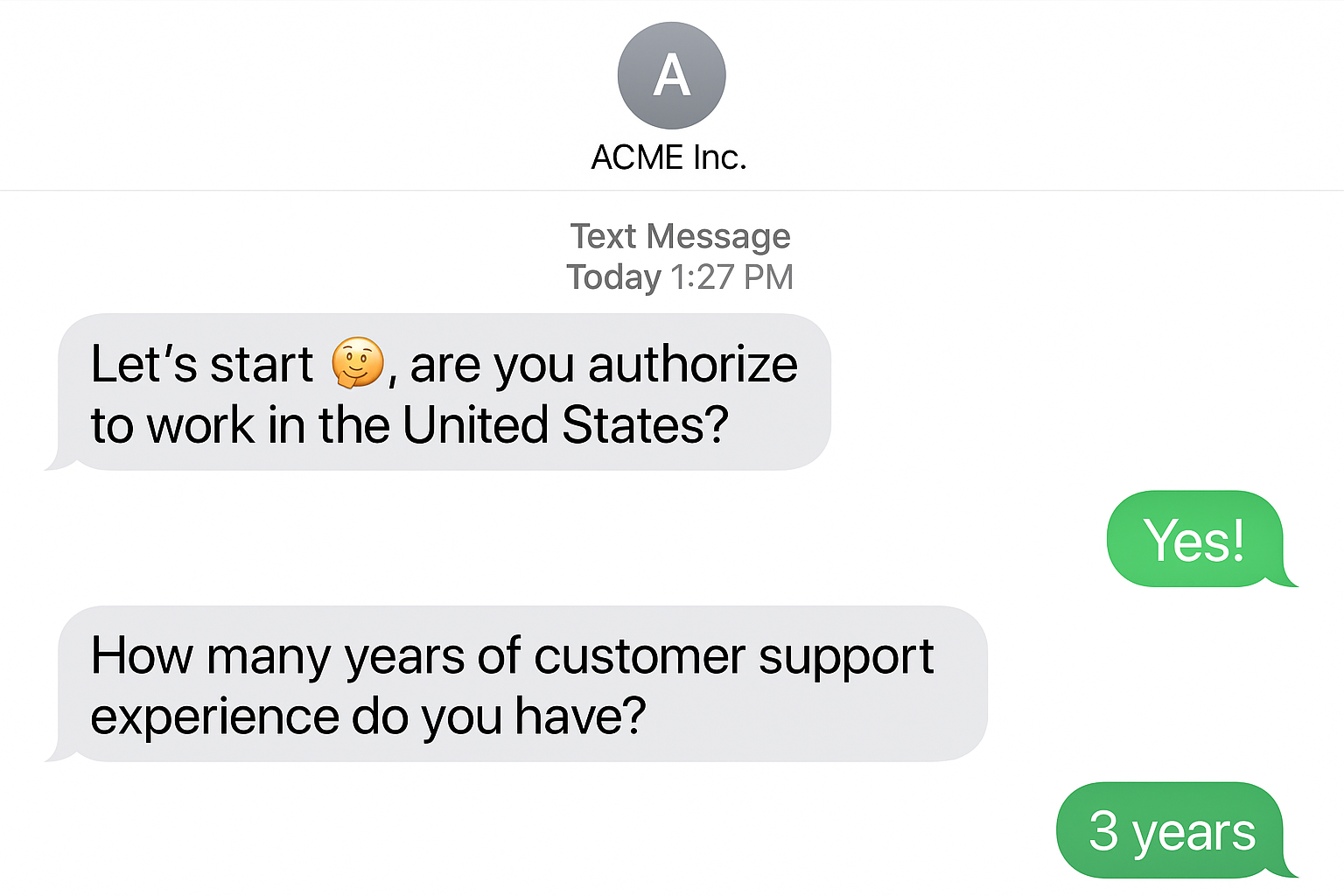
Xor isn’t trying to be a full ATS, it plugs into your stack and clears repetitive tasks out of the way. Setup was quick, and the system ran in the background while I focused on evaluating serious candidates.
If you're managing hundreds of applicants with a small team, Xor saves real time where it matters most.
Pros
- Virtual hiring events include real-time tools
- Candidates engage instantly via SMS automation
- Supports high-volume roles without slowing down
Cons
- The dashboard lacks customization for analytics
- High spend threshold limits accessibility for startups
Pricing
XOR.ai offers custom pricing based on hiring needs, and you need to contact their sales team for details.
5. Textio Loop: Best for inclusive, bias-free job descriptions
What does it do? Textio Loop optimizes hiring content by flagging bias and improving inclusivity using AI-powered language analysis.
Who is it for? Ideal for HR and TA teams focused on diversity, equity, and better employer branding.
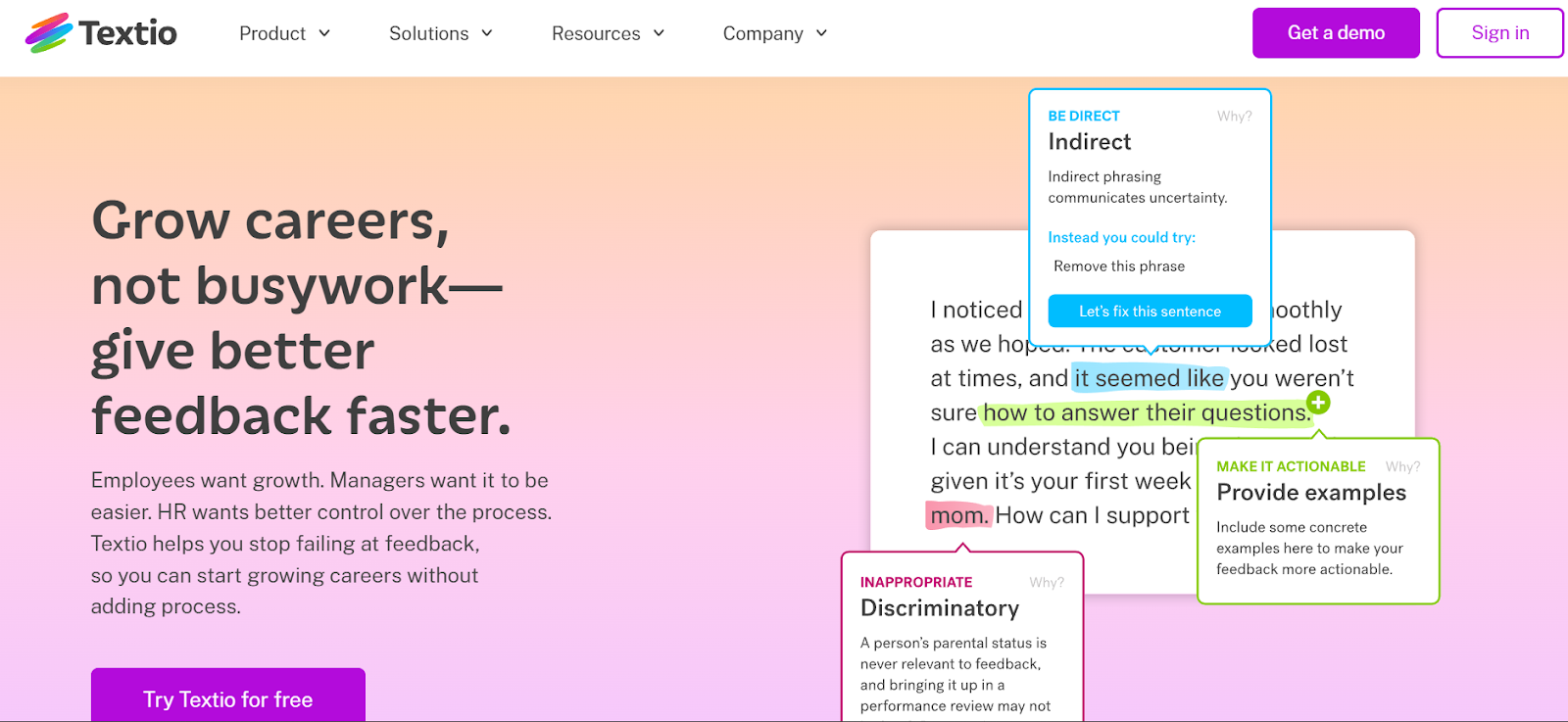
Textio Loop stands out as a writing enhancement tool purpose-built for inclusive hiring. It goes beyond grammar checks to detect bias, predict tone, and offer real-time feedback that improves the reach and accessibility of job descriptions and other candidate-facing content.
The platform highlights gendered or exclusionary language and suggests neutral, inclusive alternatives. These edits are subtle but impactful, often reshaping the tone of job posts without making them feel generic or watered down. The result is content that appeals to a broader and more diverse talent pool.
One of Textio’s key features is the Textio Score, which gives a snapshot of how language performs across demographics.
Additional tools like the Gender Meter help teams visualize potential bias, making it easier to course-correct before publishing. Companies can also embed internal language guidelines and tone preferences, helping ensure consistency across recruiters and hiring managers.
Textio integrates smoothly into existing workflows like Gmail, LinkedIn, and major ATS platforms. While it doesn’t support multiple languages and requires a sales consultation for access, its impact on inclusive hiring is clear.
For teams focused on equitable talent acquisition, Textio offers a practical and data-backed way to improve hiring language at scale.
Pros
- Helps standardize tone across job posts
- Actively reduces biased language in real time
- Predictive scoring improves writing for target audiences
Cons
- Lacks free trial or entry-level access
- No multilingual support for global teams
Pricing
No public pricing, sales consultation required for access
6. Zoho Recruit: Best for customizable AI recruitment
What does it do? Zoho Recruit offers end-to-end applicant tracking with AI matching, automation, and strong integrations.
Who is it for? Great for both corporate HR teams and staffing agencies looking for a scalable, affordable ATS.
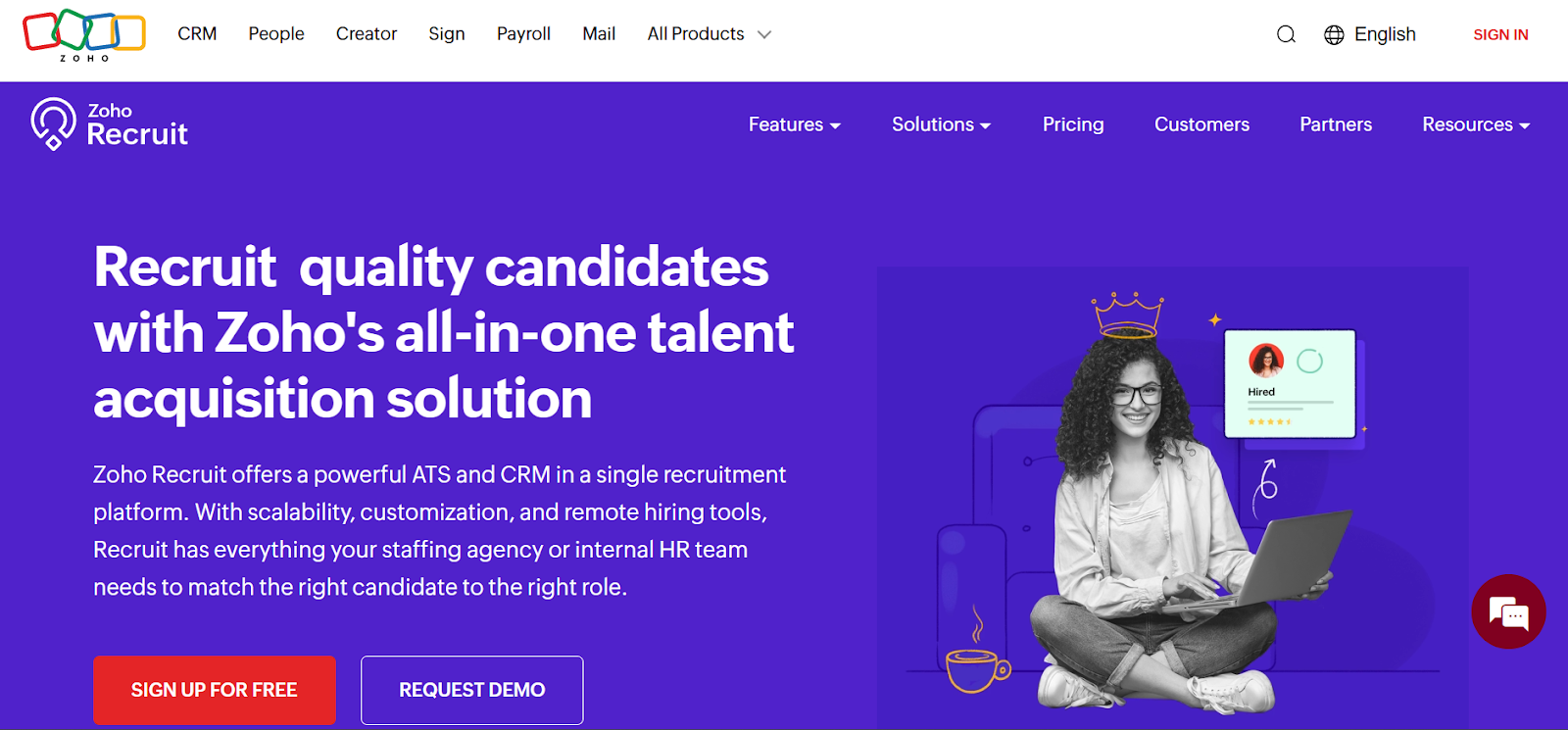
Zoho Recruit was one of the first recruiting platforms I tried when building out a basic hiring stack, and it surprised me with how much it offers, especially at the lower pricing tiers. It covers all the usual ATS functions, but where it gets interesting is in the amount of control you have over workflows, automation, and data handling.
For a small-to-mid team, the free version holds up well. You can manage one active job, parse resumes, and send candidate emails without paying a cent.
I upgraded to the Standard plan once we scaled, and the AI matching helped speed up screening by flagging the top candidates based on pre-set criteria. It’s not magic, but it saved me hours of manual scoring.
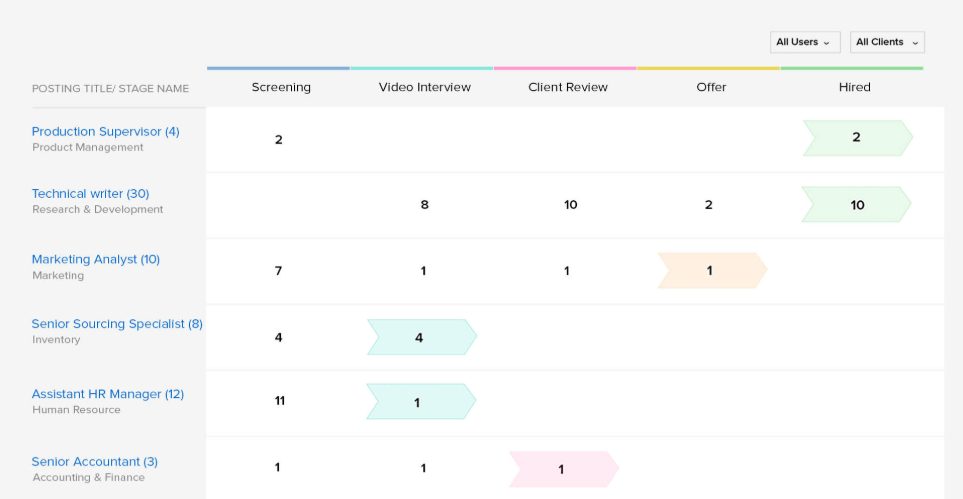
The interface isn’t the flashiest, but it feels more functional than sleek, and once you get used to the dashboard, it’s incredibly customizable. I built workflows that triggered emails after each hiring stage, integrated it with Slack and Gmail, and even synced them to Zoho CRM to track long-term candidate engagement.
That said, the mobile app is pretty barebones, and the real AI features only unlock at the higher-tier plans. But if you’re okay with a little setup time, Zoho Recruit gives you serious value for the price.
Pros
- Free plan is useful for basic hiring
- Strong automation and workflow customization
- Integrates with 50+ tools, including Slack and Zoho CRM
Cons
- Steep learning curve during setup
- A mobile app is too limited for full recruiting use
Pricing
- Standard: $25 per recruiter/month, billed annually
- Enterprise: $50 per recruiter/month, billed annually
- Free: $0 forever for very small teams (1 active job per recruiter)
- Free trial: 15 days; monthly or annual billing, no forced contracts
7. HireEZ: Best for AI-powered candidate sourcing
What does it do? AI-first recruiting platform for sourcing, outreach, and pipeline management.
Who is it for? Great for midsize to enterprise teams that need scalable, data-driven sourcing.
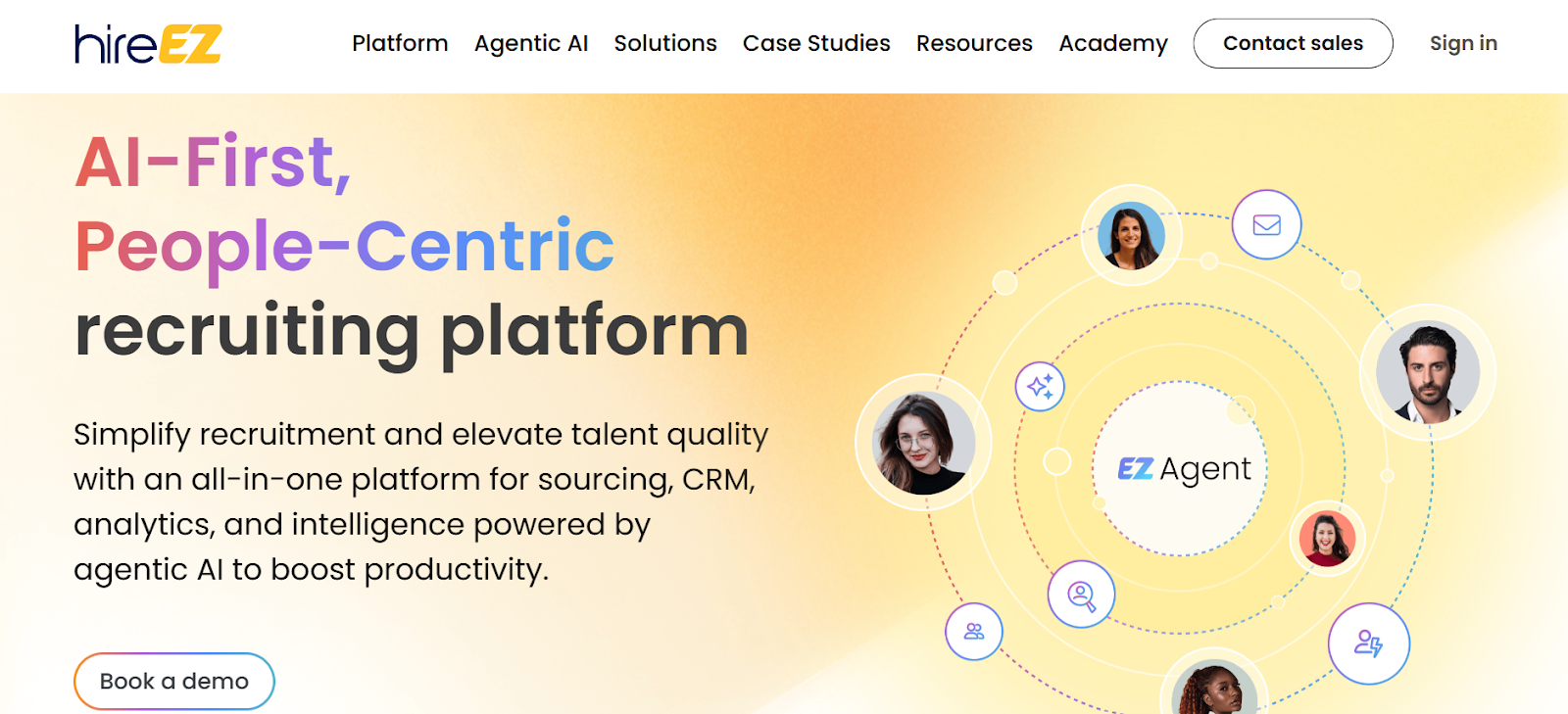
HireEZ (formerly Hiretual) is built specifically for modern recruiters who need to scale outbound sourcing without drowning in manual search or email work.
Its AI sourcing engine goes beyond keywords. Users can create candidate personas based on traits like location, skill set, or experience, and the platform surfaces matches across over 800 million profiles from sources like LinkedIn, GitHub, and Stack Overflow.
The updated AI matching engine is particularly strong for technical and hard-to-fill roles. It adapts as you refine your search, learning from which profiles you engage with. This dynamic sourcing system helps uncover talent that traditional platforms often miss.
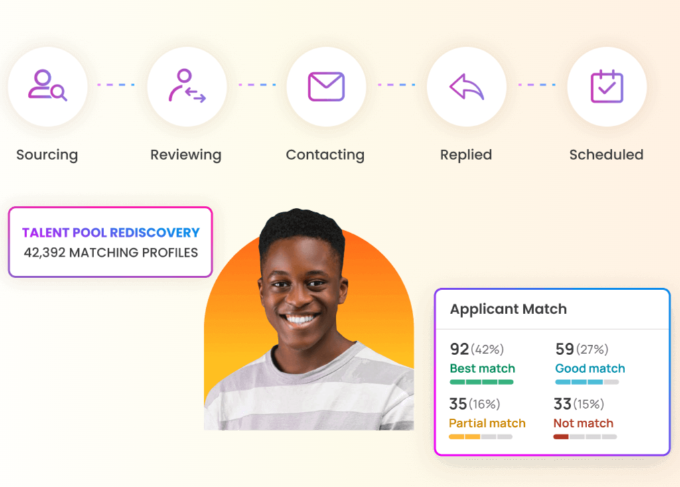
HireEZ also includes a full CRM with automated outreach, templates, and campaign tracking. The Talent Engagement Suite has improved dramatically, now offering better engagement analytics, sequence automation, and clearer insights into candidate behavior.
You can benchmark compensation, review market availability, and get diversity analytics before even writing a job post.
The new UI and analytics dashboards have also been revamped to provide deeper recruitment insights. From a usability standpoint, navigation is now faster, and workflows are more intuitive.
While the platform can feel complex for occasional hiring, it delivers serious value for high-volume or specialized recruiting teams.
Pros
- Outreach tools feel personal, not spammy
- Searches across over 800M global profiles
- Strong compensation and market intelligence tool
Cons
- Can feel overbuilt for small or occasional hiring
- Advanced features are locked behind higher-tier plans
Pricing
- Free trial: 15 days available
- Sales consultation required for details
8. Paradox: Best for conversational recruiting
What does it do? Paradox automates candidate screening, scheduling, and engagement with conversational AI.
Who is it for? Best for high-volume hiring teams needing fast, scalable automation with a mobile-first approach.
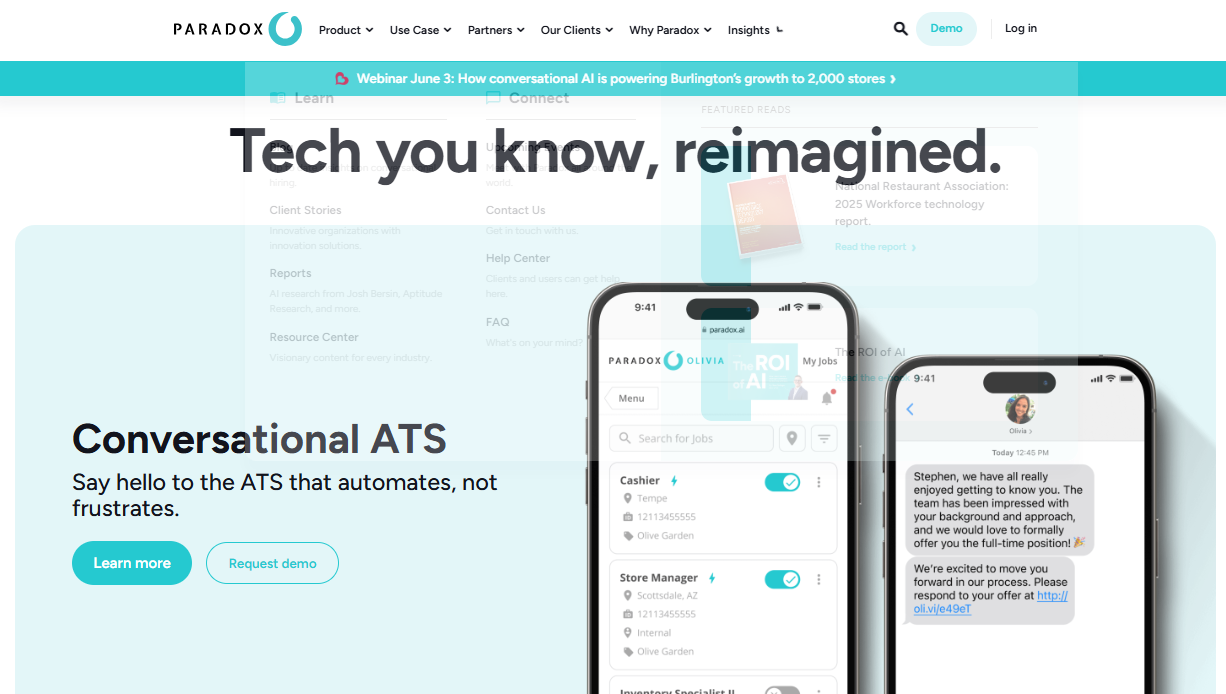
I’ve used Paradox across multiple hiring cycles, and what keeps me coming back is how much work it takes off my plate.
The AI assistant (Olivia), feels less like a bot and more like a recruiting coordinator who never sleeps. From the moment a candidate lands on our careers page, Olivia takes over the first few stages without any manual effort from my side.
Once a candidate lands on the careers page or replies via SMS, Olivia steps in. It asks pre-screening questions, schedules interviews, and even manages real-time FAQs, no forms, no delays, just responsive conversation. For frontline and hourly roles, this kind of speed and simplicity makes a tangible difference in application completion and time-to-interview.
Paradox has expanded beyond just chat. In 2025, it launched the industry's first conversational ATS with native integrations into tools like Workday and SAP SuccessFactors.
This system connection lets teams manage recruiting workflows without switching platforms. The addition of mobile-first assessments (from its Traitify acquisition) also makes it easier to evaluate candidate fit directly within the chat experience.
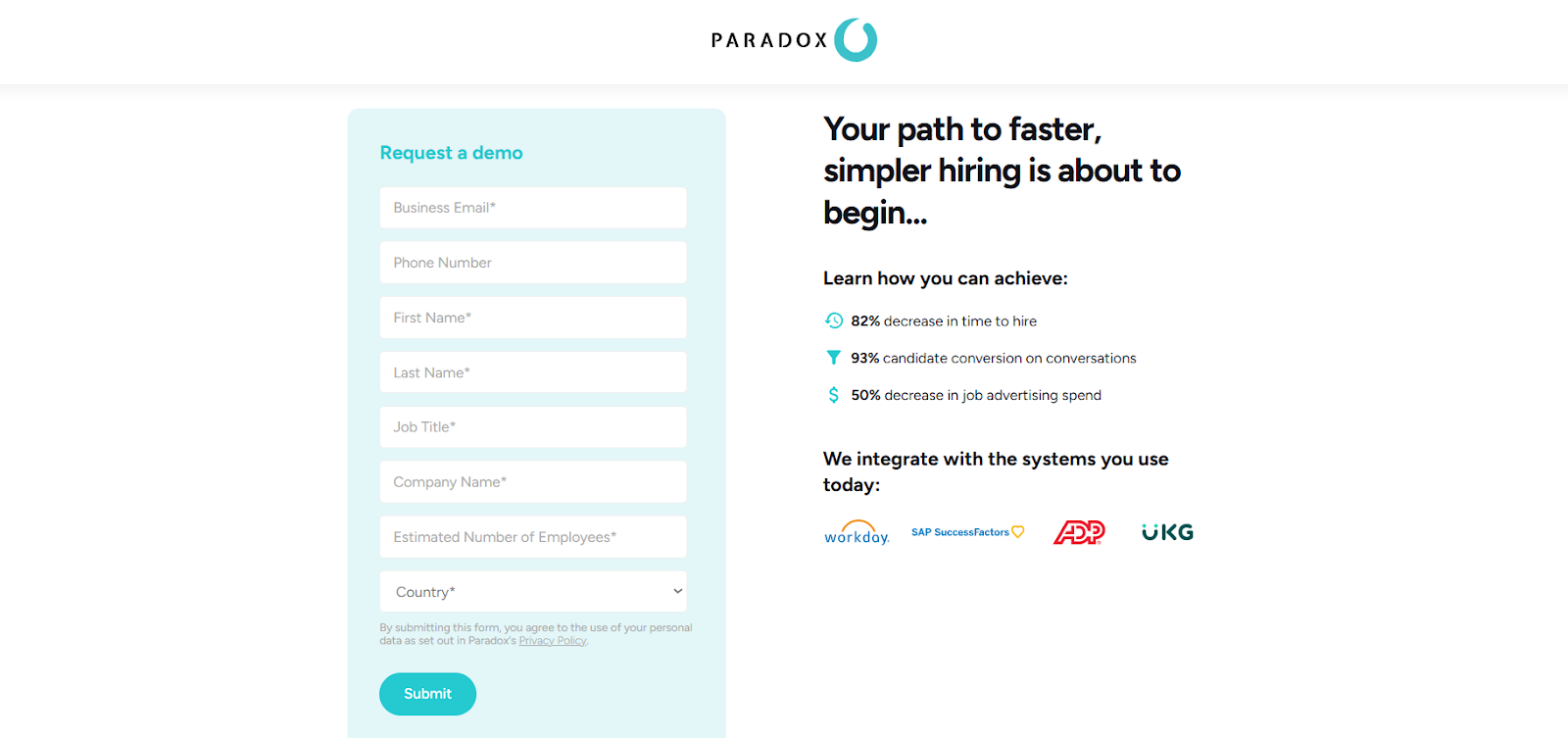
Paradox even includes workforce analytics, thanks to its acquisition of Eqtble. Hiring teams can track funnel performance, candidate sentiment, and engagement data through an updated dashboard interface.
While it may be too feature-heavy for small teams, enterprise hiring teams benefit from its 24/7 automation, multilingual capabilities, and event support
Pros
- Olivia handles screening and scheduling 24/7
- Works great for hiring events (virtual or on-site)
- Real-time dashboards help optimize your funnel
Cons
- No pricing transparency or self-serve option
- Onboarding takes time if you’re using full capabilities
Pricing
- Sales consultation required for details (Free trial available)
9. Beamery: Best for talent lifecycle management
What does it do? Manages the entire talent lifecycle using AI-driven skills intelligence and workforce planning.
Who is it for? Best for large enterprises looking to shift from role-based hiring to skills-based, long-term workforce strategy.
Beamery isn’t just another recruitment tool, it’s more like a control tower for your entire talent ecosystem. When I first tried it, I didn’t fully grasp the scope. I thought it’d help with sourcing and CRM, but Beamery goes much deeper, it gives you a full view of your workforce, mapped out by skills, not just job titles.
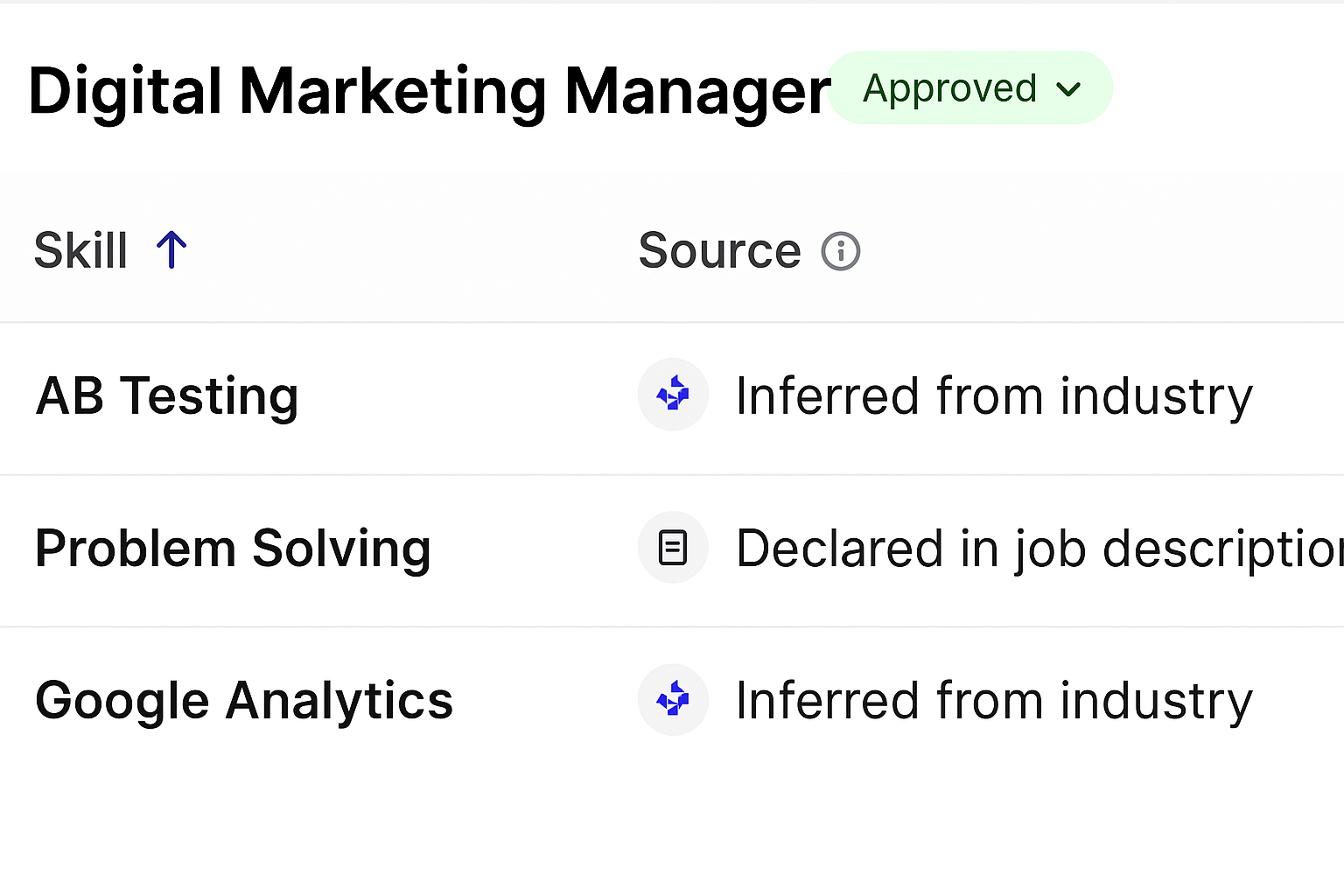
Its AI doesn’t just tell who’s a fit for a job but who could become a fit. I’ve used it to identify internal candidates for open roles, spot emerging skill gaps, and even plan future hiring needs based on market data. It’s like having a workforce strategist built into the platform.
Beamery handles compliance and explainability well. Every AI recommendation comes with a rationale, which helped a lot when working with hiring managers who were skeptical of black-box algorithms.
The system is enterprise-grade across the board, integrates easily with Workday, handles GDPR and CCPA, and even supports China’s cybersecurity laws.
The flip side is that Beamery isn’t built for scrappy startups. There’s onboarding and customization, but if you’re managing thousands of employees and need to hire, retain, and develop talent at scale, this platform does the heavy lifting.
Pros
- Market insights help align hiring with business needs
- Built-in compliance for multi-region hiring operations
- Real-time talent graph supports upskilling and mobility
Cons
- Not suitable for small teams or simple hiring workflows
- Requires onboarding and team alignment to unlock value
Pricing
No public pricing, sales consultation required for access
10. Teamtailor: Best for employer branding and collaborative hiring
What does it do? TeamtailorCombines ATS functionality with employer branding tools to attract and manage talent.
Who is it for? Ideal for companies that want a sleek, branded hiring experience with automation built in.
Teamtailor brings a modern feel to applicant tracking by blending intuitive design with powerful branding and automation features. It’s built to make recruitment feel seamless for both candidates and hiring teams, offering a clean, mobile-optimized interface that avoids the clutter common in legacy systems.
One of its standout features is the customizable career site builder. Rather than treating branding as an afterthought, Teamtailor puts employer identity front and center.
Companies can showcase culture, add team testimonials, and create a candidate experience that mirrors the brand, without relying on external dev support.
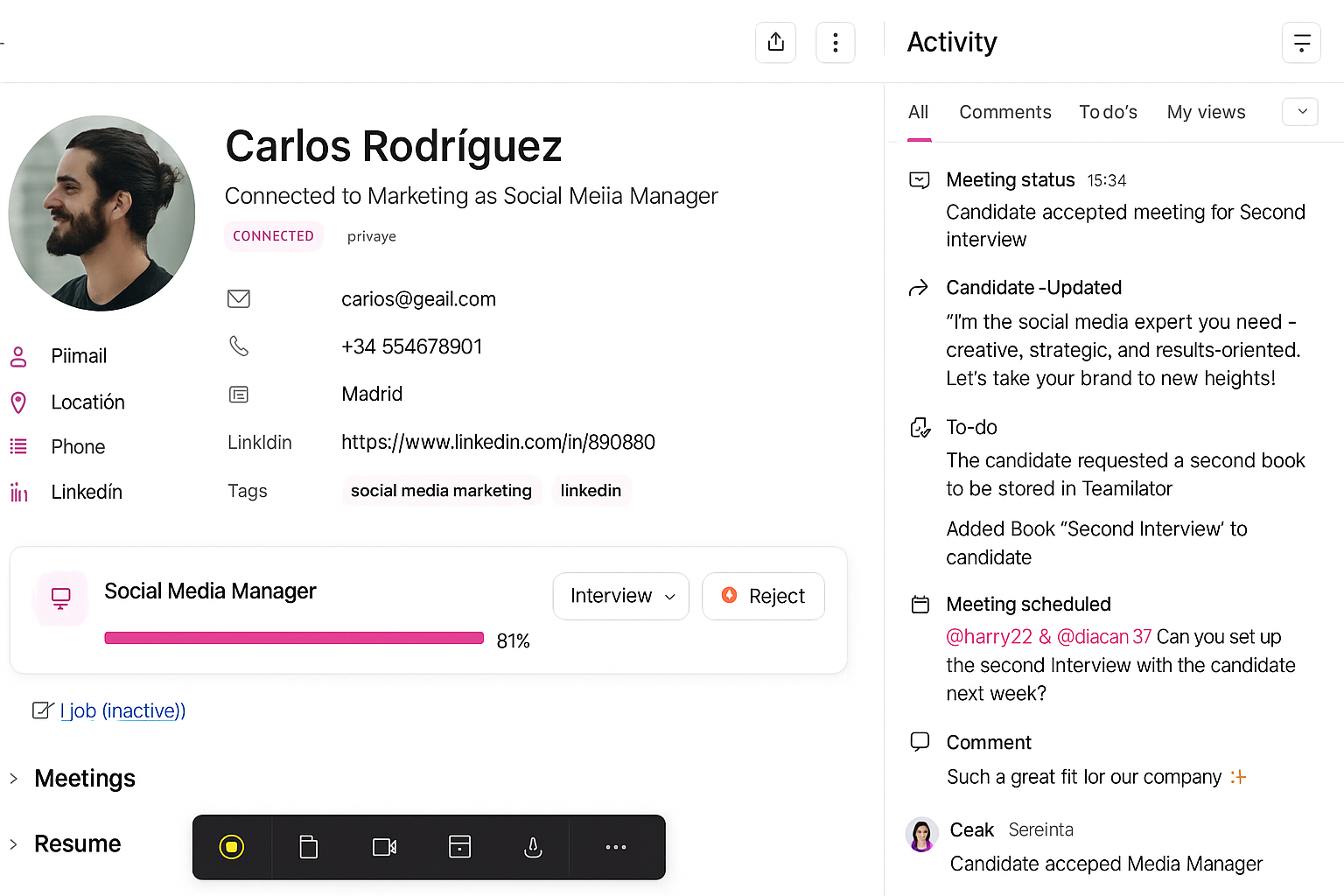
The system also supports smart automation. Recruiters can set triggers to automatically email applicants, update pipeline stages, or assign team tasks. Candidate profiles are comprehensive, bringing together every touchpoint in a single view, and the drag-and-drop workflow builder makes pipeline setup fast and flexible.
Role-based access makes it easy to collaborate across departments without complicating permissions. While onboarding is required to unlock its full customization potential, the platform scales well and stays easy to manage, even as hiring volume increases.
For teams prioritizing design, collaboration, and automation, Teamtailor delivers both form and function.
Pros
- Career sites look polished and on-brand
- Triggers and pipelines reduce manual recruiter tasks
- Permissions and access roles simplify team workflows
Cons
- Lacks transparent pricing or quick-start trial
- Requires onboarding to unlock full customization
Pricing
No free trial or public pricing, contact sales for a quote
11. Skillate: Best for AI-based resume screening
What does it do? Skillate automates resume screening, matching, and interview scheduling with AI to streamline hiring.
Who is it for? Best for mid-sized to large teams looking to cut hiring time and improve diversity through data-driven recruitment.
Skillate is designed to handle the volume and complexity of modern hiring pipelines. Its AI-based screening engine goes beyond keyword filters by evaluating resumes in the context of job descriptions, accurately matching candidates based on role fit, even when formatting is inconsistent or information is incomplete.
One of Skillate’s key strengths is its intelligent resume parser, which structures unorganized data into readable candidate profiles. The built-in chatbot streamlines first-touch engagement by handling basic screening, asking knockout questions, and automatically advancing strong candidates to the next stage.
The platform also supports diversity-focused hiring with a built-in masking feature. This hides identifying details from resumes to help hiring teams focus on skills, not biases.
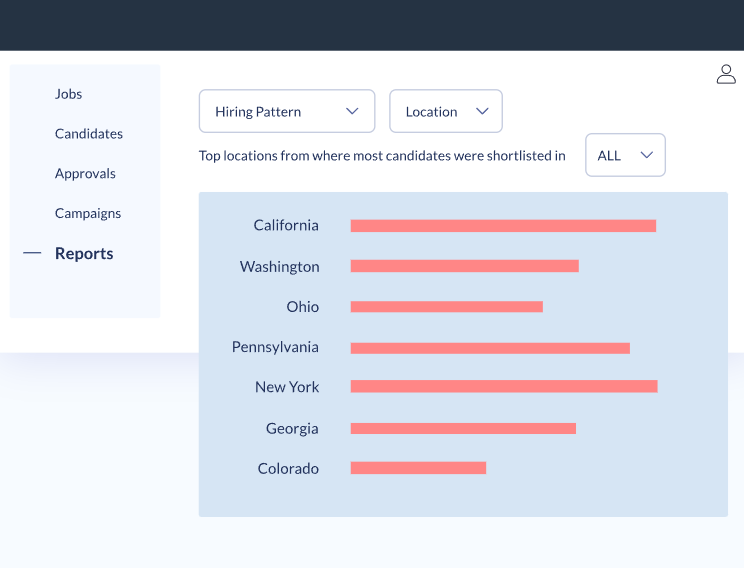
Combined with Skillate’s analytics dashboard, recruiters gain real-time insight into hiring trends and potential gaps in representation or process consistency.
While it offers strong automation, the platform does require configuration and ATS integration to reach full potential. It’s best suited for teams ready to invest in structured, bias-aware hiring workflows.
Pros
- Analytics reveal hidden trends in hiring workflows
- Diversity masking helps reviewers focus on skills
- Built-in chatbot improves early-stage candidate engagement
Cons
- An initial setup is needed for full functionality
- No trial version or published pricing for SMBs
Pricing
No public pricing, contact sales for a quote. Custom pricing based on organization size and feature needs.
12. Manatal: Best for affordable, user-friendly AI recruitment
What does it do? AI-powered recruitment platform that centralizes sourcing, screening, and onboarding in one interface.
Who is it for? Ideal for HR teams, agencies, and headhunters who want a unified, smart, and customizable hiring system.

Manatal combines ease of use with powerful features to support end-to-end hiring workflows. Its clean interface makes it approachable for smaller teams, while its AI-backed candidate matching and automation tools offer the sophistication needed by high-volume recruiters.
I started with a few open roles and ran them through Manatal’s job-posting engine. It pushes listings out to multiple job boards in one click, but what caught my eye was the candidate matching.
The AI doesn’t just skim resumes; it ranks candidates by relevance to the job, pulling in social media data to enrich profiles with skills, experience, and even potential cultural fit. I found insights that I normally wouldn’t get from a plain CV.
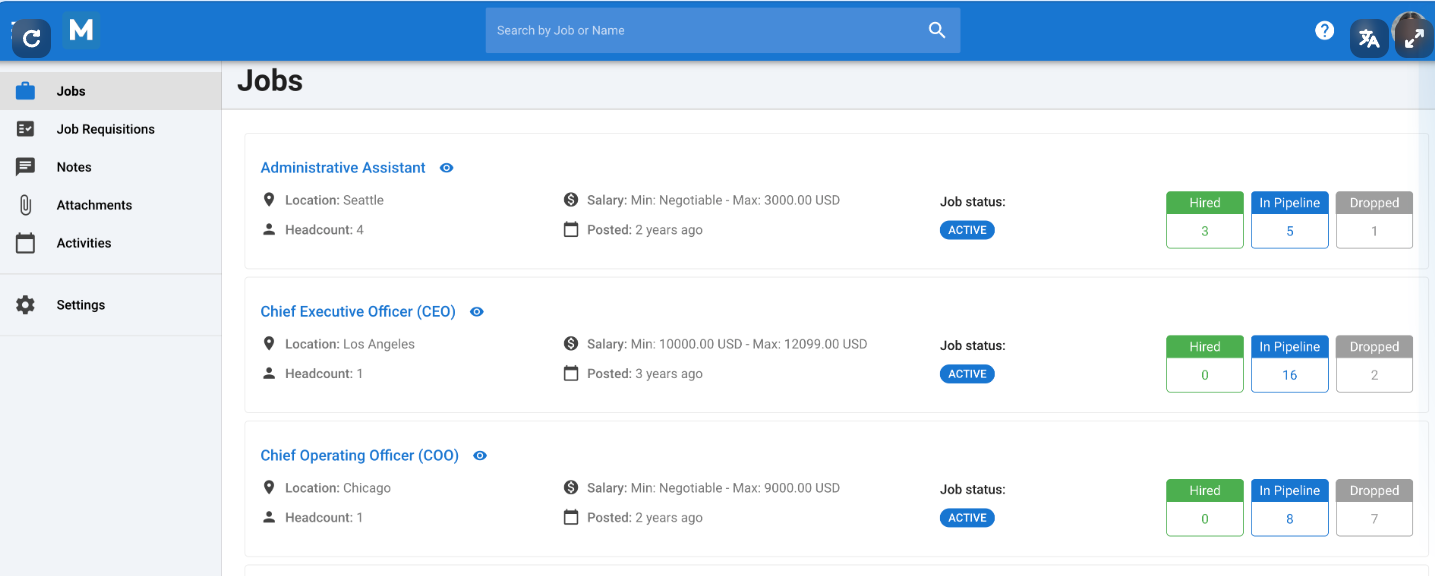
Collaboration is a core part of the experience. Teams can tag colleagues, share notes, and track progress without toggling between tools. Recruiters can build automated workflows for follow-ups, interview scheduling, and candidate stage changes, which helps reduce manual oversight.
Manatal also supports detailed pipeline customization. Users can adjust stages, set triggers, and monitor bottlenecks through the analytics dashboard. While some advanced features require initial configuration, the platform balances accessibility with depth, making it a fit for teams that want modern capabilities without enterprise-level complexity.
Pros
- Social data enrichment improves candidate context
- Easy collaboration with team-wide tagging and notes
- Role-specific pipelines and automation boost efficiency
Cons
- No public pricing, must go through sales
- Some features need setup time to fully unlock
Pricing
- Professional Plan ($15/user/month): Ideal for individuals and small teams
- Enterprise Plan ($35/user/month): For growing teams, includes full hiring workflows
- Enterprise Plus ($55/user/month): Designed for large teams, supports advanced usage
- Custom pricing: Available based on organization size and feature needs
How I Tested the Best AI Recruiting Software
The best AI recruiting tools in 2026 aren’t just about automation, they need to improve hiring outcomes without adding more noise. A good tool should save time, plug into your existing workflow, and help you make better decisions about who to hire.
To figure out which ones were worth using, I tested each product hands-on against three core criteria:
- Sourcing and screening quality: My main focus was to find and evaluate all the candidates. Some platforms uncovered hidden-fit talent through persona-based searches or enriched profiles using external data. Others saved hours by automating early screening, parsing resumes with accuracy, and surfacing only the most relevant profiles. I paid attention to how precise the matching was and whether the AI could rank candidates better than I could manually.
- Workflow fit and automation: I tested how smoothly each tool fit into my daily stack, like Slack, Gmail, Notion, and whether it integrated cleanly with my existing ATS. The setup speed and ease of use mattered. The best tools handled things like scheduling and candidate tracking without disrupting my current processes. Automation wasn’t useful unless it reduced my manual load without breaking something else.
- Candidate experience and usability: A good recruiting tool should work for both sides. I looked at how the experience felt from the candidate’s point of view, whether the interactions felt personal, if bots were helpful or intrusive, and if communication stayed clear across devices. Tools that nailed branding, timely updates, and mobile responsiveness stood out.
After weeks of use, it was clear that some tools are built to move fast at scale, others to improve precision or candidate experience. This guide breaks down what each tool did best, where it fit in my hiring process, and what made it worth keeping. Whether you're after the best AI recruiting software or exploring new recruiting tools, these insights will help you choose smarter.
How to use AI hiring software?
Start by picking one high-friction part of your hiring funnel, like sourcing, resume screening, outreach, or interview scheduling, and automate that first instead of overhauling your whole process at once.
Connect the tool to the systems you already use, such as your ATS, Slack, Gmail, and calendar, so candidate data flows automatically and nothing gets logged twice. Look for platforms with customizable templates or agents so you can match your hiring rubric, tone, and stages without heavy setup.
Most tools offer a free trial or entry-level plan, so test one on a live role before rolling it out across your team, and keep a human in the loop on final hiring decisions.
Frequently asked questions
1. What are AI recruiting tools used for?
AI recruiting tools help automate and optimize key hiring tasks like sourcing, resume screening, candidate matching, and interview scheduling. They’re built to reduce manual work, improve candidate quality, and speed up hiring decisions through smart data analysis. The best AI tools for recruiting make this process more strategic.
2. Can AI recruiting software integrate with my existing ATS or HR systems?
Yes, most modern AI recruiting tools are designed to integrate easily with popular ATS platforms (like Greenhouse, Workday, or Lever) and communication tools like Slack, Gmail, and Outlook. Many offer APIs, plug-and-play integrations, or no-code connectors for a smooth setup.
3. Are there free or low-cost AI hiring tools?
Yes, several platforms offer free trials or entry-level plans. For example, Zoho Recruit offers basic features at no cost for teams with smaller needs.
4. Do these tools improve candidate quality?
They can, especially when powered by good data and clear workflows. Tools like HireEZ and Eightfold use AI to go beyond resumes and identify skills, potential, and fit. That means less time reviewing unqualified profiles and more time with serious contenders. The best AI recruiting software often excels at surfacing talent you might otherwise miss.
5. Can AI help make hiring more inclusive?
Absolutely. Many AI hiring tools now include features like resume masking, gender-neutral language detection, and behavioral assessments. Platforms like Textio and Skillate help reduce unconscious bias in job descriptions and early screening stages, leading to more balanced shortlists.
6. Are AI recruiting tools safe to use with sensitive data?
Yes, leading platforms prioritize data security with standards like SOC 2, GDPR, and CCPA compliance. Always review a platform’s privacy policy and ensure it meets your organization’s data handling requirements before onboarding.
7. What’s the difference between traditional ATS and AI recruiting platforms?
Traditional ATS tools help you manage candidates and job postings. AI recruiting platforms go further, they actively find candidates, analyze fit, personalize outreach, and optimize workflows. They’re designed to learn and improve outcomes over time. These top recruiting tools help you hire smarter, not harder.
8. Which is the best AI recruiting tool overall?
The best AI recruiting tool overall depends on your priorities. For all-in-one automation without heavy setup, look for a platform with customizable AI agents that handle sourcing through onboarding. For deep candidate sourcing, HireEZ and Beamery stand out, while HireVue and Xor.AI focus on interview screening and scheduling.