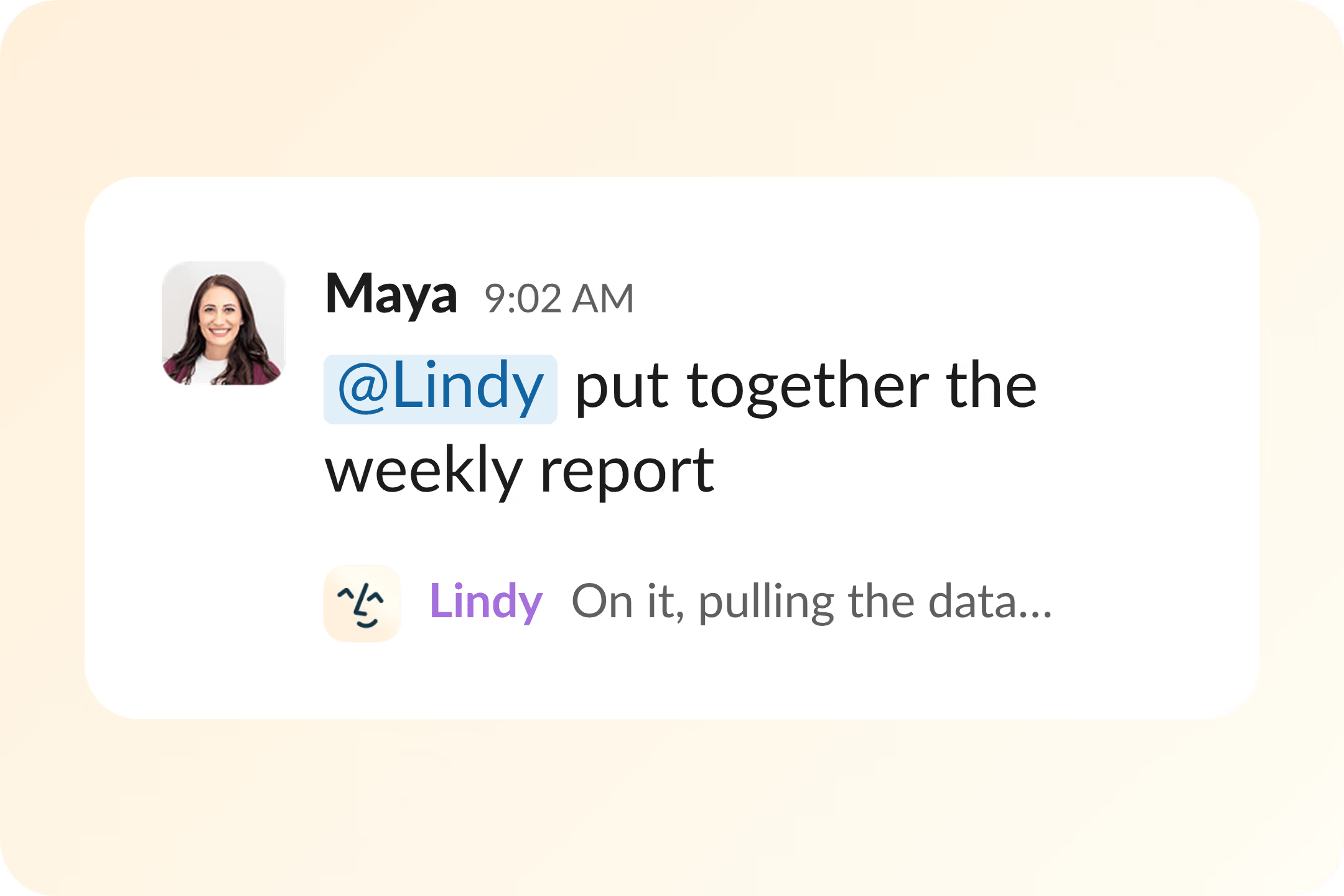
What is Automated Lead Distribution? + 5 Top Tools
Marvin broke down automated lead distribution software, explaining AI-based lead routing and comparing five top tools on cost, integrations, and ease of setup.
.avif)

Assigning leads quickly and accurately is a challenge that automated lead distribution systems solve.
Tools like Lindy with its AI routing, Pipedrive’s intuitive CRM workflows, and Chili Piper’s instant form-to-meeting scheduling make them stand out. With so many options, it can be difficult to find the right tool for your team.
In this article, we’ll help you:
- Understand how automated lead distribution works
- Learn the steps to set up an efficient lead-routing system
- Compare 5 of the best automated lead distribution tools
- Explore best practices to boost conversions
- See how AI improves lead assignment
- Discover why Lindy is redefining automated lead distribution.
Let’s go.
What is automated lead distribution?
Automated lead distribution is a system that assigns incoming leads to the right sales reps based on predefined criteria — without manual intervention.
Instead of hiring someone to sift through spreadsheets or CRM records to find the best sales rep for a new lead, automated systems instantly match leads to reps based on factors like geography, industry, lead score, or rep availability.
Let’s see why automated lead distribution tools make sense.
Assigning leads manually is slow and error-prone. Automated lead distribution helps you:
- Respond to leads faster (and win more deals).
- Improve conversion rates by ensuring the right rep engages the right prospect at the right time.
- Optimize your representatives' time by assigning the next lead as soon as the previous one is closed.
These tools allow you to move the high-intent buyers through your sales funnel without any hiccups.
Let’s first understand how automated lead distribution works.
How automated lead distribution works
Automated lead distribution may sound complicated, but it’s not.
Here’s a simple breakdown:
- Captures leads from multiple sources: Your system pulls in leads using AI, web forms, chatbots, ad campaigns, webinars, or inbound emails — and aggregates them into a central CRM or lead management platform.
- Assigns leads automatically using:
- Predefined rules (e.g., based on territory, deal size, or product line).
- Round-robin distribution (rotating leads equally among reps).
- AI-driven assignment (using dynamic factors like rep performance, past wins, or lead behavior).
- Tracks lead engagement and follow-up actions: Good systems don’t stop at assignments. They monitor if the rep has:
- Reached out to the assigned leads.
- Booked a meeting with the prospects.
- Logged important notes about the conversation.
If follow-up doesn’t happen within your set SLA (say, 5 minutes), the system can reassign the lead or trigger an automated follow-up.
Next? Automating lead distribution.
How to set up automated lead distribution
We’ve simplified the setup of an automated lead distribution strategy in 5 easy steps. Here’s how you can get started:
Step 1: Define your lead routing criteria
Before you automate anything, be clear on how you want to route the leads. You can choose criteria like:
- Geography (assign East Coast leads to your New York team)
- Industry (route healthcare leads to reps familiar with that sector)
- Lead Score (prioritize leads showing high buying intent)
- Sales Rep Availability (send leads only to reps who are online or not overloaded)
The more precisely you define these rules, the better your routing system will perform.
Step 2: Choose the right automated lead distribution software
Not all tools are created equal. Look for a platform that offers:
- CRM integration to centralize data.
- Automation capabilities to handle assignments without constant manual tweaking.
- AI-driven assignment options, if you want dynamic routing based on real-time signals.
- Workflow flexibility so you can easily tweak rules as your team grows.
Make sure the software fits into your existing sales stack without requiring heavy IT support.
Step 3: Implement lead scoring & qualification
Not every lead deserves the same attention. Use lead scoring to:
- Rank leads based on how well they fit your Ideal Customer Profile (ICP).
- Prioritize based on behaviors like downloading a whitepaper, visiting pricing pages, or booking a demo.
Automated lead qualification helps your reps focus their time on the leads most likely to convert.
Step 4: Set up automation rules for lead assignment
For this, you need to design your lead routing logic. Apart from the common methods like round-robin, weighted distribution, and performance based routing, include advanced methods like AI-assisted routing.
Routing using AI decides the most suitable rep for the lead based on past performance, recent conversion rates, reviews and other factors. It maximizes your conversion rates by assigning high priority leads to the best available rep.
Most good platforms let you combine methods. Here's an example, AI-assisted round-robin distribution, but only among reps who've closed a deal in the last 30 days.
Step 5: Monitor & optimize the process continuously
Once your system is live, keep a close eye on the data. Track metrics like:
- Speed to lead (how fast reps reach out)
- Response rate
- Lead-to-opportunity conversion rate
If some reps are slow to respond or specific routes aren’t converting well, tweak your rules.
5 best automated lead distribution software options
We chose the 5 best automated lead distribution tools and compared their features, who they’re best for, and how much they cost. Here’s a quick comparison:
| Software | Key Features | Best For | Pricing |
|---|---|---|---|
| 1. Lindy | AI-powered lead routing, workflow automation, CRM integration | SMBs to Enterprises needing adaptive AI | Free plan; paid plan starts at $49.99/month |
| 2. Pipedrive | CRM with basic lead routing workflows | Small to medium-sized sales teams | Starts at $14/user/month |
| 3. Chili Piper | Form concierge, calendar integrations, round-robin | Mid-market SaaS companies | Custom Pricing |
| 4. Close CRM | In-built CRM with manual and simple lead distribution | Small sales teams and startups | Starts at $29/user/month |
| 5. LeadExec | High-volume lead distribution platform | Lead generation agencies | Free plan; paid plan starts at $825/month |
Let’s check them out in detail:
1. Lindy

Lindy is a no-code platform that helps you create a powerful AI lead distribution system. The intuitive workflow builder lets you create custom lead assignment logic without technical skills. Whether you want basic round-robin distribution or complex AI-based routing based on rep performance, Lindy has you covered.
It integrates with your CRM and favorite sales tools to streamline the entire process. It even gives you ready-to-deploy templates.
Key features
- AI lead assignment: Automatically matches leads to the most suitable reps based on skills, past performance, availability, and live data.
- Conditional workflows: Set advanced logic to route leads differently based on lead score, region, industry, or any CRM field you choose.
- Real-time reassignment: Lindy supports real-time reassignment if a rep doesn’t respond, but this requires setting up SLA-based triggers inside your custom workflow.
- CRM enrichment and updates: Lindy can pull additional information about a lead and update your CRM records in real time for more personalized outreach.
Best for
Lindy is an excellent choice for:
- Sales teams looking to improve speed-to-lead and boost conversion rates.
- Revenue operations teams who need adaptive, no-code automation.
- Growing businesses that want dynamic lead routing without hiring dedicated admins.
Businesses wanting to respond faster, assign leads more intelligently, and boost pipeline efficiency will find Lindy valuable.
Pricing
Free plan available with limited features. Paid plans start at $49.99/month for Pro and $299.99/month for Business.
Lindy goes beyond traditional lead distribution platforms. If you want to automate even more areas of your business, from outbound sales to customer support, we highly recommend checking out the Lindy Academy for deeper insights.
{{templates}}
2. Pipedrive
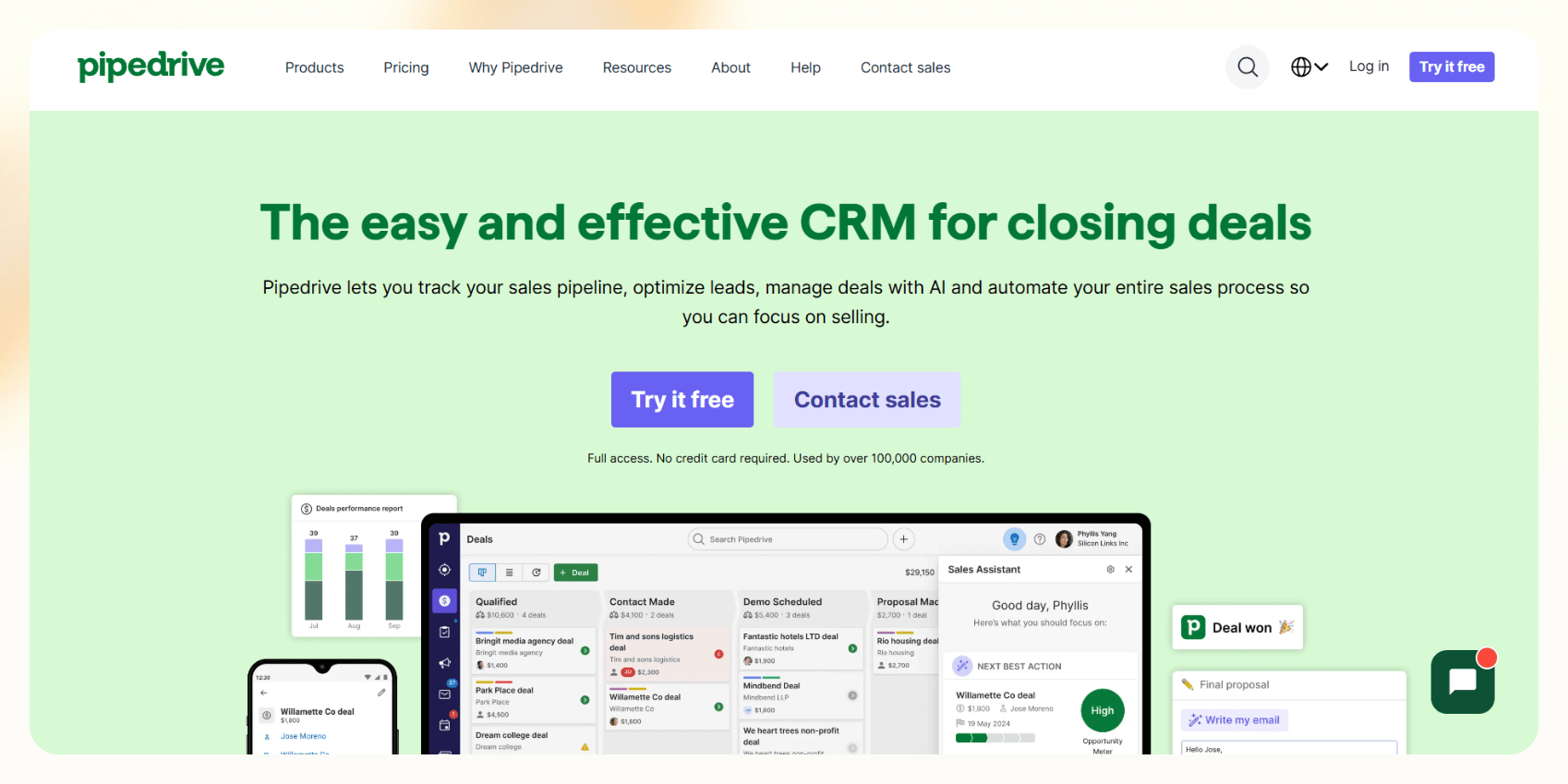
Pipedrive includes basic lead distribution features for small to mid-sized sales teams. It’s designed to ease pipeline management and offers visual tools to track deals, automate assignments, and monitor sales performance.
Key features
- Basic lead routing: Create assignment rules based on deal stages, territories, or custom fields.
- Automation templates: Set up triggers like "When a deal is created, assign it to X rep."
- Lead source tracking: Monitor where leads come from to optimize distribution efforts.
- CRM and sales pipeline tools: Manage contacts, deals, and follow-ups in one place.
Best for
Pipedrive works best for:
- Small to mid-sized sales teams looking for a simple CRM with basic automation.
- Companies just starting with lead assignment automation.
It’s ideal if you’re managing straightforward pipelines without complex distribution rules.
Pricing
Plans start at $14/user/month, with higher tiers offering more automation and reporting capabilities. While effective for simple setups, Pipedrive may feel limited for teams that need highly dynamic or AI-driven lead assignment.
3. Chili Piper
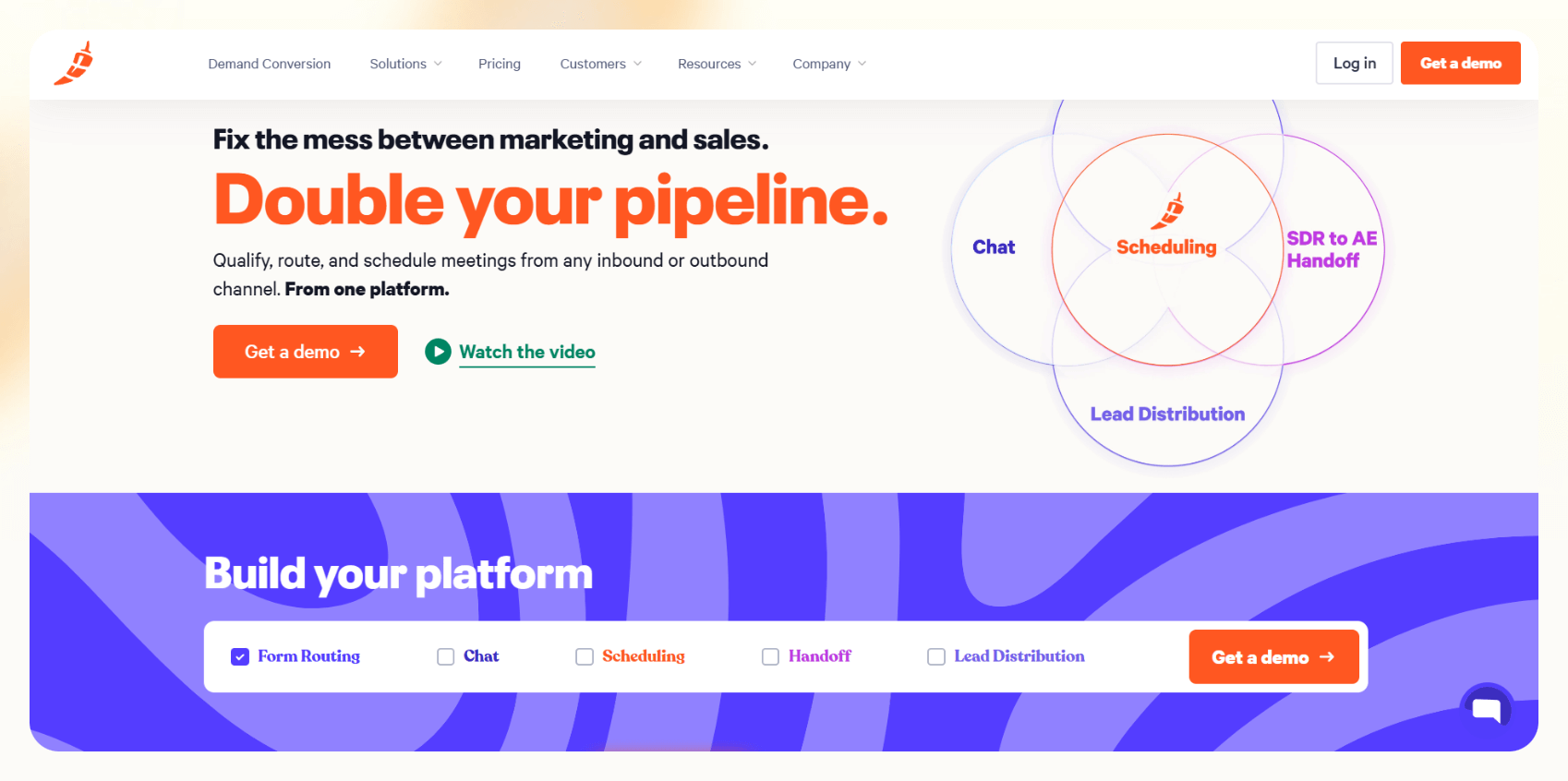
Chili Piper specializes in automated scheduling and instant lead routing right after form submissions.
It automatically connects inbound leads to the right sales reps or meeting slots. That makes it a favorite among SaaS companies focused on speed-to-meeting metrics.
Key features
- Form concierge: Instantly qualifies and routes leads after web form submissions.
- Round-robin and priority routing: Assign leads based on rep availability and predefined priorities.
- Calendar integrations: Book meetings directly into reps’ calendars.
- Real-time lead assignment: No waiting for manual triage.
Best for
Chili Piper is ideal for:
- Mid-market SaaS companies looking to improve inbound lead conversion rates.
- Sales teams that need fast scheduling and distribution workflows.
If your main goal is to increase the number of meetings booked directly from your website, Chili Piper shines.
Pricing
The pricing is custom and depends on your CRM, the size of your sales team and the features you need. While Chili Piper is excellent for form-based inbound routing, it doesn’t offer AI logic beyond set workflows.
4. Close CRM
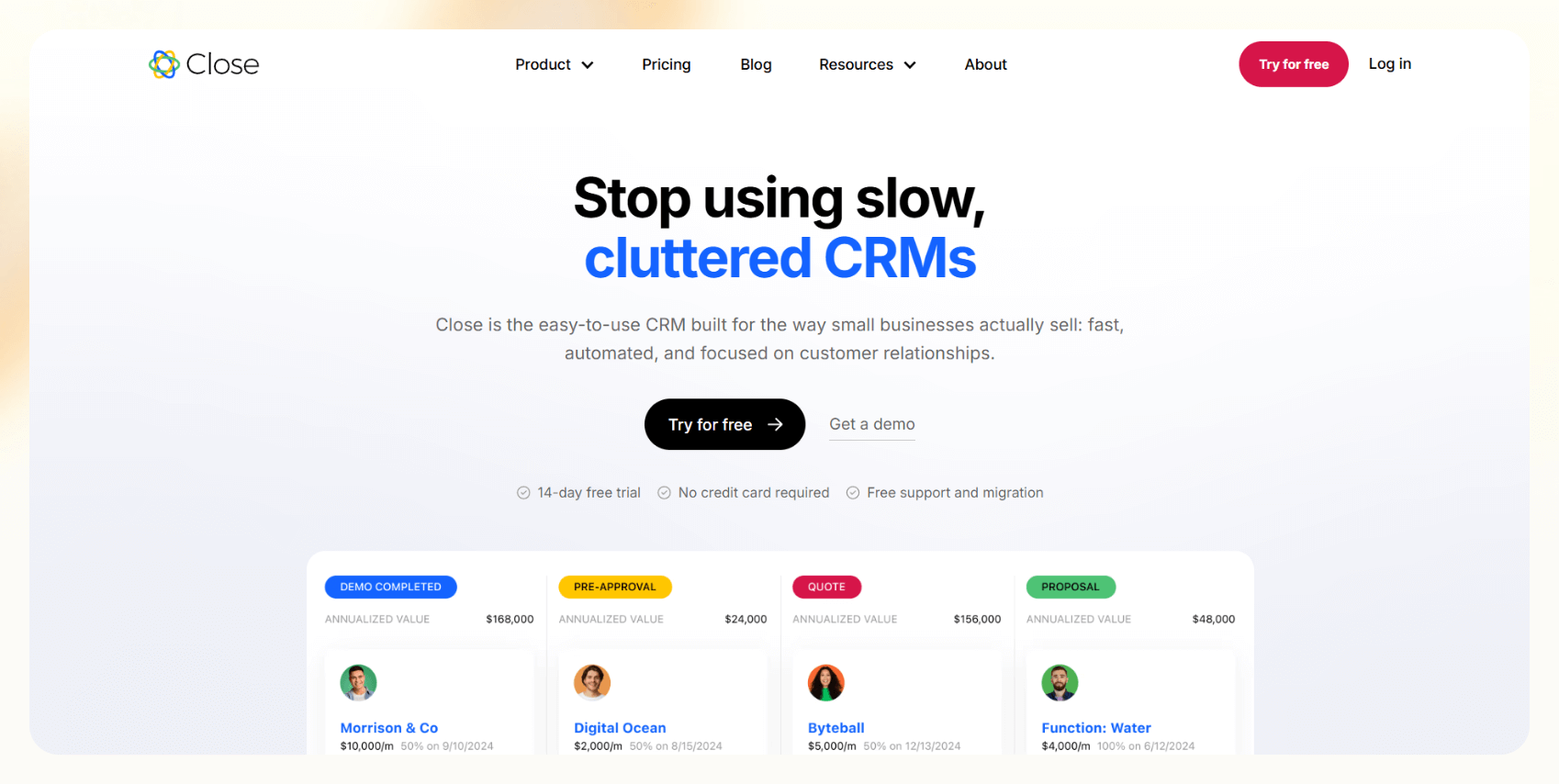
Close CRM is a sales-focused platform for startups and small businesses who want speed and simplicity. It comes with built-in calling, emailing, lead tracking features, and basic lead assignment capabilities.
Key features
- Lead and deal assignment: Assigns new leads to available reps using simple workflows.
- Built-in communication tools: Manage calls, emails, and SMS directly inside the CRM.
- Smart Views: Segment and prioritize leads automatically based on custom criteria.
- Pipeline reporting: Measure lead progression and team performance.
Best for
Close CRM is ideal for:
- Small sales teams that want everything (calling, emailing, CRM) under one roof.
- Startups that need a simple, ready-to-go solution without heavy customization.
It’s less suited for teams needing highly sophisticated or large-scale lead distribution logic.
Pricing
Plans start at $29/user/month, and include calling and email integrations. Close CRM is fast and easy to use but lacks AI-level lead assignment flexibility.
5. LeadExec
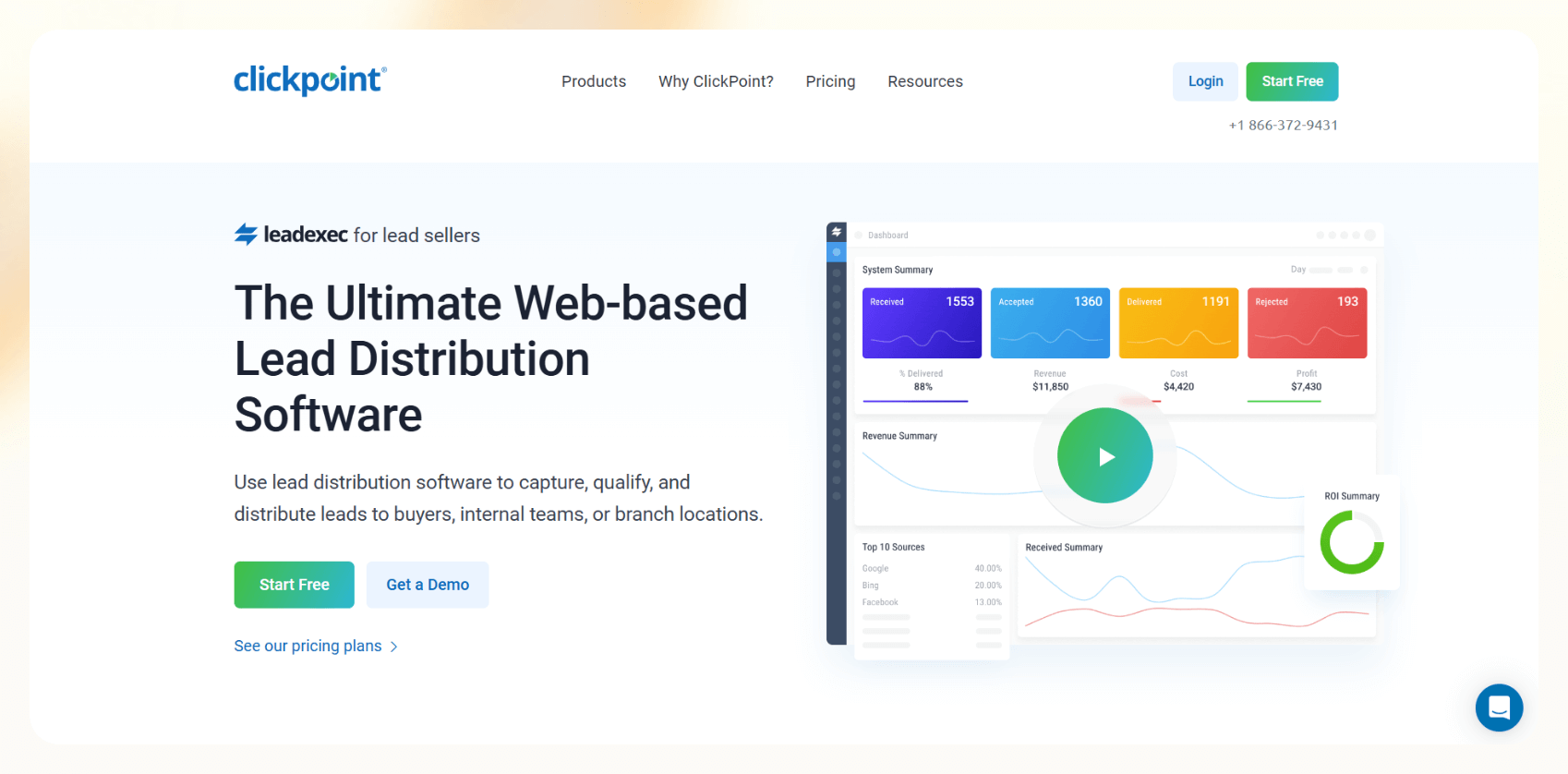
LeadExec is a dedicated lead distribution platform for businesses that generate and sell thousands of leads. It offers detailed tracking, custom routing rules, and integrations with marketing platforms.
Key features
- Real-time lead distribution: Instantly route leads to buyers or sales teams based on detailed criteria.
- Lead source tracking: Monitor which sources deliver the highest-quality leads.
- Ping post capabilities: Sell and distribute leads to multiple buyers simultaneously.
- Compliance features: Manage TCPA and GDPR compliance during lead transfers.
Best for
LeadExec is built for:
- Lead generation agencies that sell leads to third parties.
- Companies managing complex, multi-buyer lead distribution workflows.
It’s specialized software, so it’s overkill if you only use it to distribute leads internally.
Pricing
There’s a free plan but it won’t be of any use for enterprises. Paid plan starts at $825/month. LeadExec offers excellent flexibility for high-volume lead sellers but isn’t necessary for typical internal sales team routing.
Now that we know the tools, strategies are the next step.
Lead distribution strategies: Best practices for maximum conversions
Automated lead distribution is about speed and matching. Here’s how to get the most out of it:
Lead qualification & scoring
Not all leads are created equal. Use lead scoring to rank prospects based on fit and behavior — such as company size, website visits, or demo requests.
Focus your top reps on high-scoring leads to maximize conversions.
Round-robin vs. AI-based lead routing
Let’s compare them for a clearer idea:
- Round-robin ensures fairness by evenly distributing leads among reps.
- AI-based routing goes further — it matches leads to reps based on performance, territory, workload, or historical win rates.
AI routing can significantly improve outcomes if your sales team has different specialties or experience levels.
Ensuring speed to lead
Speed matters — a lot. According to InsideSales study, leads contacted within 5 minutes are 8 times more likely to convert.
Use automation to:
- Instantly notify reps when a lead comes in.
- Reassign leads if there’s no response within a set window (e.g., 5–10 minutes).
Aligning lead distribution with sales KPIs
Lead distribution isn’t set-and-forget. Tie your routing logic to real performance indicators like:
- Response time
- Lead-to-opportunity conversion rate
- Closed deals per rep
Regularly review the data and tweak your rules to optimize for what drives revenue.
We know AI can make a difference. Let’s see how.
How does AI improve lead distribution?
Traditional lead distribution assigns leads based on simple, static rules. But AI makes the process faster and more adaptive to sudden changes. Here’s how AI makes a difference:
1. Smarter lead scoring
Instead of assigning leads randomly, AI can score leads based on data like:
- Company size
- Role seniority
- Engagement level
- Website activity
It ensures your best reps get the highest-quality leads first.
2. Real-time qualification
AI can instantly qualify leads based on preset criteria — such as industry fit, budget, or decision-making power — before they hit a rep’s pipeline. So, you waste no time on low-fit prospects.
3. Adaptive lead routing
Unlike static rules, AI considers live signals like rep availability, workload, and past win rates when assigning leads. If a rep is overloaded or underperforming, AI adjusts routing on the fly.
4. Enriched lead profiles
AI tools can automatically fetch missing data (like company revenue, number of employees, or recent news) from external databases. This creates richer lead profiles that reps can use to personalize their first outreach.
5. Workflow automation
Beyond distribution, AI can automate the next steps:
- Send a follow-up email if there's no response.
- Trigger outreach cadences via LinkedIn or SMS.
- Assign nurture workflows for lower-priority leads.
Lindy was designed from the ground up to use AI making it more intuitive to get started on, whereas most traditional lead distribution platforms added it later. Let’s show you how the platforms compare.
Lindy vs traditional lead distribution platforms
Most traditional lead distribution tools follow a simple path: capture a lead, assign it based on a basic rule (like round-robin or territory), and move on. It works — but only up to a point. Lindy changes this path.
You can configure Lindy to score leads dynamically if integrated with tools that provide engagement data — the scoring model itself must be custom-defined.
How Lindy automates lead routing with AI
Lindy’s workflows are flexible and customizable. You can define complex conditional logic. For example, send high-scoring SaaS leads to your enterprise team, while lower-intent leads go into a nurture sequence.
If a rep doesn’t act fast enough, Lindy reassigns the lead to another team member automatically.
What makes Lindy different?
Lindy’s no-code workflow builder lets you tweak assignments, adjust lead scoring models, and add new routing criteria instantly — no IT ticket required. And because Lindy automatically enriches and updates lead profiles, your team always works with the most accurate data.
Why businesses choose Lindy for automated lead distribution
Teams looking to scale without adding complexity turn to Lindy. Lindy helps small teams punch above their weight by automating lead capture, qualification, routing, and follow-up sequences.
It shortens response times, improves lead quality, and gives reps more time to sell. Plus, Lindy easily integrates with your CRM, email tools, and internal communication platforms, making setup smooth and expansion easy.
Frequently asked questions
Is automated lead distribution worth it for small businesses?
Absolutely. Even small teams benefit from faster response times and better lead-rep matching. Instead of losing high-intent leads in manual spreadsheets or slow handoffs, automated distribution ensures every opportunity is handled quickly and correctly.
How does automated lead routing work?
When a new lead enters your system, automated lead routing matches it to the right sales rep based on pre-set rules or AI models.
Factors like geography, industry, lead score, and rep availability determine the assignment — all without human input.
Can automated lead distribution integrate with my CRM?
Yes. Most modern systems, including Lindy, integrate with major CRMs like Salesforce, HubSpot, and Pipedrive.
This ensures leads are automatically logged, updated, and routed without manual entry, saving time and improving data accuracy.
What’s the best way to measure the success of a lead distribution system?
Focus on a few key metrics:
- Speed to lead: How fast your team contacts new leads.
- Lead-to-opportunity conversion rate: How many leads turn into qualified deals.
- Rep response time and activity: Track if reps engage quickly and consistently.
- Close rate: Ultimately, how many assigned leads result in wins.
Review these KPIs regularly to fine-tune your distribution rules for better performance.
{{cta}}
Try Lindy: Your new lead distribution platform — and way more
Lindy is designed to easily create flexible AI automations. It combines lightning-fast lead assignment with background information from popular CRMs that you can integrate.
That’s the revolutionary power Lindy brings to your sales and marketing teams. Here’s how Lindy goes the extra mile:
- Fast lead assignment: Lindy captures, scores, qualifies, and routes leads within seconds, giving your reps the best chance to close deals fast.
- Always-on lead management: Lindy operates 24/7, ensuring no lead falls through the cracks — even outside regular business hours.
- Conquering data gaps: When integrated with data providers like People Data Labs, Lindy can enrich leads and update your CRM. But you must configure it in the workflow.
- Effortless CRM integration: Lindy plugs directly into your existing tools, like Salesforce, HubSpot, or Pipedrive, keeping your systems clean and synced.
- Scales to meet your growth: Whether you're handling 10 or 10,000 leads a day, Lindy scales up effortlessly to optimize assignments as your team grows.
- Much more than just lead distribution: Lindy supports broader workflows — from outreach automation to inbound support — helping you streamline your entire revenue operation.