Best AI Sales Chatbot Tools: 9 Picks Compared for 2026
Everett tested nine AI sales chatbots, including Tidio, Chatfuel, and Salesloft, weighing lead qualification accuracy, channel coverage, and CRM integrations.


I've had a chatbot ask me the same qualifying question three times in one conversation. I've also had one ask two quick questions about team size and timing, then offer me a demo slot while I was still on the pricing page.
The first was a scripted flow wearing an AI label: it repeated itself and would have left a rep with just a name and an email. The second held a real conversation, caught my buying intent, and moved me toward a booked meeting. I looked for the second kind in every tool below.
I compared nine tools on the same five questions: how well each qualifies a lead, which channels it covers, how it hands off to a CRM or calendar, how much setup it needs, and how clear its pricing is. Every price and feature comes from the vendor's own site, not from review round-ups that go stale within a quarter.
These are the 9 I'd recommend, organized by the specific job each one does best.
9 best AI sales chatbots: TL;DR
- ChatBot.com: Best for a full AI sales conversation across channels
- Rep AI: Best for Shopify and ecommerce stores
- Tidio: Best for SMBs combining live chat and automation
- HubSpot Chatbot Builder: Best for teams already running HubSpot
- Warmly: Best for identifying anonymous B2B website visitors
- Chatfuel: Best for Facebook, Instagram, and WhatsApp DMs
- Watermelon: Best for multilingual sales and support
- Salesloft: Best for B2B SaaS sales pipelines
- ManyChat: Best for campaign-based social selling
How I researched these AI sales chatbots
A visitor asks about pricing at 9 p.m. The chatbot replies, asks a few questions, and the conversation ends. What does the sales rep find the next morning? That's the question I kept in mind while comparing these tools.
- Lead qualification: Does it learn what the buyer needs and whether they're ready to talk, or leave the rep with a name and email?
- Channel coverage: Does it work where customers contact you? A website chat, WhatsApp message, and Instagram DM each need a workable handoff.
- CRM and calendar integration: Can a qualified lead reach the right record or book a meeting without someone copying details across?
- Setup effort: Could a sales manager change the questions and handoff rules without waiting on a developer?
- Pricing clarity: Can you estimate the bill from the published plans, including charges tied to conversations or usage?
My three starting points: ChatBot.com for sales conversations across a website and messaging channels, Rep AI for ecommerce chats that respond to shopper behavior, and Warmly for B2B teams that want visitor context before starting a conversation.
What is an AI sales chatbot?
An AI sales chatbot is software that holds a real conversation with a website visitor, works out buying intent instead of matching keywords, and moves that visitor toward a qualified conversation or a booked meeting.
Unlike a scripted bot, it can handle a question that goes off-script, remember context across the conversation, and hand a high-intent lead to a rep at the right moment.
1. Best AI Sales Chatbot for Full Sales Conversations Across Channels
ChatBot.com: What is it?
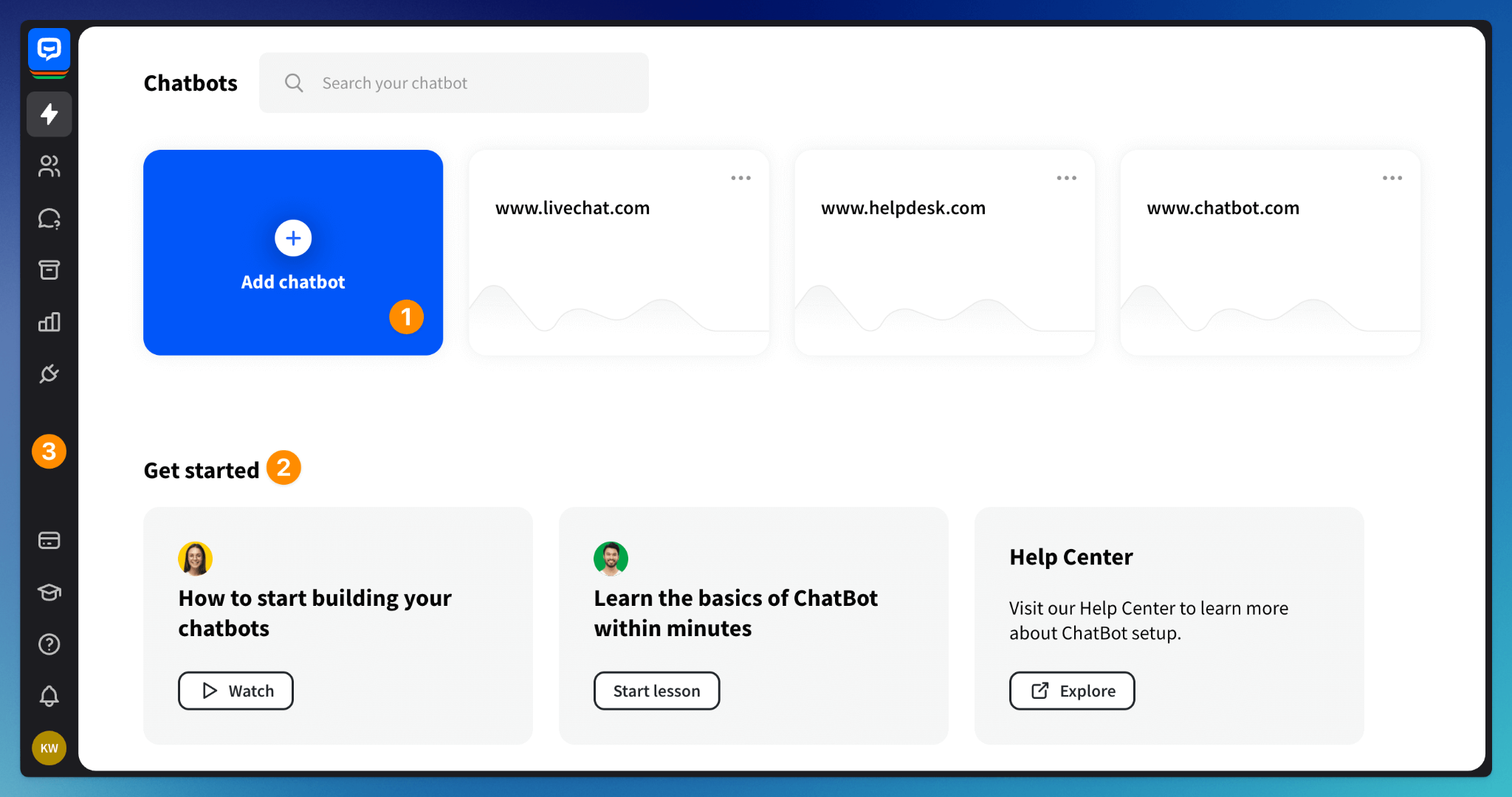
ChatBot.com runs an AI Agent (built by Text) that monitors conversations for buying signals, answers from a trained knowledge base, and routes qualified leads to a rep.
Who it's for: Teams that want live chat, an AI sales agent, and a help desk running from one platform instead of three separate tools bolted together.
Pricing: ChatBot.com plans start at $25/user/month (Essential, billed monthly), with Growth at $99/user/month and custom Enterprise pricing. A 14-day free trial is also available, no credit card required.
What I liked
The AI Agent learns from a company's own website, help center, and files, then executes what ChatBot.com calls a sales skill inside one conversation: offering a discount, recommending a product, or escalating to a rep depending on what the visitor needs.
WhatsApp comes included on every plan with no extra Meta fees for customer-started chats. The live Shopify catalog sync stood out too. Recommendations reflect current stock and pricing automatically, so the bot never suggests something that's actually sold out.
What I disliked
AI resolutions are capped per plan, just 10 a month on the entry Essential tier. A team with real conversation volume will burn through that fast and need to buy extra resolution packs on top of the base price.
2. Best AI Sales Chatbot for Shopify and Ecommerce Stores
Rep AI: What is it?
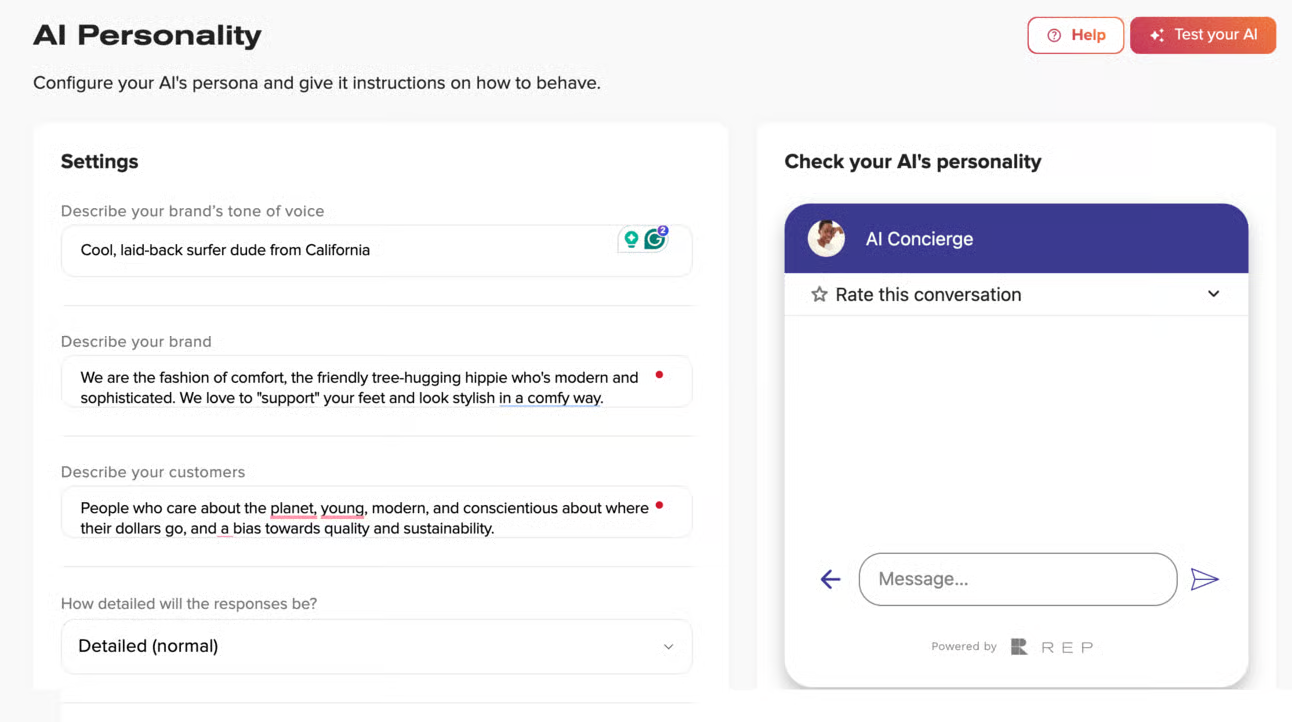
Rep AI watches shopper behavior (hesitation, product comparisons, exit risk) and starts a conversation the moment intent shifts, guiding the shopper toward a purchase instead of waiting for them to open a chat window.
Who it's for: Ecommerce brands, especially on Shopify, that want something closer to an in-store salesperson than a reactive FAQ bot.
Pricing: At 10,000 website visits per month, Rep AI charges $104/month for its Sales Agent, $49/month for Support, or $130/month for Concierge, which combines both.
These are monthly billing rates; the price changes with website traffic. All plans include a 14-day free trial with no credit card required.
What I liked
Rep AI can open a chat with something tied to the specific product a shopper's been comparing. Most tools on this list greet every visitor the same way.
The automated post-purchase support impressed me too. Order tracking, returns, and cancellations get handled without creating a support ticket, a job the sales-first tools here skip.
Rep AI offers a 5x ROI money-back guarantee: if you don't see the results, it refunds you.
What I disliked
This tool is built specifically for ecommerce. A B2B team without a product catalog to browse won't find much use for the behavior-detection engine that makes Rep AI worth choosing in the first place.
3. Best AI Sales Chatbot for SMBs Combining Live Chat and Automation
Tidio: What is it?
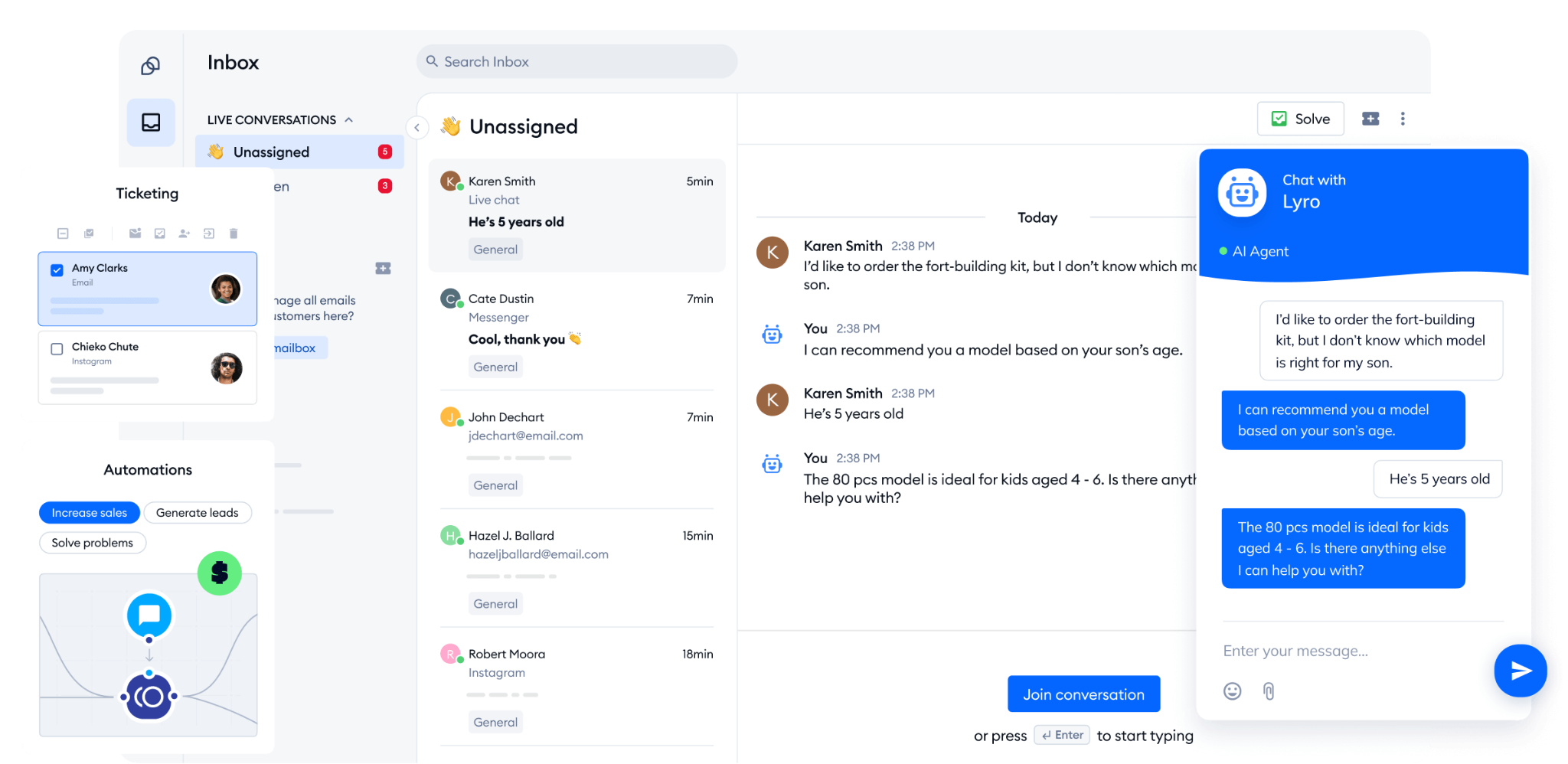
Tidio pairs an AI chatbot called Lyro with live chat, email, and a help desk, so a small team can run sales and support conversations from one inbox.
Who it's for: Small to mid-sized businesses without a developer that want sales and support chat running the same day.
Pricing: Tidio’s Lyro AI Agent costs $39/month for 50 AI conversations with monthly billing, or $32.50/month billed annually. The free plan includes 50 Lyro conversations as a one-time allowance. A seven-day free trial is available without a credit card.
What I liked
Lyro handles the AI piece while a visual editor lets a non-technical person build the scripted flows around it, which meant I didn't need a developer to get a working setup running the same day. The free plan is enough to test live chat and the flow builder before you pay.
What I disliked
Lyro, the actual AI chatbot, is capped hard on the free plan. You get 50 Lyro conversations once, not every month, so ongoing AI chat needs the separate Lyro plan from $39/month.
4. Best AI Sales Chatbot for Teams Already Running HubSpot
HubSpot Chatbot Builder: What is it?
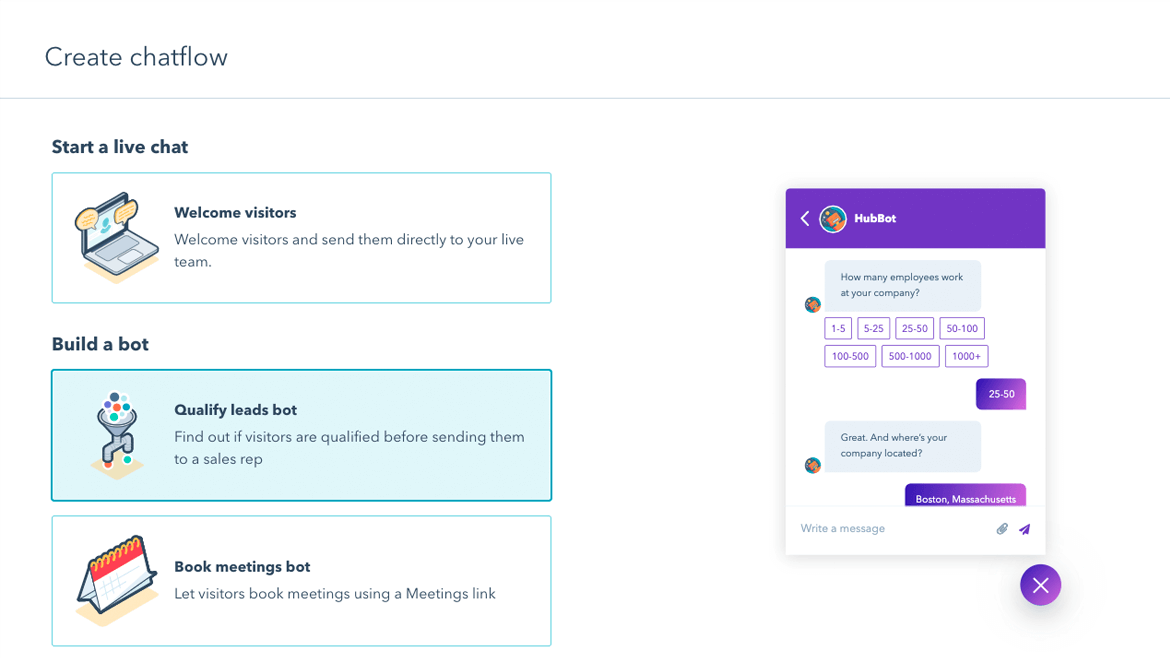
HubSpot's chatbot builder qualifies leads, books meetings, and answers common questions, then writes everything it collects directly onto the contact record in HubSpot's Smart CRM.
Who it's for: Teams that already manage their pipeline in HubSpot and don't want chatbot conversations living in a separate, disconnected tool.
Pricing: HubSpot’s chatbot builder is free with no credit card required, and its free CRM supports up to two users.
Professional and Enterprise editions of Marketing Hub, Sales Hub, Service Hub, and Content Hub add chatbot features. Sales Hub Starter starts at $20/seat/month with monthly billing, but you don't need it to use the free builder.
What I liked
Because it's tied to the CRM a rep already checks, every chatbot conversation adds to the same contact history instead of creating a second source of truth someone has to reconcile manually.
The rule-based chatbot builder costs nothing to start, which is rare for a tool this tied into a CRM. HubSpot's AI customer agent, powered by Breeze, needs a Professional or Enterprise plan.
What I disliked
Conversational depth is limited on the Free and Starter tiers. If/then branching and HubSpot's AI customer agent need a Professional plan, such as Sales Hub Professional at $100/seat/month plus a required $1,500 onboarding fee.
5. Best AI Sales Chatbot for Identifying Anonymous B2B Website Visitors
Warmly: What is it?
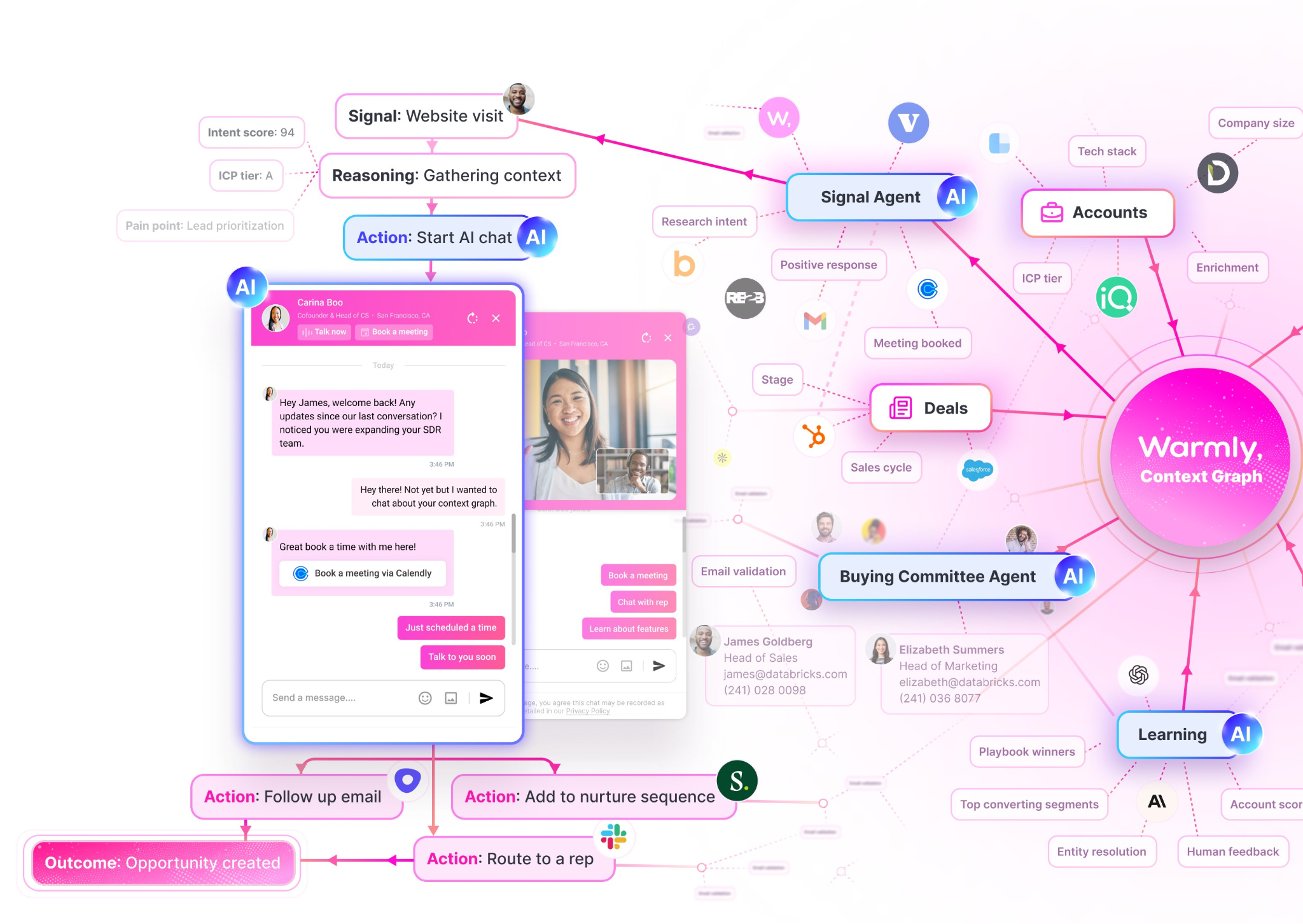
Warmly identifies website visitors by name, role, and company before a conversation even starts, so its AI chat opens already knowing who it's talking to.
Who it's for: B2B teams whose website gets real traffic but a low form-fill rate, and who want the first line of the chat to reference the visitor's company by name.
Pricing: Warmly's paid plans start at $10,000/year (billed annually) for identification, with Inbound Chat at $20,000/year and AI Inbound Autopilot at $30,000/year. You can also pay quarterly, from $4,875 a quarter. There's no free plan and no monthly option.
What I liked
The identification pipeline runs in under three seconds, fast enough that the AI chat can reference a visitor's company and the page they're on in the opening message, rather than a generic "how can I help?"
Meeting booking happens directly inside the chat window, no separate form or "someone will follow up" step in between.
What I disliked
There's no free plan, and the entry price is steep at $10,000 a year just for identification. A small team without meaningful website traffic won't see enough volume to justify that cost.
{{templates}}
6. Best AI Sales Chatbot for Facebook, Instagram, and WhatsApp DMs
Chatfuel: What is it?
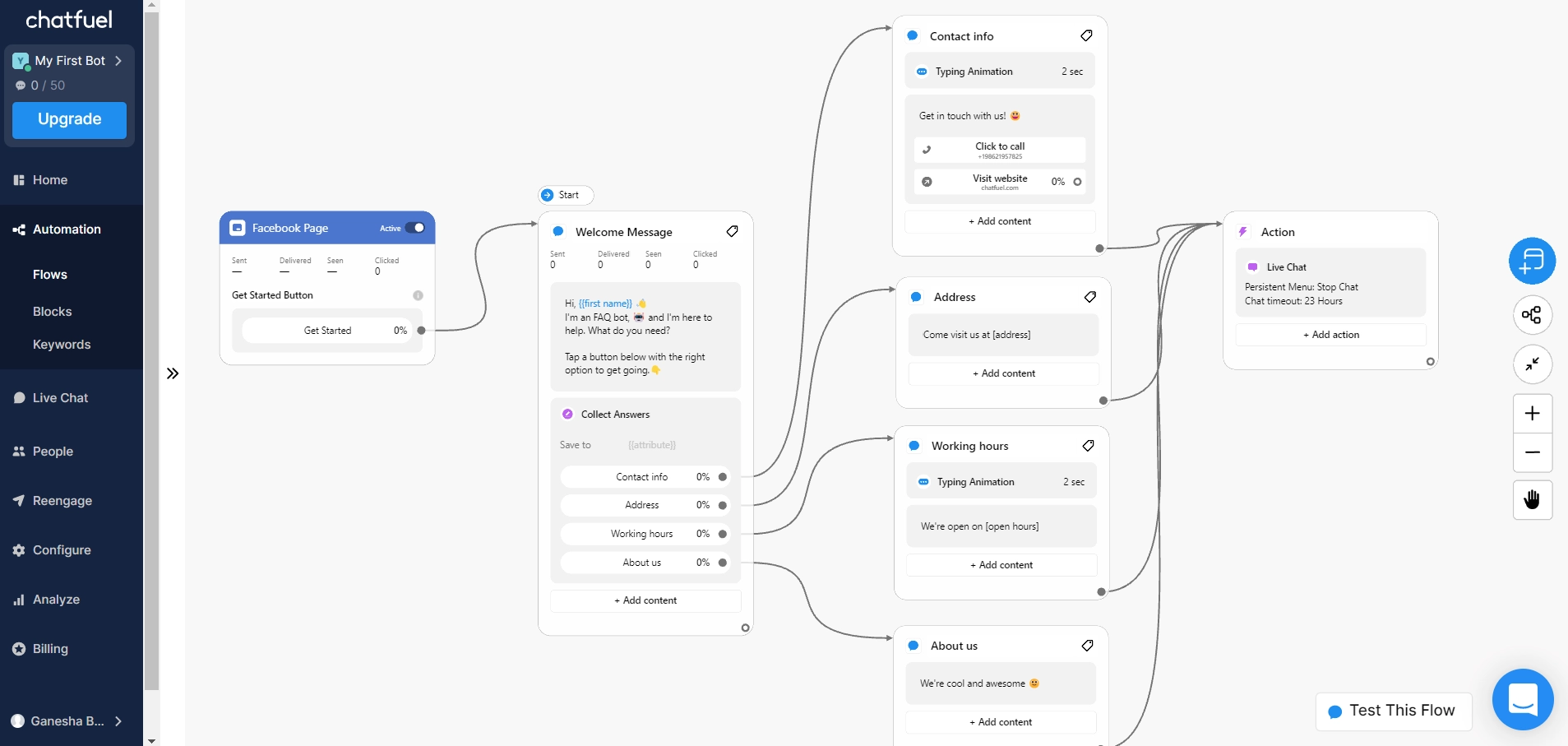
Chatfuel builds chatbots purpose-built for Meta's messaging platforms, automating lead capture, FAQs, and cart recovery inside Messenger, Instagram, and WhatsApp specifically.
Who it's for: DTC brands and sellers whose sales conversations start in social DMs rather than on a website.
Pricing: Chatfuel lists Business at $69/month and Agency S at $100/month with monthly billing. Both plans offer a free trial.
What I liked
The depth of Meta-specific automation goes further than a general chatbot platform bolting on a Messenger integration as an afterthought. Comment auto-replies, story mentions, and keyword-triggered actions all get their own dedicated setup.
I could test flows across Facebook, Instagram, and WhatsApp before paying anything.
What I disliked
The AI usage limit takes some planning. Chatfuel allows unlimited contacts and messages, but AI replies have a fair use allowance. A busy campaign or a long knowledge base could use that allowance faster than expected. If you reach the limit, AI replies pause until it resets or you renew the plan.
7. Best AI Sales Chatbot for Multilingual Sales and Support
Watermelon: What is it?
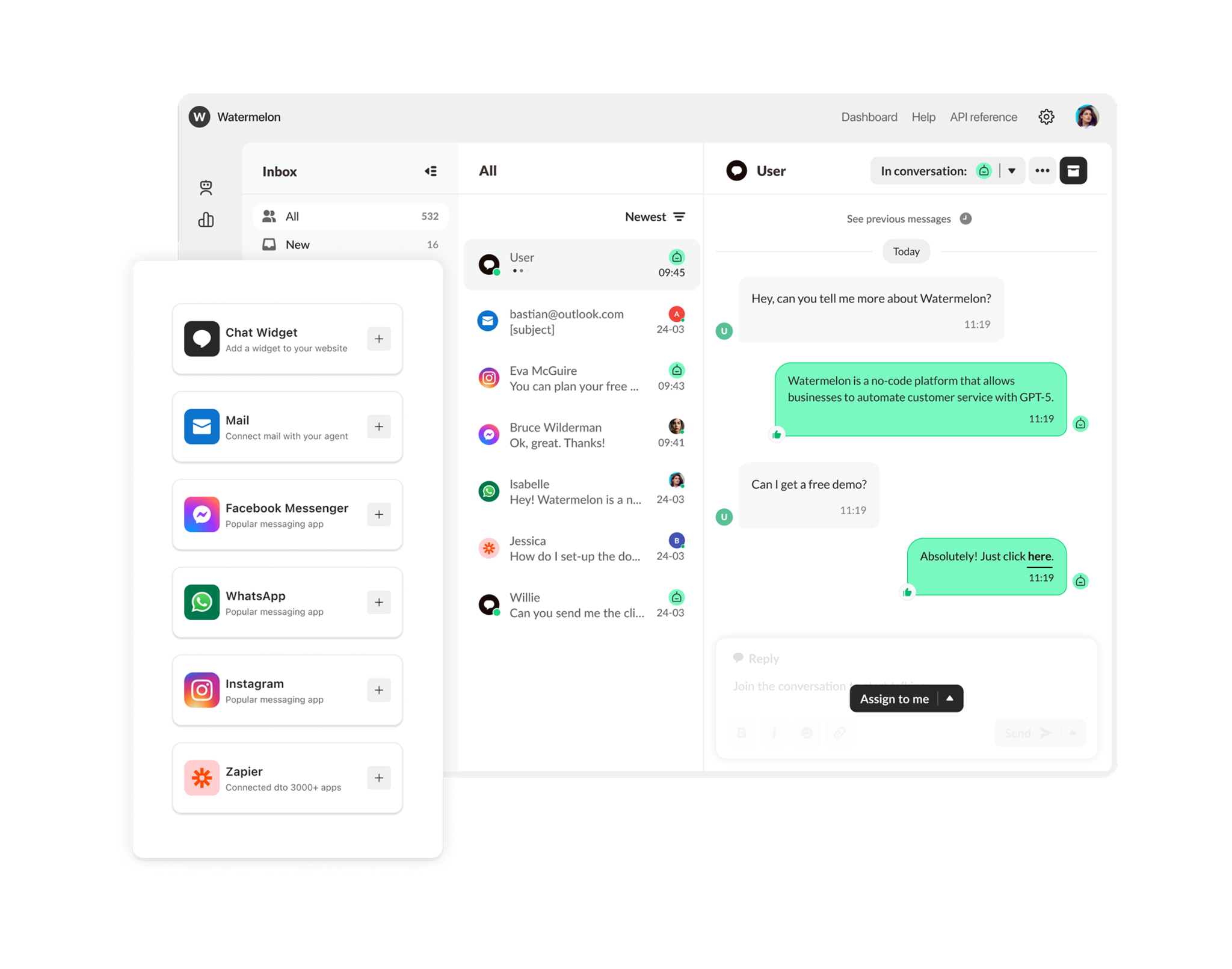
Watermelon runs GPT-powered chatbots that auto-detect a visitor's language and reply in it, on your website on every plan, plus WhatsApp, Messenger, and Instagram DMs from the Starter plan up.
Who it's for: Teams selling or supporting customers across multiple countries or languages without staffing each one separately.
Pricing: Watermelon plans start at €99/month (Starter, billed monthly), with Advanced at €199/month and Business at €399/month, plus custom Enterprise pricing. A free plan is also available for 50 conversations a month.
What I liked
The language switch happens mid-conversation without any manual configuration, so one shared inbox can serve contacts from several regions.
The no-code agent builder meant I could shape how the agent answers, with instructions and knowledge sources, without needing a developer.
What I disliked
Watermelon leans more toward support conversations than dedicated outbound sales automation, so a team building a pure sales funnel might find the sales-specific tooling thinner than the support side.
8. Best AI Sales Chatbot for B2B SaaS Sales Pipelines
Salesloft: What is it?
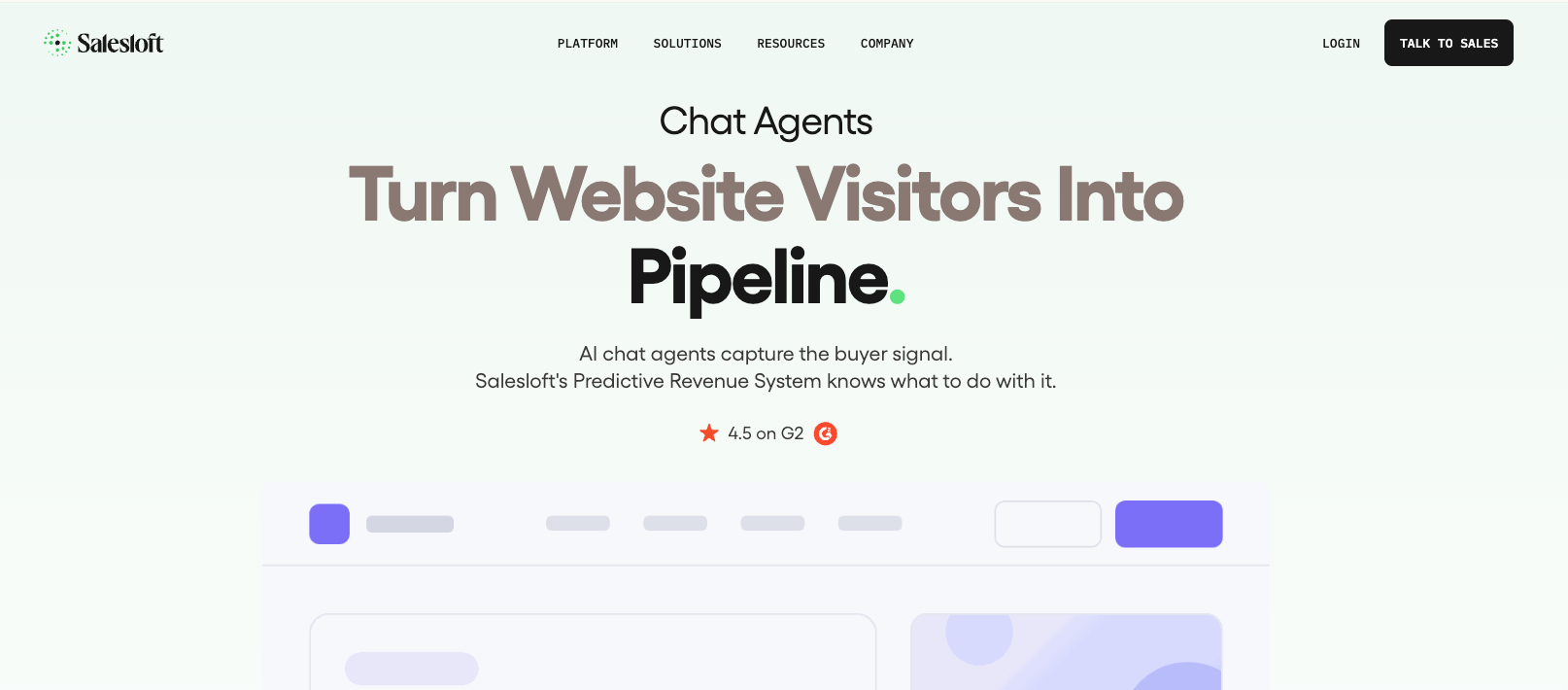
Salesloft pairs its sales engagement platform with AI chat agents from its partner 1mind, which replaced Salesloft's own Drift chat in 2026. Chat conversations feed into Salesloft's cadences and forecasting, alongside built-in AI call summaries and follow-up emails.
Who it's for: Mid-market and enterprise B2B teams running longer, multi-touch sales cycles across email, phone, and chat.
Pricing: Salesloft doesn't publish pricing. Getting an actual number means contacting their sales team directly.
What I liked
The chat piece feeds buyer signals straight into cadences, rep workflows, and forecasting. Because 1mind's chat data flows into Salesloft, reps work those leads from the same place they run outreach.
What I disliked
Nothing about pricing is public. Every quote requires a sales call, which makes it hard to even shortlist Salesloft against a competitor without first giving up an hour to a discovery conversation.
9. Best AI sales chatbot for campaign-based social selling
ManyChat: What is it?
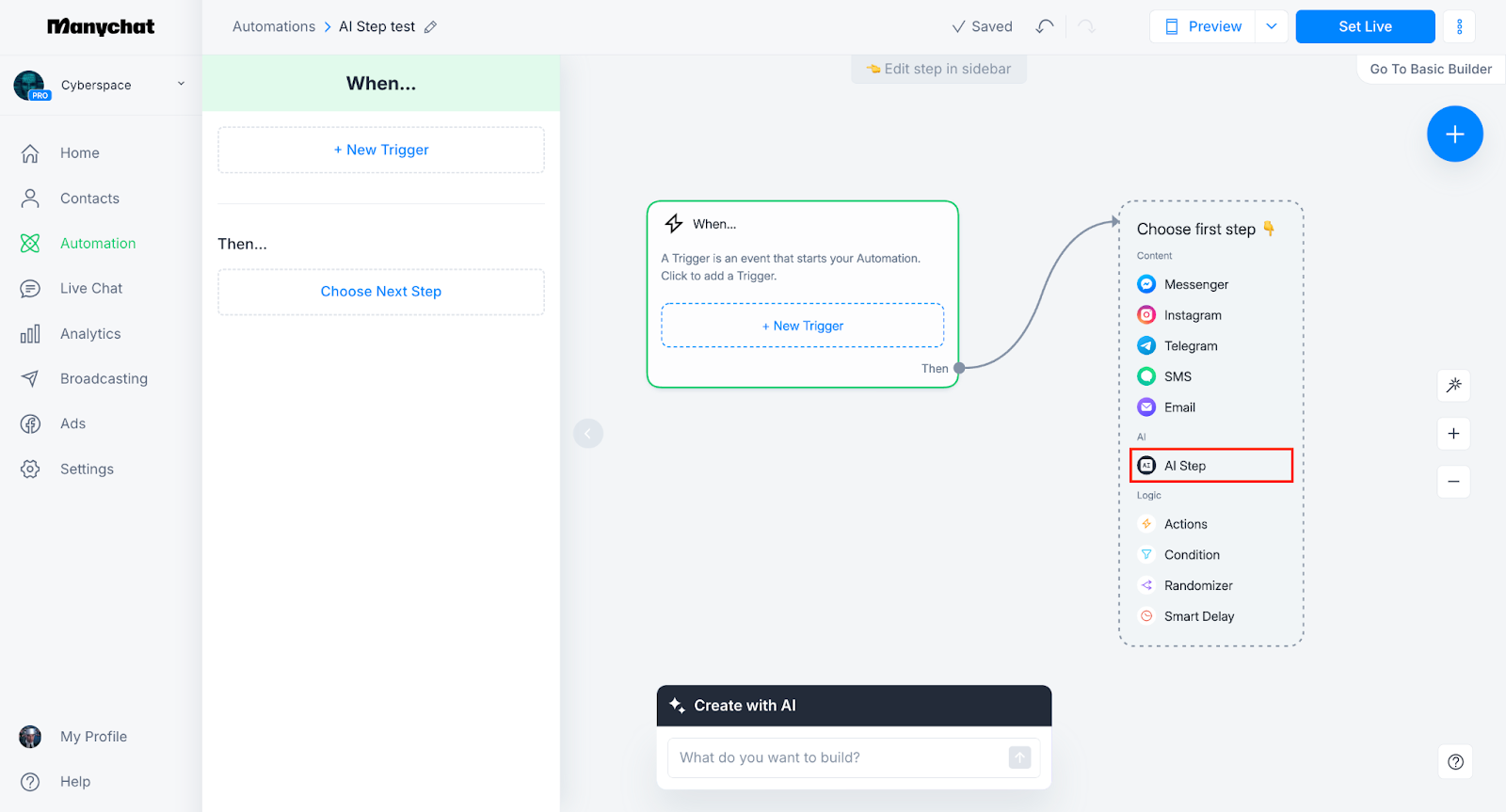
ManyChat automates messaging across Instagram, Messenger, TikTok, WhatsApp, SMS, and more (WhatsApp and SMS start on Pro), built around drip campaigns and broadcast sequences more than a single ongoing sales conversation.
Who it's for: Marketing teams running timed launches, promotions, or seasonal campaigns through chat apps instead of email.
Pricing: ManyChat AI starts with Pro at $39/month with monthly billing, for 2,500 active contacts. Essential costs $17/month without AI, while Business costs $99 and Advanced costs $199. The free plan covers 25 active contacts per month. Pro offers a 14-day free trial.
What I liked
The campaign builder made it easy to set up a sequence, quiz, or interactive flow without writing code, and the free plan let me test a full campaign before paying anything.
Time-bound offers drew the strongest response. A launch announcement sent through Messenger received 16 replies, a clear sign that people wanted to continue the conversation.
What I disliked
Broadcast messaging is subject to each platform's own policy restrictions, so a campaign that works fine on one channel can hit limits on another without warning.
Meta's 24-hour messaging window adds friction too. Once a contact goes quiet for 24 hours, automations stop. On Messenger and Instagram, only manual replies work for the next 7 days. On WhatsApp, you have to use an approved template, which isn't built for a sales pitch.
Sales chatbot examples
A useful sales chatbot keeps the conversation moving and gives the next person enough context to act. Here’s what that can look like:
- Qualify a lead: A visitor opens the pricing page. The bot asks about team size, current tools, and timing. A buyer who wants to talk can book a demo; the rep receives the answers with the request.
- Answer a pricing question: Someone asks what ten seats would cost. The bot uses approved pricing information to answer, then brings in a rep if the buyer needs a custom quote.
- Book a demo: A visitor asks whether a feature works with their CRM. Once the bot answers and the visitor wants to continue, it offers available meeting times in the chat.
These examples depend on how you configure the bot, the information you give it, and its calendar and CRM connections. I’d test all three paths before putting one on a busy pricing page.
Free AI sales chatbots (more options)
Free access means something different at every one of these, so check what's actually included before assuming "free" means a working AI conversation.
- Zoho SalesIQ gives 3 operators, 100 live-chat sessions, and 10,000 tracked visitors a month on its free plan. That covers live chat only. Zobot, its bot builder, starts on the paid Basic plan.
- Freshchat's free plan covers live chat and email for up to 10 agents, but Freddy AI Agent, its actual AI agent, starts on the paid Growth plan and is billed per session, at $49 per 100 sessions.
- Landbot's Free plan allows 100 chats a month on one seat. Landbot AI stays off until you upgrade, so the free plan is a scripted flow builder.
- Crisp's free plan gives two seats and a website widget with zero AI credits included; its AI agent starts on the $45/month Mini plan.
All four give you free live chat or flows, and the AI costs extra. For a free AI plan, Watermelon gives 50 AI conversations a month on your website.
{{cta}}
Which AI sales chatbot should you choose?
Choose an AI sales chatbot by following one lead from the first message to the sales handoff. Where do buyers reach you, what should the bot learn, and where should that information go?
For website conversations, ChatBot.com brings AI chat, live agents, and tickets together. Tidio pairs Lyro with live chat, while Watermelon gives you an AI agent you can start testing on your site. HubSpot fits when the lead’s contact record is already your team’s home base.
Rep AI is worth a look when shoppers need help choosing products as they browse. Warmly serves B2B teams that want visitor context before engaging. Salesloft fits teams with an established sales process that want website conversations, through its 1mind chat partnership, routed to the right rep.
For conversations that start on social media, Chatfuel has dedicated Facebook, Instagram, and WhatsApp automations. ManyChat is a strong candidate when comments and DMs drive lead capture.
Before choosing, give each candidate the same pricing question and demo request. Check the answer a buyer sees, the details saved for your team, and how easily a person can take over.
FAQs
1. Which AI chatbot is best for sales?
The best AI chatbot for sales depends on the channel and audience. ChatBot.com fits teams wanting a full AI agent across channels, Rep AI fits Shopify and ecommerce stores, and HubSpot fits teams that want chatbot data synced directly into a CRM they already use.
2. Is there an AI for sales?
Yes. AI sales chatbots like the ones on this list qualify leads, answer pricing and product questions, and book meetings without a rep handling every conversation. They work best at the top and middle of the funnel, where a human still closes the deal.
3. Can AI chatbots qualify leads automatically?
Yes. Most tools here ask qualifying questions, score buyer intent, and either book a meeting or route the conversation to a rep based on that score.
4. Do sales chatbots work with my CRM?
Most do. HubSpot's chatbot builder syncs natively since it's built by the same company; Warmly and Salesloft connect directly with CRMs like Salesforce and HubSpot, and ChatBot.com connects through its parent platform, Text.
5. What's the best free AI sales chatbot?
Watermelon offers the strongest free AI option, with 50 website conversations each month. Tidio includes 50 Lyro conversations as a one-time allowance, while the free plans from HubSpot and ManyChat support rule-based flows and require an upgrade for AI conversations.