Top 13 AI Agent Development Companies: My Picks for 2026
Marvin tested 30-plus AI agent development platforms, including Relevance AI, Zapier, and Make, weighing ease of setup, integrations, governance, and pricing transparency.
.avif)

One "AI agent development company" I evaluated turned out to be a five-person shop that wanted a six-month contract signed before they'd show me a single working build. That was the ninth demo in a week that I'd mostly spent watching vendors swear they were the one company that does it all.
The term tries to cover everything from a beginner-friendly no-code platform to an agency that writes custom code for six figures. So, your shortlist becomes a mix of tools you'd use this afternoon against contracts you'd sign next quarter.
The term tries to cover everything from a beginner-friendly no-code platform to an agency that writes custom code for six figures. So, your shortlist becomes a mix of tools you'd use this afternoon against contracts you'd sign next quarter.
So I tested 30-plus platforms and providers for performance, flexibility, and ease of use. Some are self-serve builders you stand up on your own. A few are full-service teams that take the whole thing off your plate.
I sorted them by how much of the work you actually want to do yourself. These are the 13 I'd recommend.
13 Best AI Agent Development Companies: TL;DR
- Relevance AI: Best for multi-agent orchestration
- Master of Code: Best for custom conversational AI builds
- Intuz: Best for enterprise AI solutions
- Abstracta: Best QA-focused AI agent services
- StackAI: Best for enterprise-grade agent deployment
- BuildShip: Best hybrid no-code and full-code development
- Flowise: Best open-source AI agent builder
- Langflow: Best low-code tool for developers
- Zapier: Best for automation-first agent integrations
- Make: Best for adaptive, real-time workflows
- ZenML: Best MLOps platform for the agent lifecycle
- Salesforce Agentforce: Best enterprise-ready AI agent platform
- Microsoft Copilot Studio: Best for Microsoft ecosystem users
Why I looked for AI agent development companies
Businesses now use AI agents to manage operations, answer customers, and connect workflows across their tech stack. But choosing the right AI agent-building platform is confusing. Comparing top ai agent builder software options can help you identify which platform best matches your operational requirements.
You can choose from dozens of options, from no-code AI agent platforms to enterprise tools that require custom development. The choice depends on the tool’s capabilities, whether it matches your goals, and what your needs are. To narrow down your options, reviewing the best ai agent companies can simplify your evaluation process.
Some teams prefer control and customizations, while non-technical teams prefer no-code options. I wanted to find which AI agent development companies make it easy to build reliable, flexible agents. For teams looking to create custom software visually, an intuitive ai app builder offers a fast alternative to traditional coding.
1. Relevance AI: Best for multi-agent orchestration
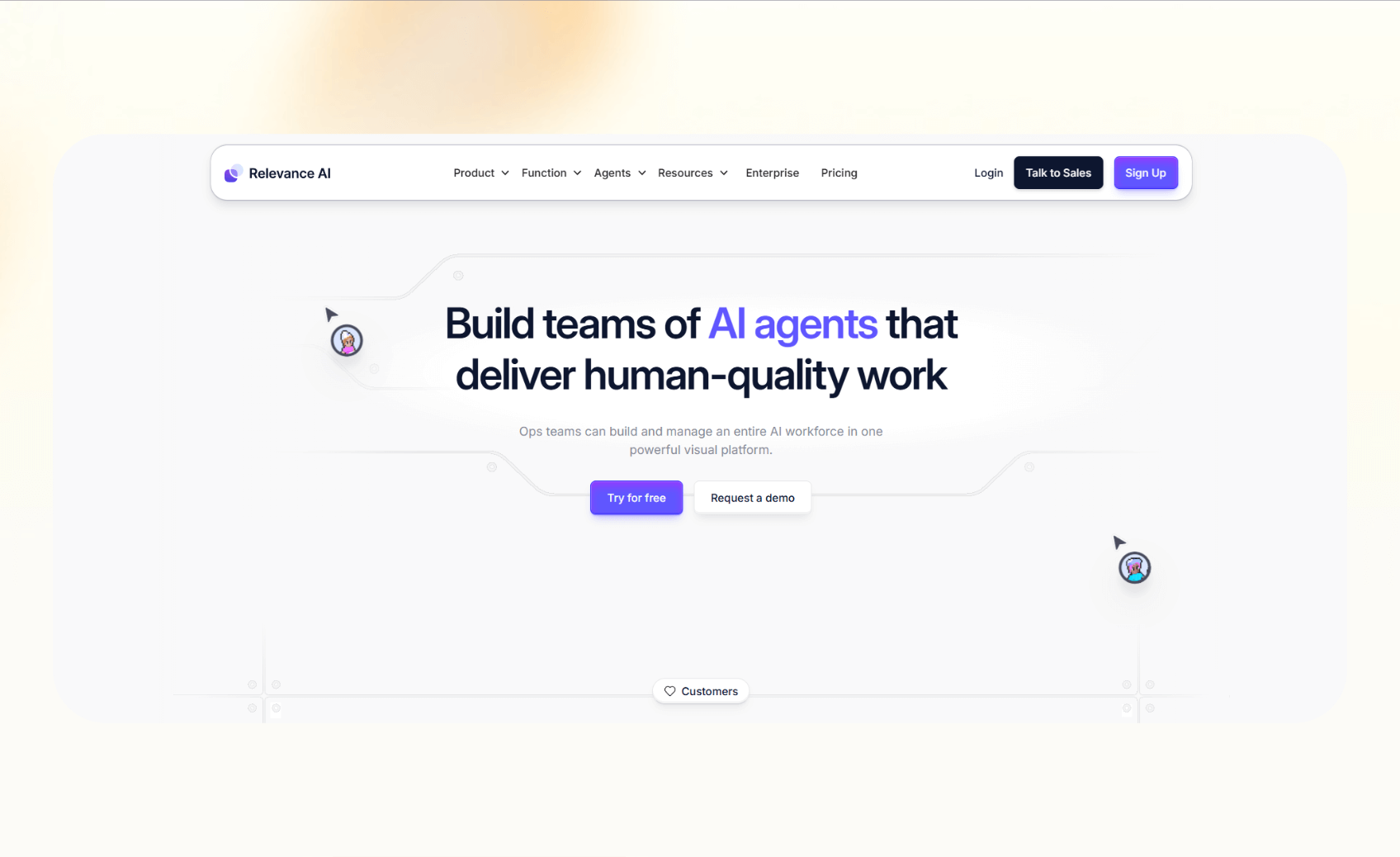
Relevance AI helps teams create and manage groups of AI agents that work together on shared goals. Each agent can handle specialized tasks like data analysis, reporting, or outreach, while the platform coordinates their actions for efficiency.
It’s best for operations, marketing, and product teams that need agents to collaborate on complex workflows or customer-facing tasks.
Key features
- Multi-agent “Workforce” system for team coordination
- Performance analytics and dashboards
- Governance controls for permissions and data tracking
- Integrations with Slack, Notion, and Google Sheets
Pros
- Supports agent collaboration and version control
- Flexible for technical and non-technical teams
- Built-in cost and usage tracking
Cons
- Setup takes time for large-scale workflows
Pricing
- Pricing is custom and quoted by the sales team
- Enterprise plans include unlimited agents, users, and projects
2. Master of Code: Best for custom conversational AI builds
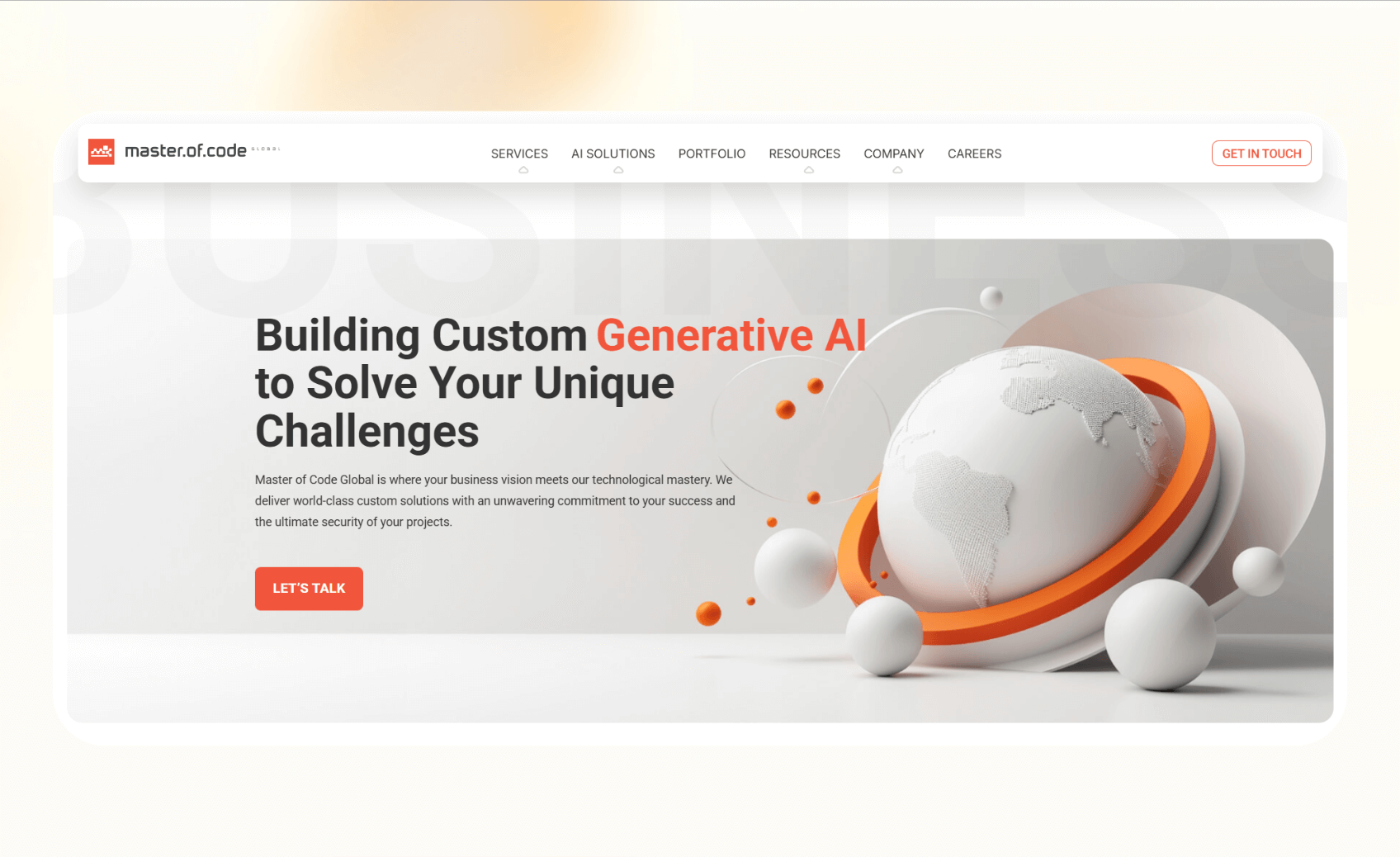
Master of Code is a conversational AI development company that designs and builds chatbots, virtual assistants, and AI-driven customer support systems. It focuses on creating tailored solutions that combine design, development, and long-term optimization.
It works for enterprises and brands that want fully customized AI chat solutions integrated with their existing customer experience platforms.
Key features
- Custom conversational AI development for chat and voice
- Integrates with CRM and analytics platform
- Multilingual chatbot design and optimization
- Enterprise-grade deployment and support
Pros
- Expertise in chatbot design and deployment
- Strong client portfolio across multiple industries
- Offers full-service development and maintenance
- Supports advanced integrations and APIs
Cons
- Longer project timelines than no-code tools
- Custom builds can be expensive for small teams
Pricing
- Custom pricing based on project scope, features, and integration requirements.
- Free consultation calls
3. Intuz: Best for enterprise AI solutions
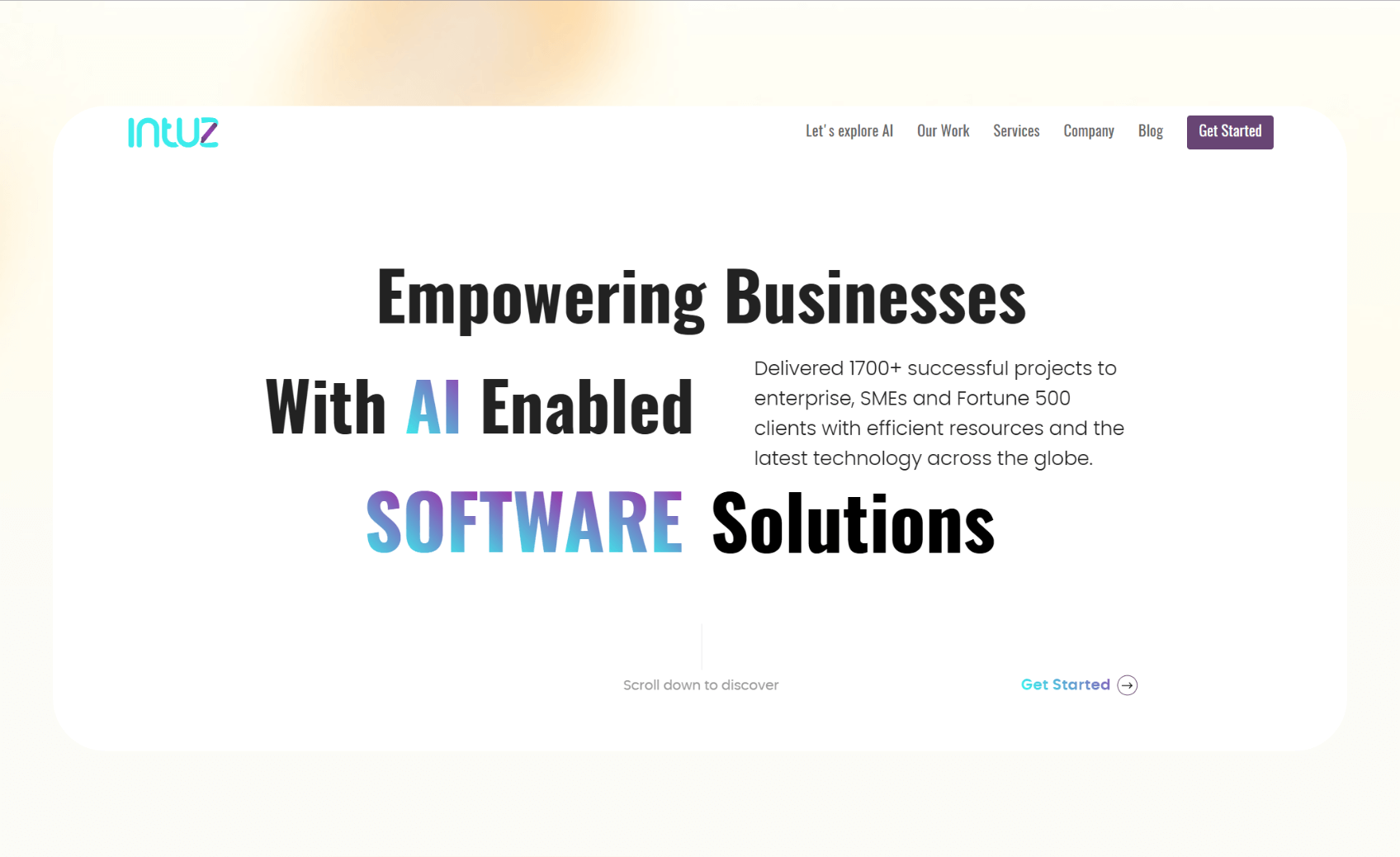
Intuz is an AI development company that builds tailored software and automation systems for large organizations. It helps businesses integrate AI into existing workflows, covering everything from concept to deployment.
Intuz is best for enterprises and startups that need end-to-end AI product development or complex workflow automation.
Key features
- Custom AI application development for web and mobile
- Cloud integration with AWS, Azure, and Google Cloud
- AI strategy and architecture consulting
- Post-launch maintenance and optimization
Pros
- Handles complete development from idea to launch
- Strong experience with enterprise-level projects
- Flexible team structure for startups and large organizations
- Supports multiple cloud environments
Cons
- Requires longer delivery timelines
- No free or self-serve plan
Pricing
- Custom pricing based on project size, technology stack, and integration scope
- Can request detailed proposals before starting a build
4. Abstracta: Best QA-focused AI agent services
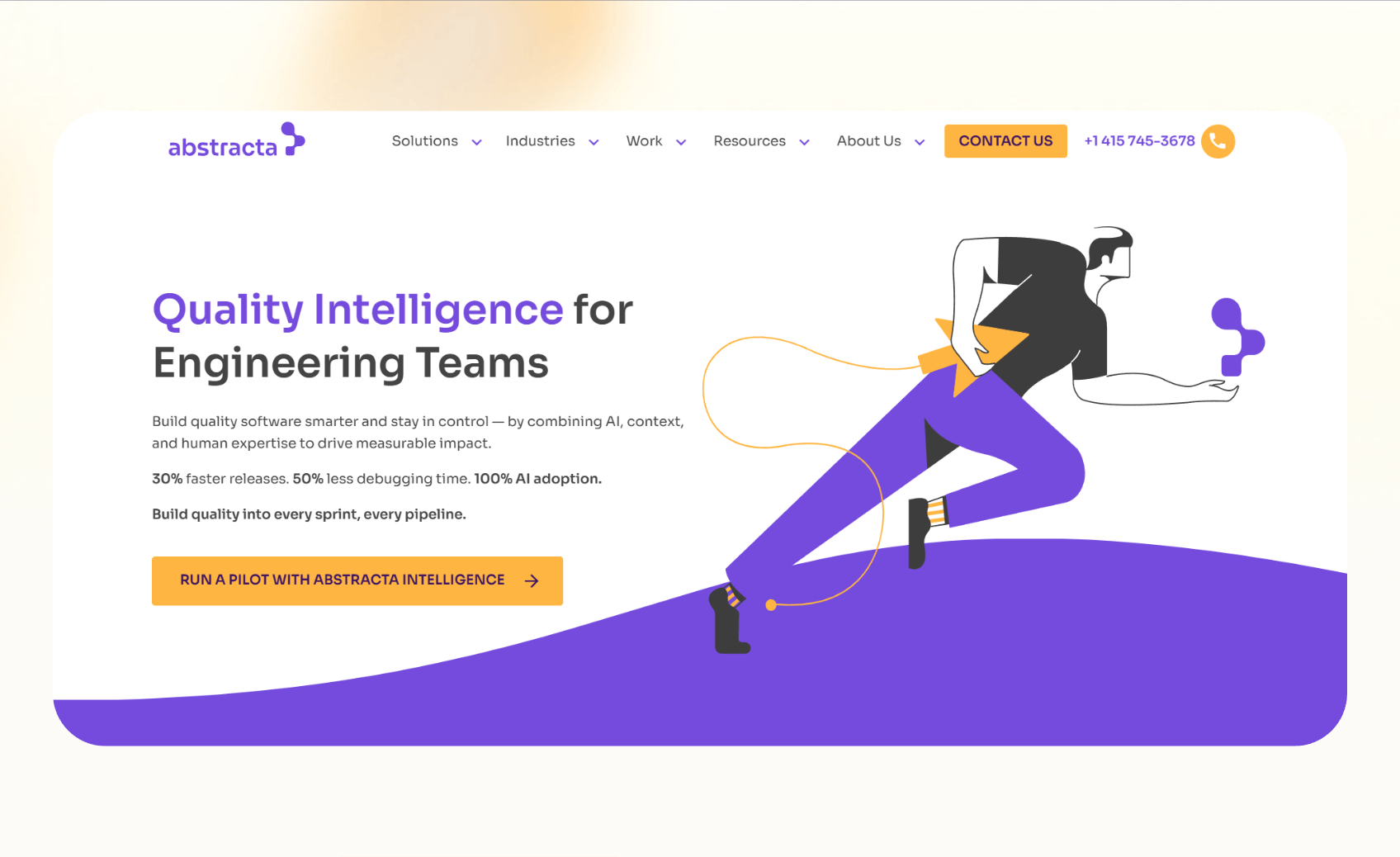
Abstracta is an engineering company that helps businesses build, test, and deploy reliable AI agents. It combines software testing expertise with AI automation to improve system performance and reduce manual effort.
Abstracta works well for enterprises that need dependable AI agent development services with a focus on testing, quality assurance, and long-term stability.
Key features
- Automated testing and quality-assurance agents
- Integration with DevOps and reporting pipelines
- Continuous monitoring for accuracy and reliability
- Consulting for performance and process improvement
- Enterprise data-security compliance
Pros
- Strong background in quality engineering
- Focuses on building stable, error-free AI agents
- Offers packaged solutions through Microsoft AppSource
- Provides post-launch monitoring and optimization
Cons
- Limited flexibility for self-service users
- Custom builds can take time to deploy
Pricing
- Custom pricing model based on project size and complexity
- Request demos or consultations for tailored quotes
5. StackAI: Best for enterprise-grade agent deployment
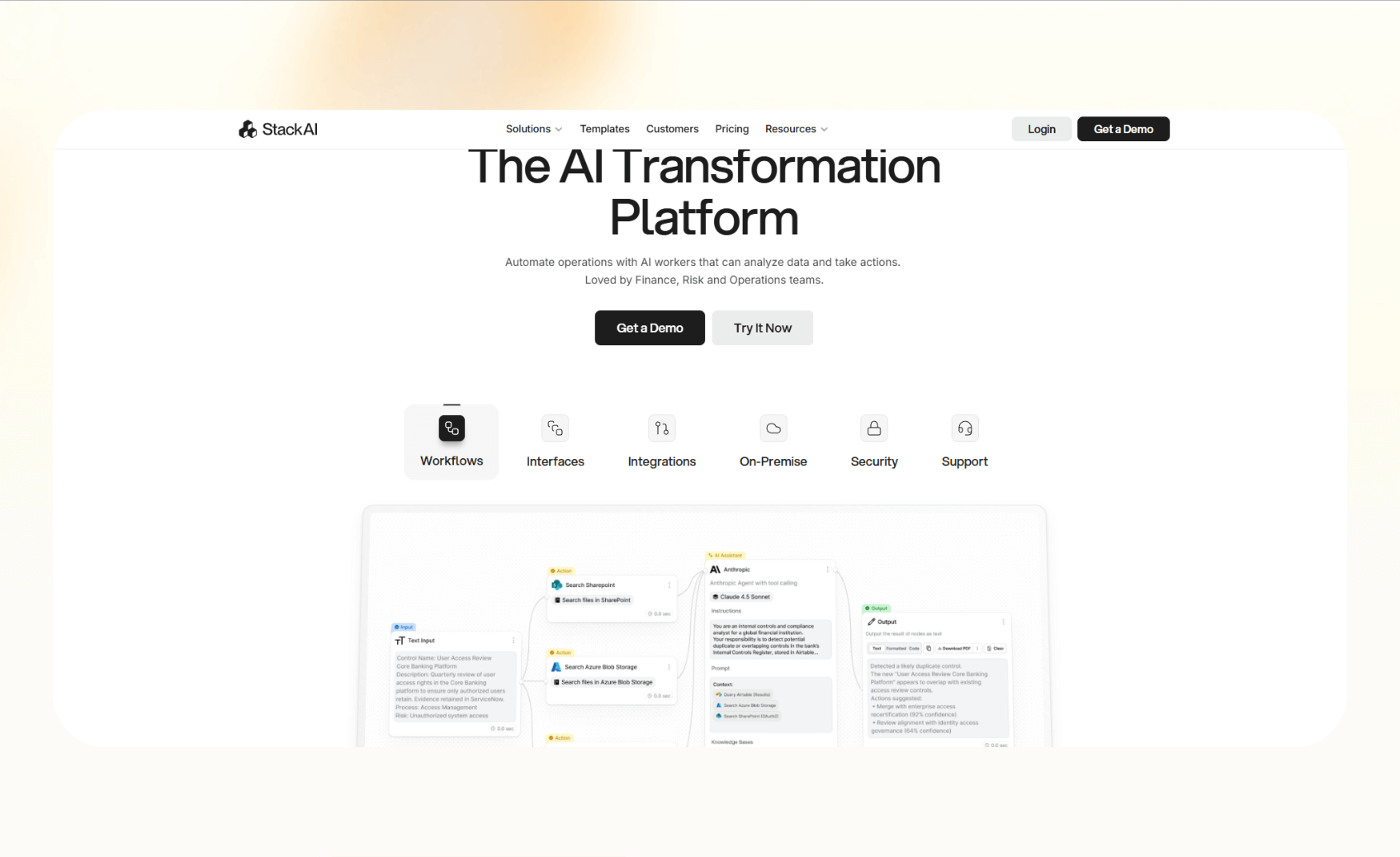
StackAI is a no-code enterprise platform that helps teams build and deploy AI agents for internal operations. It lets teams create scalable, secure automation systems that connect with existing business tools.
It works the best for large teams and enterprises that need to create compliant, production-ready agents without writing code.
Key features
- No-code builder for enterprise-grade AI agents
- Logic and branching for complex workflows
- Real-time monitoring and audit logging
- Support for document and text-based automation
- Multi-team collaboration features
Pros
- Enterprise focus with governance tools
- Easy to manage large-scale deployments
- Supports model fine-tuning and prompt customization
- Offers collaboration features for multi-team projects
Cons
- No public pricing details
- Best suited for enterprise budgets
Pricing
- Free plan with 500 runs/month
- Custom pricing for the paid plan, based on usage volume, integrations, and deployment scale
6. BuildShip: Best hybrid no-code and full-code development
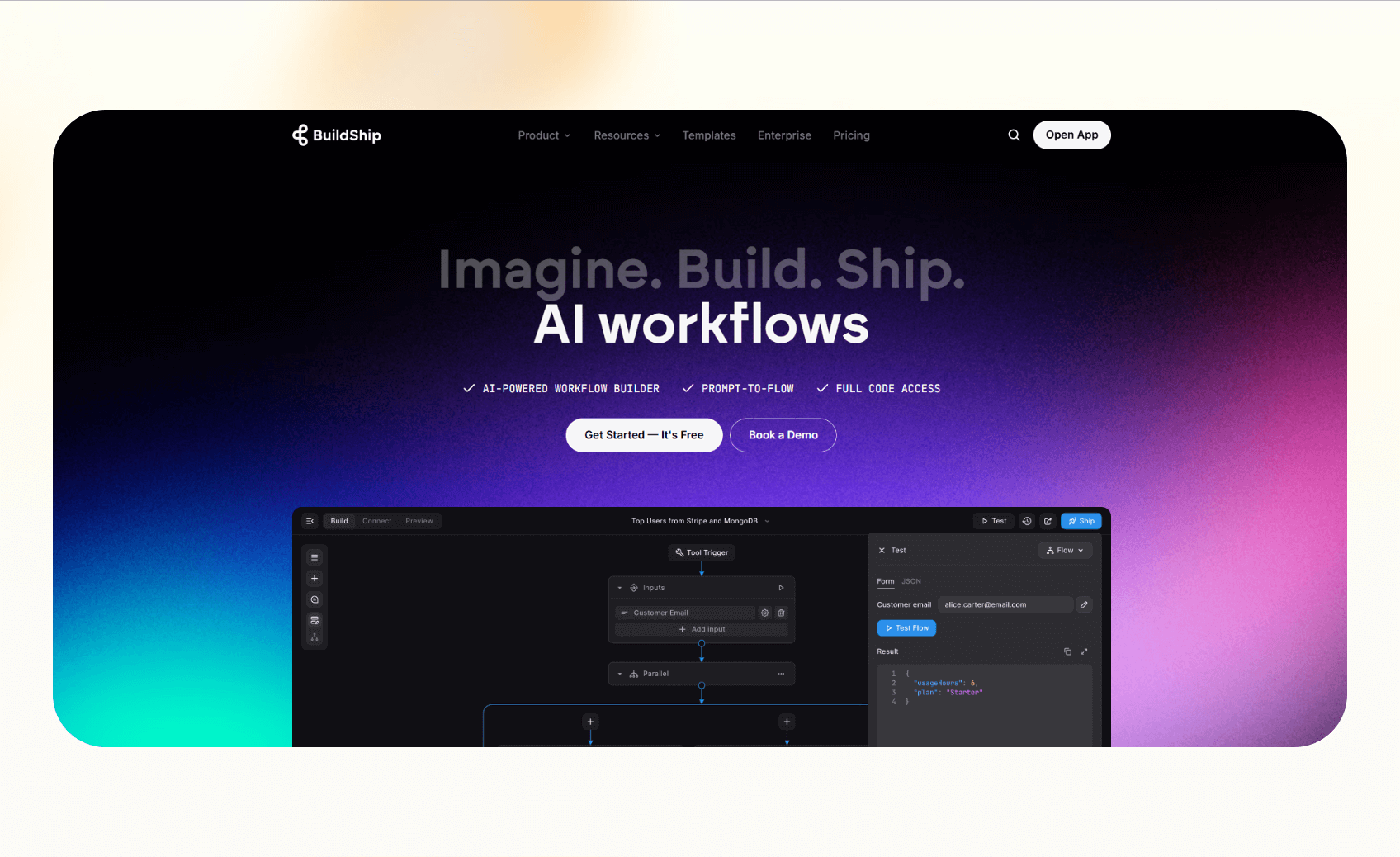
BuildShip is a visual development platform that lets teams create AI workflows and agent tools using both no-code blocks and custom scripts. It bridges the gap between technical and non-technical users, making it easier to build and scale automation.
It suits teams that want the speed of no-code building with the flexibility of adding full-code extensions when needed.
Key features
- Visual workflow builder with code-editor access
- Custom logic and script integration
- Version control and deployment tools
- Integration with Slack, Notion, and HubSpot
Pros
- Works well for product and operations teams
- Fast setup with clear documentation
- Supports scalable backend automation
Cons
- Requires basic coding knowledge for advanced setups
- Lacks templates for some niche use cases
Pricing
- The Starter plan includes 20,000 monthly credits
- Paid plans start from $19/month, with custom Enterprise pricing
7. Flowise: Best open-source AI agent builder
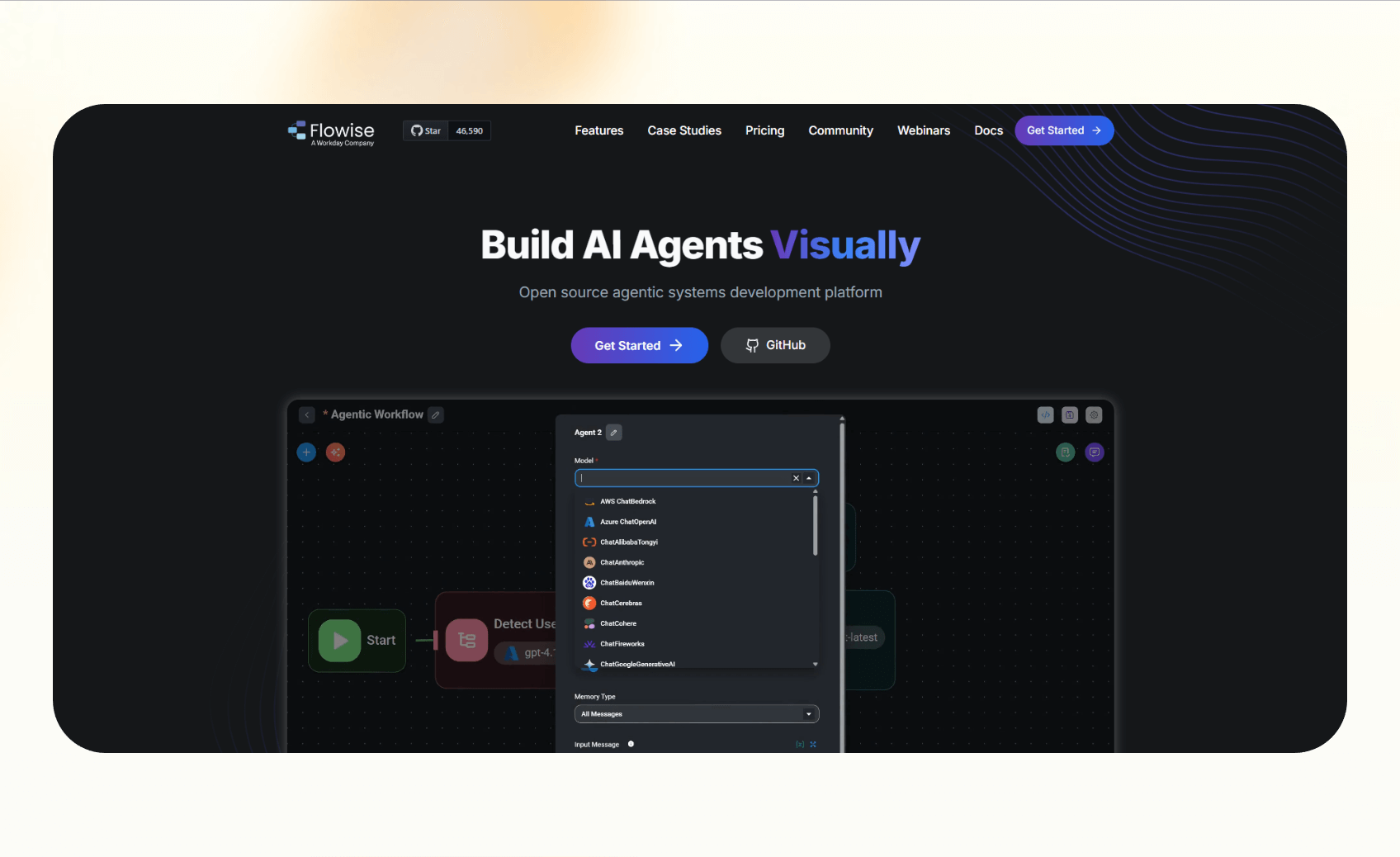
Flowise is an open-source platform that lets teams create AI agents and retrieval-augmented generation (RAG) applications through a simple visual builder. It gives complete control over deployment, hosting, and customization.
Flowise works well for developers and tech-savvy teams that prefer to self-host their AI agent platform and customize workflows without vendor restrictions.
Key features
- Open-source visual builder for AI agents
- Support for RAG and knowledge-based workflows
- Compatibility with LangChain and OpenAI
- Integration with vector databases like Pinecone
- Flexible local or cloud deployment
Pros
- Open-source and self-hostable
- Strong community support and regular updates
- Works with multiple LLMs and data integrations
Cons
- Requires developer setup and maintenance
Pricing
- Free to use under an open-source license
- Managed cloud hosting plans from $35/month
8. Langflow: Best low-code tool for developers
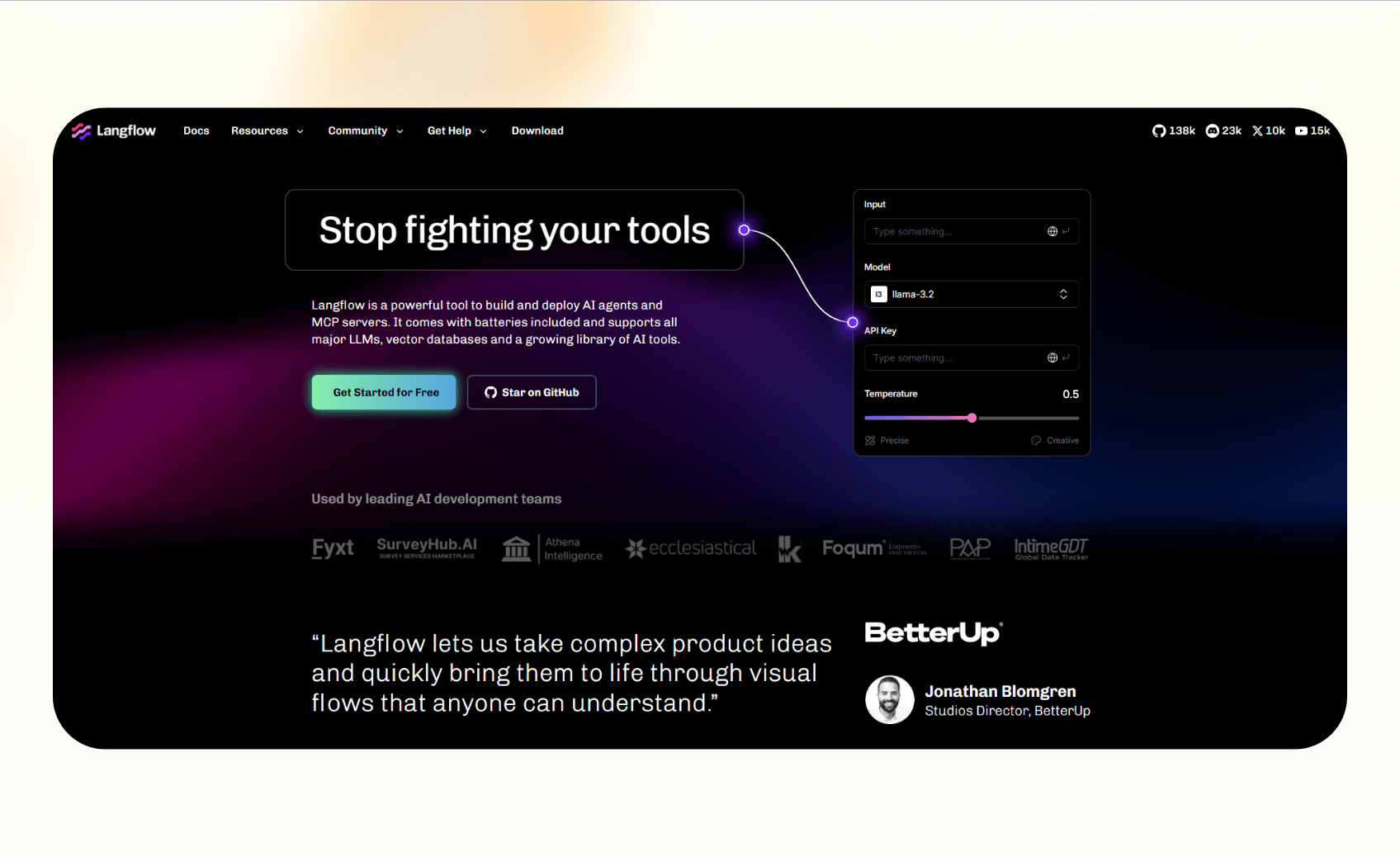
Langflow is a low-code framework that helps developers and data teams design, test, and deploy AI agents visually. It provides a flexible environment to build retrieval, reasoning, and automation workflows without setting up complex infrastructure.
Langflow is ideal for developers and technical teams who want complete control over their AI agent development platform while still working in a visual, low-code environment.
Key features
- Low-code visual builder for AI agents and pipelines
- Multi-model support across LLMs and APIs
- Local, Docker, or cloud deployment options
- Integration with LangChain, Hugging Face, and OpenAI
- Exportable API endpoints for deployment
Pros
- Combines developer flexibility with visual simplicity
- Strong community documentation and support
- Easy local and cloud deployment options
Cons
- Steeper learning curve for non-technical users
- No native team management tools
Pricing
- Langflow is open-source and free to use
9. Zapier: Best automation tool with largest integration library
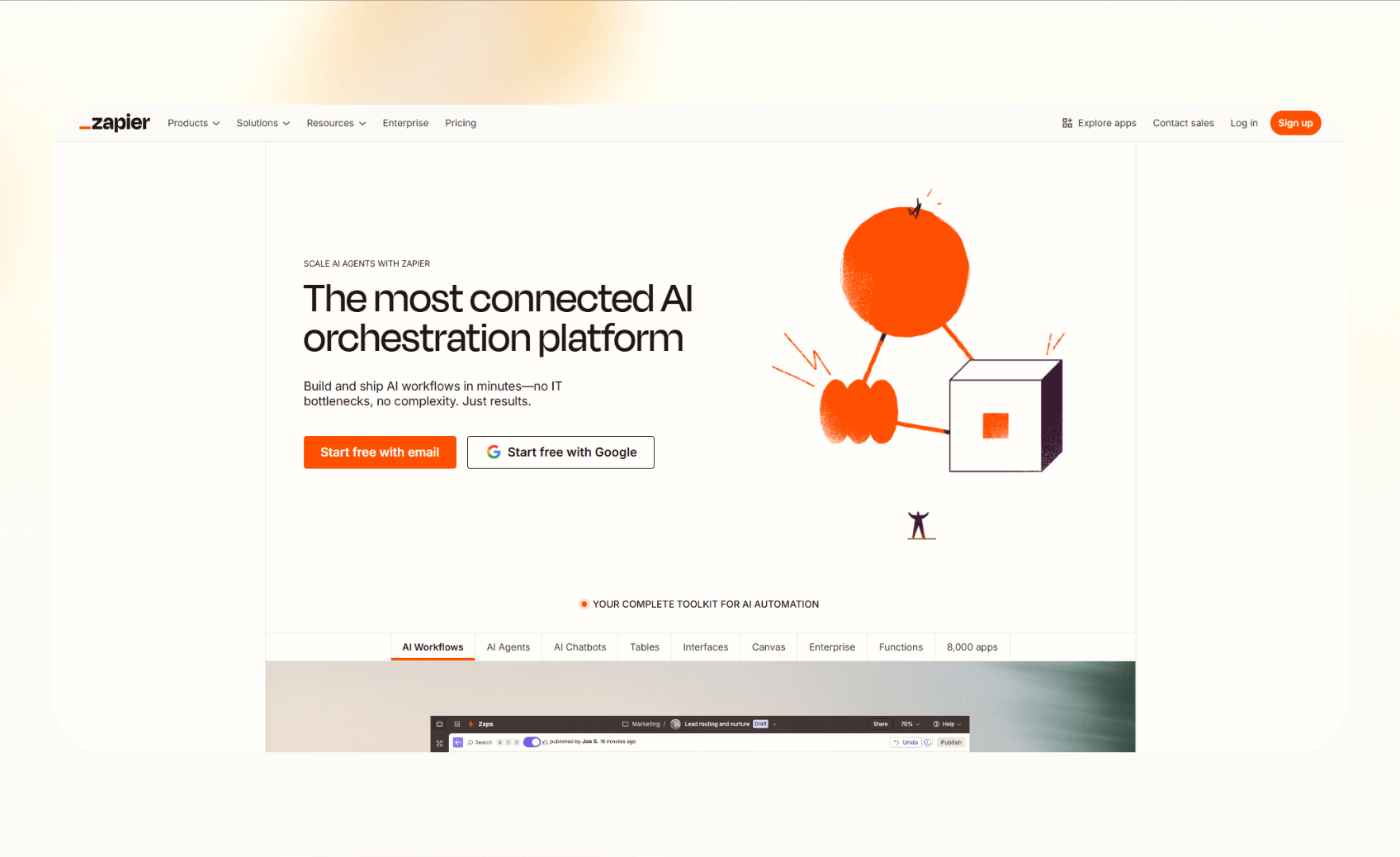
Zapier is an automation platform that now includes AI Agents to help users create smart, task-oriented workflows. Its new features combine traditional triggers and actions with AI decision-making, making it easier to automate complex processes.
Zapier is best for small businesses, marketing teams, and operators who want to integrate AI agents into their daily tools without technical setup.
Key features
- AI Agents with no-code builder
- Custom actions through Zapier Interfaces
- Visual workflow tracking and management
- Integrates with more than 8,000 apps
Pros
- Largest ecosystem of app integrations
- Easy setup for non-technical users
- Reliable performance and uptime
Cons
- Advanced features limited to paid tiers
- Can get expensive as workflow volume increases
Pricing
- Free plan with 100 tasks/month
- Paid plans start from $29.99/month, billed monthly
- AI Agent and Chatbot add-ons in Beta
10. Make: Best for low-code visual workflows

Make is a visual automation platform that lets you create AI Agents for business workflows. It helps teams connect apps, move data, and trigger intelligent actions without writing code.
It’s ideal for businesses that want a flexible automation builder with AI capabilities for business workflows.
Key features
- Visual builder for multi-step workflows
- AI agents that can automate recurring tasks
- Integration with 3,000+ business applications
- Custom scenario templates for faster setup
- Workflow monitoring and error handling
Pros
- Easy visual interface for complex automations
- Scales well for growing teams
- Affordable entry-level plans
Cons
- AI features are lighter than dedicated agent platforms
- Complex logic may require testing before launch
Pricing
- Free plan with 1,000 monthly credits
- Paid plans start from $10.59/month, billed monthly
11. ZenML: Best MLOps platform for agent lifecycle
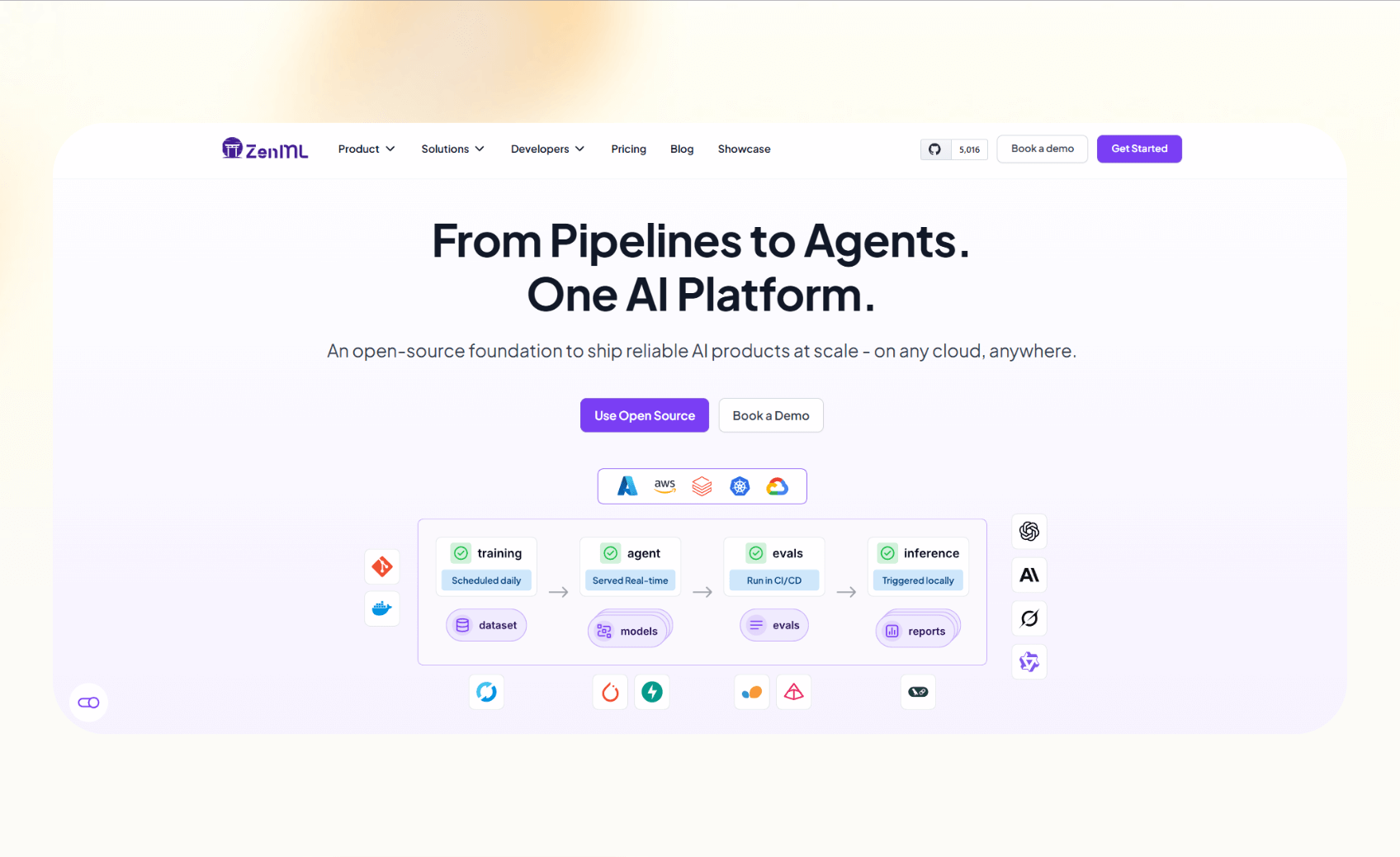
ZenML is an open-source MLOps framework that helps teams build, deploy, and manage AI agent pipelines. It provides structure for running experiments, tracking performance, and scaling machine learning workflows in production.
It suits data science and engineering teams that need a consistent way to manage the lifecycle of LLMs and AI agents across cloud or on-prem environments.
Key features
- Pipeline-based framework for LLM and AI agent workflows
- Integration with MLflow, Weights & Biases, and TensorBoard
- Support for multiple cloud and on-prem environments
- Native connectors for Kubernetes, SageMaker, and Vertex AI
Pros
- Open-source and cloud-agnostic
- Strong integrations with leading ML tools
- Ideal for production-level AI deployment
- Active developer community and documentation
Cons
- Requires technical setup and DevOps knowledge
- Limited pre-built templates for non-ML use cases
Pricing
- Free to use under an open-source license
- Pro plan has custom pricing
12. Salesforce Agentforce: Best enterprise-ready AI agent platform
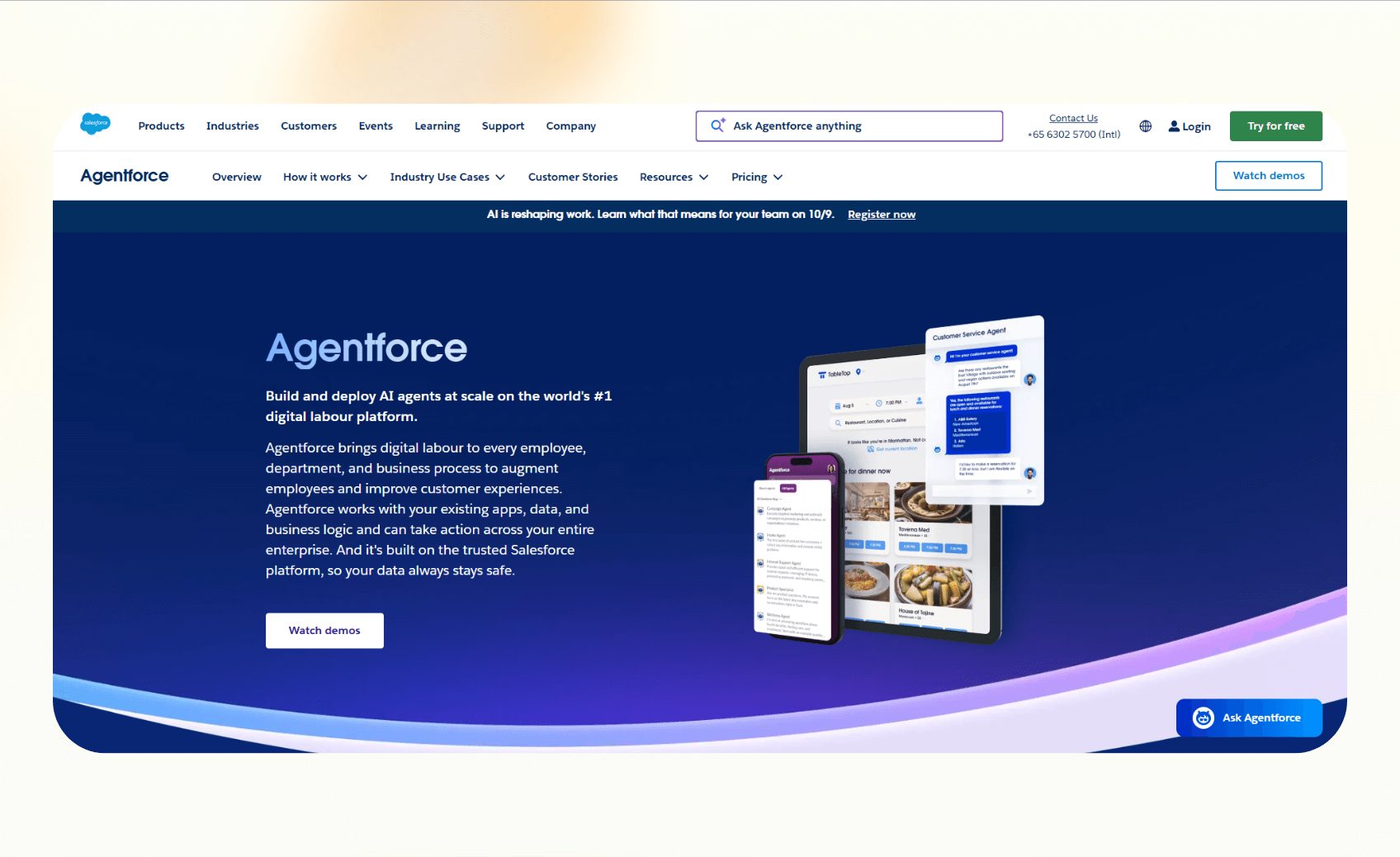
Salesforce Agentforce is an enterprise platform for building and deploying AI agents inside the Salesforce ecosystem. It helps teams create agents that understand business data, automate customer interactions, and work across Salesforce, Slack, and connected apps.
Agentforce is for enterprises that already use Salesforce and want to extend its automation with secure, AI workflows and customer engagement tools.
Key features
- Visual builder for creating business AI agents
- Integration with Salesforce CRM and Slack
- Context indexing and knowledge retrieval from company data
- Governance and compliance controls
- Analytics and monitoring for agent performance
Pros
- Native to Salesforce and Slack environments
- Data connectivity across Salesforce Clouds
- Enterprise support and documentation
Cons
- Only available within the Salesforce ecosystem
- Pricing suits enterprise users
Pricing
- Different pricing for different plans, depending on add-ons
- Pay-per-action Flex credits from $500 per 100k credits
13. Microsoft Copilot Studio: Best for Microsoft ecosystem users
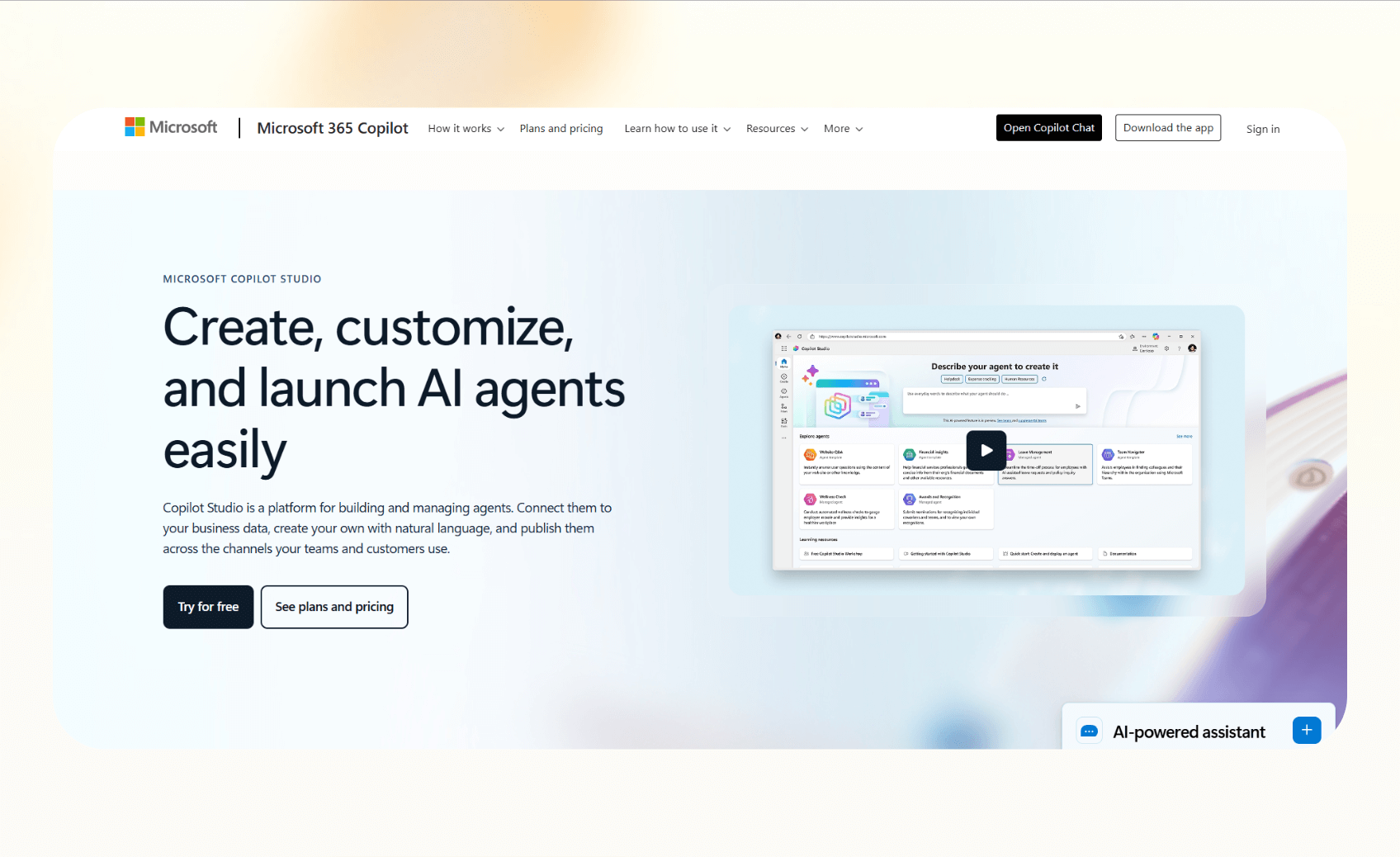
Microsoft Copilot Studio is a no-code platform that helps organizations create and manage custom Copilot agents across Microsoft 365. It connects productivity tools, company data, and Azure AI services to deliver automated assistance inside everyday workflows.
It’s for teams already using Microsoft 365 or Azure who want to build secure, context-aware agents for business operations, support, and reporting.
Key features
- Visual interface for building and managing Copilot agents
- Integration across Microsoft 365 apps and Azure AI services
- Action and automation triggers within M365 workflows
- Built-in analytics and usage tracking
- Security and compliance aligned with Microsoft 365 standards
Pros
- Easy for non-technical users to build internal agents
- Centralized management for IT and data teams
Cons
- Requires Microsoft 365 or Azure licenses
- Limited flexibility outside the Microsoft stack
Pricing
Pay-as-you-go: $0.01 per Copilot credit
Copilot Studio: $200/month for 25,000 credits
How I tested these companies
I tested each AI agent development company to see how fast and reliably they could build agents that handle business work. I created sample workflows for scheduling meetings, responding to leads, and updating CRMs.
Here’s what I looked for:
- Ease of setup: Quick setup matters because most teams want results fast. I prioritized tools that let users build their first working agent in under an hour.
- Integrations: A good AI agent development platform should connect smoothly with CRMs, email tools, and internal systems. Strong integrations make agents more reliable and scalable.
- Scalability and reliability: I tested how each tool handled multi-step workflows and concurrent automations. Stability under load matters for growing teams.
- Governance and security: Business automation requires data safety and compliance. I checked for SOC 2 certification, access controls, and audit trails.
- Pricing transparency: Clear pricing helps teams plan budgets confidently. I favored platforms that show tiered or usage-based models upfront.
I tracked build time, integration quality, and performance across the workflows I created to see which tools deliver the best balance between capabilities and usability.
There are a few exceptions that don’t meet the above criteria but are still on the list. Abstracta, Intuz, and Master of Code aren’t easy to set up or have pricing transparency. But they provide value for large-scale industries that the self-serve tools don’t.
Which industries benefit most from AI agents
AI agents are now used across almost every industry, but some sectors see faster returns from automation than others. Here are the areas where they create the most impact:
- Technology and SaaS: AI agents manage lead routing, schedule demos, and support customers around the clock. They also automate reporting and data updates across CRMs and internal tools.
- Healthcare: Clinics and health-tech startups use agents for patient intake, appointment booking, and record summarization. Agents save staff time while keeping workflows HIPAA-compliant.
- Real estate: Agents qualify leads, schedule viewings, and manage post-tour follow-ups. This reduces missed opportunities and keeps communication consistent.
- Finance and accounting: AI automates document processing, data reconciliation, and client communication. It speeds up reporting and reduces manual errors.
- Customer service: Businesses use AI receptionists and chat assistants to handle routine questions, escalate complex cases, and maintain quick response times.
Which AI agent development company should you choose
Each platform suits different teams, so it’s best to match your choice to your workflow needs. It’ll depend on your goals, technical skills, and budget. Here’s how to narrow down on the best options:
- For startups and small teams: Zapier is a great pick. It makes it easy to automate calls, messages, and data tasks without any coding.
- For enterprises: Salesforce Agentforce and StackAI work best. They include governance tools, data security, and scalability features for large teams.
- For developers and technical users: Langflow, Flowise, and ZenML are ideal. These open-source tools give complete control over data, models, and deployment environments.
- For businesses that need custom builds: Master of Code, Intuz, or Abstracta deliver tailored AI solutions with full development support and post-launch maintenance.
- For low-code flexibility: BuildShip and Make combine visual builders with the option to add code or custom logic. They’re a good middle ground for teams that want creative control and quick execution.
My final verdict
For technical teams, open-source AI agent development platforms like Langflow, ZenML, or Flowise make sense as they let you tinker and customize your agents.
Enterprises may prefer Agentforce or Copilot as they work effortlessly within their ecosystem.
But for most teams that want an easy-to-use, no-code platform, Zapier and Make are the strongest starting points. Both balance usability and integration depth, and BuildShip adds a middle path when you want to drop into code.
Frequently asked questions
Which AI agent development company is best for enterprises?
Salesforce Agentforce is one of the best AI agent development companies for enterprises. It integrates directly with Salesforce CRM, includes governance tools, and supports secure data automation.
What are the best free AI agent development platforms?
Flowise and Langflow are some of the best free AI agent platforms. Both are open-source and free to self-host, and StackAI adds a free plan with 500 runs a month. All three help teams test and scale agents without upfront cost.
Is it better to use an open-source AI agent framework or a paid platform?
Open-source AI agent frameworks are better if you need control and customization, while paid platforms work well for businesses that want fast setup and ongoing support. The right option depends on your technical experience and project needs.
How long does it take to create a custom AI agent?
You can create a custom AI agent in a few minutes using a no-code tool like Zapier or Lindy. If you prefer full-service builds using tools like Master of Code or Intuz, it’ll take longer, depending on complexity.